
Kpando Municipal Assembly pushes community-led sanitation to tackle open defecation
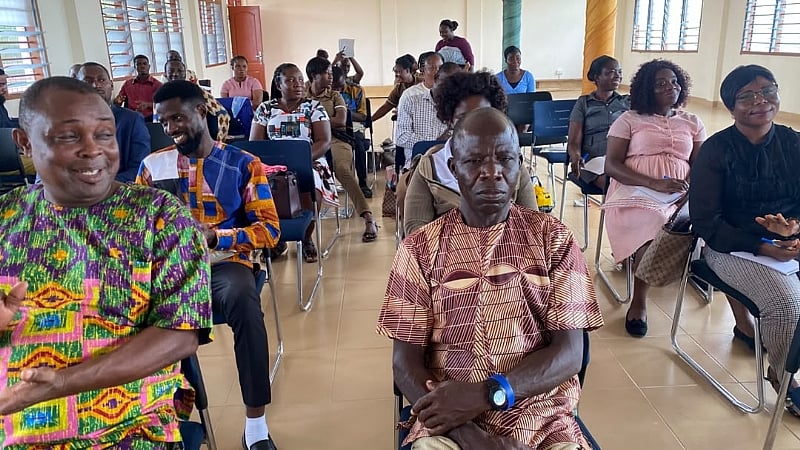
The Kpando Municipal Assembly has reaffirmed its commitment to the fight against open defecation through intensified sanitation advocacy and capacity-building initiatives aimed at achieving Open Defecation-Free (ODF) communities.
The four-day Community-Led Total Sanitation (CLTS) training workshop, held from June 9 to June 12, was sponsored by the Kpando Municipal Assembly following the advocacy efforts of the Municipal Director of Environmental Health, Mr. Peter Pariki-Kwashie, and the Volta Regional Office who facilitate the programme.
Delivering the closing remarks, the Kpando Municipal Chief Executive (MCE), Hon. Killian Donkor, urged participants to intensify public education and impress upon communities that sanitation is a shared responsibility, and that every citizen has a role to play in maintaining environmental cleanliness. He emphasized the need for residents to appreciate the dangers associated with open defecation and work collectively towards ending the practice.
“There is the need for all of us to discipline ourselves and adopt proper sanitation practices to safeguard public health and protect the environment,” he stated.
Hon. Donkor further advised Environmental Health Officers to foster unity and teamwork in the discharge of their duties, stressing that without collaboration, the objectives of the training workshop would not be fully realized. He assured participants of the Kpando Municipal Assembly’s unwavering support and pledged the Assembly’s readiness to provide the necessary assistance to enable officers to effectively carry out their mandate.
Speaking to the media after the successful completion of the workshop, the Monitoring and Evaluation Officer for the Community-Led Total Sanitation (CLTS) Programme in the Volta Region and the Volta Learning and Capacity Centre (VLCC), Mr. Felix Bosonkui, called for sustained efforts to eliminate open defecation and promote improved sanitation practices across communities.
According to him, the CLTS approach empowers communities to identify their sanitation challenges and take collective action towards achieving improved environmental health outcomes.
He explained that the training sought to strengthen the capacity of participants drawn from Environmental Health and Sanitation Units of various Municipal Assemblies, Planning Units, Physical Planning Departments, Community Development and Social Welfare Departments, as well as other stakeholders within the sanitation sector.
Mr. Bosonkui noted that participants undertook practical field exercises at Sovie Kudzra on the final day of the workshop, where live triggering sessions were successfully conducted to encourage behavioural change and community ownership of sanitation issues.
“We are optimistic that in the near future the community will attain Open Defecation-Free status, where residents will no longer resort to open defecation but will construct and consistently use household toilet facilities under hygienic conditions,” he stated.
He stressed that the eradication of open defecation remains a national priority and urged Metropolitan, Municipal and District Assemblies (MMDAs) to invest in the continuous training of Environmental Health Officers to intensify sanitation and hygiene education at the community level.
Mr. Bosonkui observed that open defecation poses significant public health threats due to the spread of disease-causing pathogens such as Vibrio cholerae and Salmonella typhi, which are responsible for cholera and typhoid fever, respectively.
According to him, Ghana loses more than US$290 million annually through health-related costs associated with poor sanitation and preventable diseases, underscoring the need for greater investment in environmental sanitation interventions.
He added that government’s renewed commitment to improving sanitation nationwide comes at an opportune time and called on all stakeholders to collaborate in building healthier communities and enhancing national productivity.
The workshop was attended by key facilitators including the Volta Regional Environmental Health Officer, Madam Stella Kumedzro; the Volta Regional CLTS Focal Person, Mr. Festus Tagbodza; and the Monitoring and Evaluation Officer for the CLTS Programme in the Volta Region, Mr. Felix Bosonkui. The programme was hosted by the Kpando Municipal Director of Environmental Health, Mr. Peter Pariki-Kwashie.
The four-day capacity-building programme forms part of efforts aimed at strengthening environmental sanitation management and accelerating progress towards achieving Open Defecation-Free communities within the Kpando Municipality and beyond.