
Josh Hartnett turned heartthrob fame into a career of risks

Of all the tawdry delights in “Verity” — Michael Showalter’s adaptation of bestselling author Colleen Hoover’s massively popular psychological thriller — the best and most unexpected is how well the film hides its secrets. Now, don’t get me wrong: The movie isn’t exactly garnering Oscar buzz, or even eliciting the fervent “you’ve got to see this!” refrain that followed 2014’s “Gone Girl” around. “Verity” is trashy fun through and through, and doesn’t try to elevate itself past that pulpy baseline. But Showalter and the movie’s screenwriter, Nick Antosca, are skilled in the art of misdirection. They know how to surprise, and they use their trio of actors to do it cleverly.
Take Anne Hathaway, fresh off a string of box-office smashes in “The Odyssey,” “The Devil Wears Prada 2,” “The End of Oak Street” and “Mother Mary.” (Alright, the last one made a few pennies and a nickel, but we can dream.) This year alone, Hathaway has repeatedly proven her versatility, jumping between gun-toting moms, tortured pop stars and struggling journalists. In “Verity,” she plays the titular character, Verity Crawford, the author of a string of hit thriller novels who’s been mysteriously incapacitated after a car accident and can’t finish her final three books.
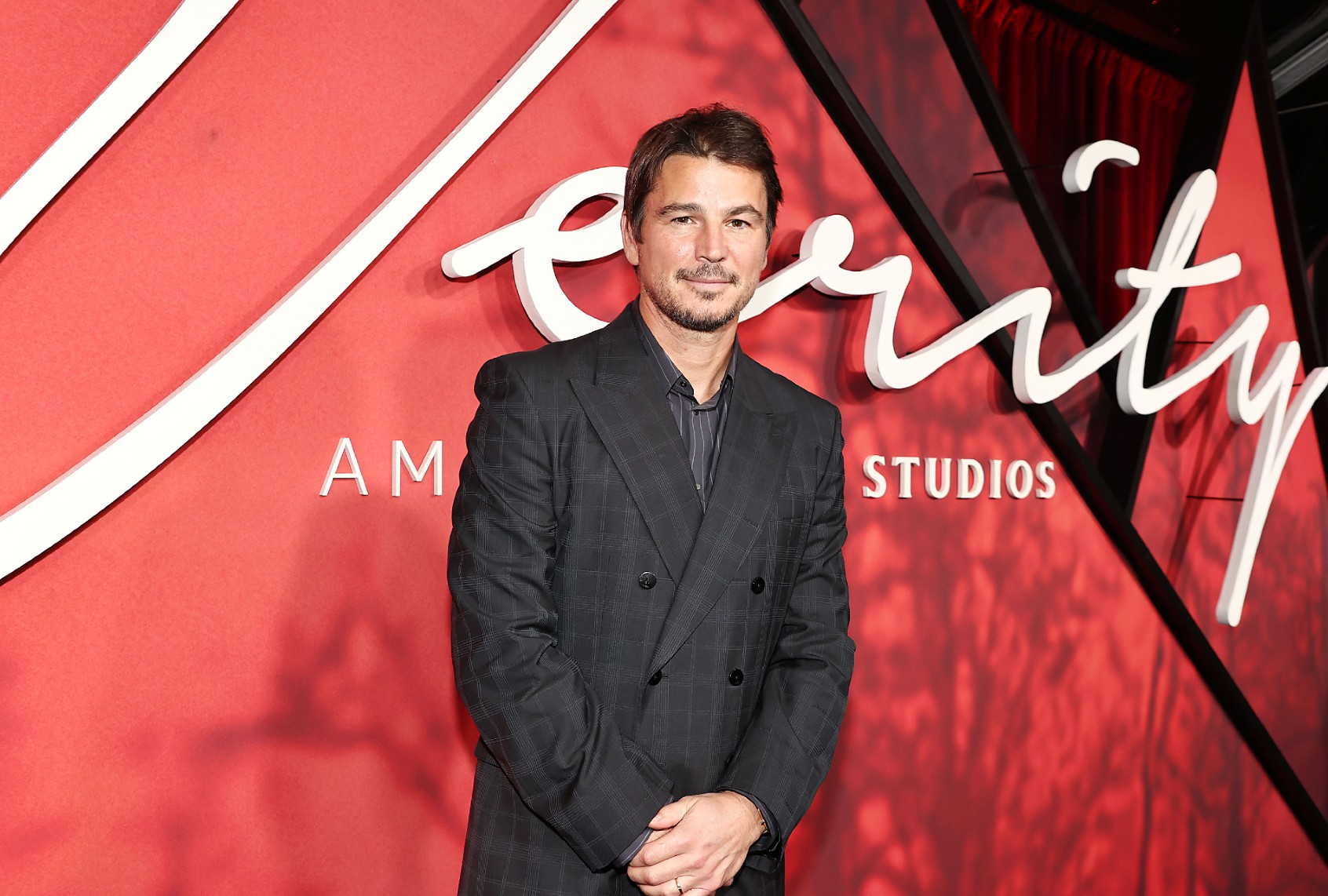
(Dave Allocca / Starpix) Josh Hartnett attends the “Verity” New York Premiere
Hartnett stands out among the roster of stubborn, uncompromisingly masculine leading men from his heyday, proving that there’s much more to winning over an audience than simply playing into the public’s perception.
To complete the series, Verity’s publisher taps little-known writer Lowen Ashleigh (Dakota Johnson), who agrees to step into Verity’s place using her copious notes. While Johnson’s elasticity as a performer is a bit more contentious, I’ve always found her choices fascinating — oscillating between rom-coms, superhero films and arthouse horror with the bat of a mascara’d eye. “Verity” is no different, allowing Johnson to move her character between suspicion and warmth with languid ease as she settles into Verity’s Vermont home to work.
Want more from culture than just the latest trend? The Swell highlights art made to last.
Sign up here
But the key piece to the “Verity” puzzle is Josh Hartnett, who plays Verity’s put-upon husband, Jeremy, with all the unnerving capriciousness a film like this demands. Here, Hartnett’s character exists in flux, somewhere between his old life and a new start. He’s both charming and chilling, expertly using a near-imperceptible shift in expression or tone to keep the audience on their toes. With Hartnett weaving through the entire story, it’s nearly impossible to get a handle on what’s really going on in “Verity.” And that volatility is what makes the film so exciting, even when it goes full-tilt cheesy.
This is nothing new for Hartnett, who’s spent the last few years enjoying a well-deserved career renaissance, following up his role in “Verity” with a starring role in Netflix‘s supernatural thriller miniseries, “Below.” Once the quintessential ’90s heartthrob, Hartnett has parlayed the goodwill from his hunky idol days into something far more compelling. Though he’s always been a great actor, popping up here and there to elevate material, Hartnett has found an artistic sweet spot, using his effervescent charm and boy-next-door-all-grown-up good looks to subvert expectations. Hartnett stands out among the roster of stubborn, uncompromisingly masculine leading men from his heyday, proving that there’s much more to winning over an audience than simply playing into the public’s perception.
For those who have watched Hartnett grow throughout his career, the actor’s keen yet unassuming abilities surely don’t come as a shock. His late ’90s breakthrough in the triple-hitter lineup of “Halloween: H20,” “The Faculty” and “The Virgin Suicides” catapulted him to international fame practically overnight, cementing his place alongside the era’s Tiger Beat celebrity infatuations. The primary difference between Hartnett and his contemporaries, though, was that Hartnett could hold his own on screen. He may not have had the bona fides of someone like Leonardo DiCaprio, but Hartnett’s work was consistent and appealing. He knew how to play the everyman (or everyteenager), caught up in frequently absurd or abrupt situations beyond his control.
That’s not to say they were all hits, of course. 2002’s “40 Days and 40 Nights,” an offbeat rom-com about a Bay Area web designer who chooses to abstain from sex and masturbation for the duration of Lent, is patently ridiculous and more than a little sexist. But that’s also where Hartnett’s appeal lies. He understands how to use his innate magnetism to charm his way through even the silliest scripts, occasionally creating a dissonance between the film and his performances that makes even the duds memorable.

(Netflix) Josh Hartnett as Calvin in “Below”
These days, I can’t say the same about some of Hartnett’s early peers, like Brad Pitt and Tom Cruise, who, despite rising to fame earlier than Hartnett, never fully figured out how to separate themselves from their reputation. Both Cruise and Pitt have a death grip on their A-List prestige, hyper-aware of how much the world perceives and enjoys their work. That self-awareness has made their late-period work all too stodgy, selecting roles clearly informed by their notable reputations. Take Pitt’s “F1: The Movie” and this year’s “Heart of the Beast,” where Pitt plays hypermasculine characters whose lives, actions and goals are defined by a relentless desire to come out on top. For someone whose notoriety has twice become inseparable from who he’s married to, Pitt’s choice to play gruff loners feels noticeably calculated, keeping an arm’s distance between his work and the audience.
For Hartnett, shading in a complete picture, warts and all, is essential to making a character believable. It’s an old-school way of thinking for the modern era — a belief that the work should be taken seriously but without ever letting the viewer in on how intensely he’s considering it.
In Cruise’s case, artistry seems to have taken a backseat almost entirely. Over the last decade, Cruise has resigned himself to action stardom, writing death-defying stunts into his contracts. Even with “Digger,” Cruise’s most ambitious project in years, he confines himself to a loud, obnoxious character destined to be written about as a “big swing.” The problem is that “Digger” only feels like a big swing because it’s marginally different from what Cruise has been doing lately. Cruise’s ambition is moot if he’s otherwise resigned himself to crowd-pleasers, making his occasional enterprising choices look even more daring.
Comparing Hartnett to actors like Pitt and Cruise might seem like a stretch. But consider that “Verity” topped last week’s box office by a wide margin, leaving “Digger” and “Heart of the Beast” eating its dust. No doubt this is partially due to Hoover’s extreme popularity, and Hathaway and Johnson’s bankability — those are fair elements to incorporate here. But when it comes to the difference in performance among all three leads, there’s really no competition.
Hartnett’s work is dynamic and unsettling, making what could be a forgettable tertiary character into an integral part of the story that viewers hold in the back of their minds, even when he’s offscreen. From the start, when Jeremy runs into Lowen on the street before they meet at Verity’s publisher’s office, Hartnett makes Jeremy’s presence feel dubious. His every motive feels ulterior, and his inevitable simmering romance with Lowen resembles a can of worms that could pop open at any moment.
But that’s Hartnett’s great skill. He understands how to keep viewers vigilant, how to shock them and startle them as soon as they think they know where he’s headed. He doesn’t just subvert expectations; he perverts them, creating characters who appear to have rich inner lives and plenty of secrets that the audience may never fully understand. M. Night Shyamalan’s 2024 thriller “Trap” used Hartnett’s expertise to its full potential, crafting a character who could be both a doting dad and a vicious serial killer at the same time. For Hartnett, shading in a complete picture, warts and all, is essential to making a character believable. It’s an old-school way of thinking for the modern era — a belief that the work should be taken seriously but without ever letting the viewer in on how intensely he’s considering it. With Hartnett, what you see is never what you get, at least not fully. And what a delight it is that this world still holds some surprises for us.
Read more
about actors who deserve their due