
Farm workers face a ‘double-edged sword’ of extreme heat and pesticides

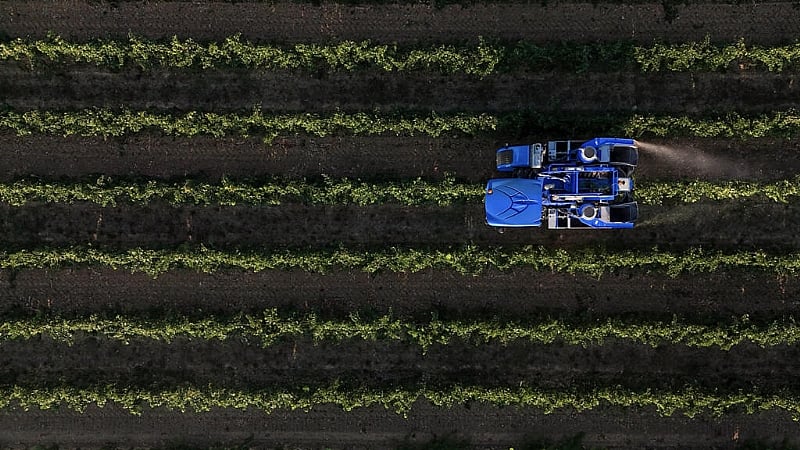
The problem creates a dangerous trade-off. While protective clothing can reduce contact with pesticides, in extreme temperatures it can also trap body heat and increase the risk of heat-related illness.
Research by the Union of Concerned Scientists (UCS), a US-based advocacy group, has documented the risks that extreme heat and pesticide exposure pose to farm workers.
In the United States, the issue is also part of a wider debate over protections for people working in extreme heat. The Occupational Safety and Health Administration, the federal agency responsible for workplace safety, has proposed the country’s first federal workplace heat standard.
It would cover agriculture and other sectors, but has not yet been finalised.
Omanjana Goswami is a scientist with the food and environment programme at UCS, which was founded in 1969 by scientists and students at the Massachusetts Institute of Technology.
From Washington DC, she spoke to RFI about why heat and pesticides can be a particularly dangerous combination for the people who produce our food.
What can France learn from Spain’s heatwave protection for workers?
RFI: The UCS has documented how extreme heat can increase farm workers’ exposure to pesticides. Why does that happen?
Omanjana Goswami: When the outside air temperature is very high, pesticides that have been applied to fields and crops evaporate faster. This means the air in and around the fields can contain a much higher concentration of pesticides in vapour form.
An agricultural worker in that field can then be exposed to pesticides in several ways. They breathe in pesticides in the air, but they are also exposed through their skin. When a worker is outside in the field, their body temperature rises and they start sweating. Their pores become larger, which increases absorption through the skin.
Workers are not only exposed through direct contact with crops – for instance while watering them or checking their growing conditions – they are also exposed through the air they breathe. Extreme heat increases the different ways in which workers can be exposed to pesticides.
RFI: You also say rising temperatures are likely to increase pesticide use. Why is that?
OG: Pesticides applied during the growing season are being lost through vaporisation and run-off at a higher and faster rate. It is a little like leaving a glass of water outside on a hot day: the water disappears faster than it would when the temperature is lower. If you want to maintain the same amount of water in the glass, you have to keep refilling it.
It is the same with pesticides. In the US agricultural system, farmers have to keep reapplying them to maintain the same level on crops as temperatures rise throughout the growing season.
That is unfortunate because pesticides can have harmful effects on both environmental and human health, and they also come with costs for farmers. So increased pesticide use during the summer months has both environmental and economic consequences.
‘Poison in your coffee’ report sounds alarm over widespread pesticide use
RFI: Is there any way for agricultural workers to properly protect themselves from pesticide exposure while working in the fields?
OG: Pesticide labels usually include safety instructions that agricultural workers and farm owners need to follow when a pesticide is applied to a field. One common precaution is personal protective equipment, similar to what many people wore during the Covid-19 pandemic. It is designed to prevent direct contact with pesticides, both droplets in the air and pesticides in liquid form.
But one of the problems during extreme heat is that this equipment – which can include a full-body suit, mask and goggles – traps body heat. When the outside temperature is above 35C, that body heat can become trapped inside the protective equipment. That makes working conditions extremely difficult and uncomfortable for workers, but also dangerous. It increases their risk of heat-related illness. A farm worker sprays a lemon plantation in Spain wearing a protective suit.
So equipment designed to protect workers can end up causing them harm. It is a double-edged sword. Many heat-related illnesses linked to wearing protective equipment go unreported because wearing it is simply considered part of the job.
So what do you do? Do you not wear the protective equipment, even though it is required and recommended, or do you wear it and increase your exposure to extreme heat?
RFI: Farm workers are particularly vulnerable in many countries, not just the United States. Is this also an issue of environmental injustice?
OG: Absolutely. Agricultural workers in major farming nations, particularly here in the US, are often immigrants. English is not their first language and they often have unequal access to healthcare or no access at all. They can also live in poor-quality housing and facilities.
This means there is a high chance that illnesses caused by exposure to large amounts of pesticides or extreme heat go unreported because workers simply do not have the economic means to access healthcare or see a doctor for treatment.
What we generally see is underreporting and undercounting of both deaths and illnesses caused by heat. Illness caused by pesticide exposure is part of that problem as well.
France recognises role in pesticide harm across Caribbean islands
RFI: So what needs to be done?
OG: One of the main things we need is robust federal legislation protecting outdoor workers. Agricultural workers are the largest group of outdoor workers exposed to heat. We need heat thresholds and plans setting out what happens on farms when workers are exposed to high temperatures.
Unfortunately, the US has no federal heat law in place to protect workers. Several states have their own regulations requiring farmers, farm owners and managers to provide breaks during periods of extreme heat, ensure workers have access to fresh water and make adequate medical help available when pesticide exposure or heat causes an injury.
But because there is no overarching federal protection in the US, workers remain vulnerable when they are heavily exposed to heat and agricultural chemicals.
Agricultural workers are the backbone of our economy. We have to make sure they can work in proper conditions and have access to healthcare when they need it, because without them, we would not have the food we have on our tables.
This interview by RFI’s Stefanie Schüler has been edited for clarity.