
NAFDAC: Tackling fake products requires collective responsibility
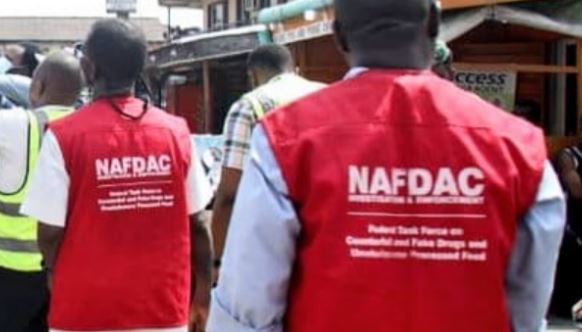
ABUJA — The National Agency for Food and Drug Administration and Control, NAFDAC, has called for collective efforts among government agencies, businesses and the public to tackle the circulation of counterfeit, adulterated and substandard products in Nigeria.
The Director-General of NAFDAC, Prof. Mojisola Adeyeye, made the call on Monday while briefing journalists on the agency’s efforts to address suspected counterfeit and unsafe products in circulation.
Adeyeye said the fight against counterfeiting could not be left to NAFDAC alone, urging Nigerians to report suspected counterfeiters and unsafe products through the agency’s official complaint channels.
“Counterfeiters are not ghosts; they exist within our communities, neighbourhoods, and business premises,” she said.
She said NAFDAC had established complaint channels, including a 24-hour call centre, through which members of the public could report suspected violations.
Adeyeye said the agency received more than 200 complaints monthly, adding that 225 calls were recorded through its complaint channel in August.
She said NAFDAC was aware of concerns over suspected adulterated, counterfeit, substandard and unsafe food products, including claims recently circulated on social media concerning yoghurt, palm oil, apples, soy sauce, olive oil, chicken, fish, water and beverages.
The NAFDAC boss, however, cautioned that social media allegations did not by themselves establish that a product was counterfeit, adulterated or unsafe.
She said credible claims should be subjected to scientific evaluation and regulatory investigation before conclusions were reached.
According to Adeyeye, food regulation covers the farm-to-fork chain, including processing, distribution, retail and food service, with different government agencies responsible for various aspects of the food safety system.
She said NAFDAC’s mandate, as provided under the NAFDAC Act and other relevant laws, primarily covered processed and packaged foods, including documentation, establishment inspection, product sampling and laboratory analysis.
“Under the NAFDAC Act and other applicable laws and regulations, any person engaged in the production, distribution, importation, exportation, advertisement, sale, or use of unregistered regulated products is acting unlawfully,” she said.
Adeyeye said the agency’s regulatory activities included compliance monitoring, post-market surveillance, complaint investigation, product verification, product withdrawal or recall and enforcement.
“NAFDAC takes credible reports of suspected counterfeit, adulterated, or unsafe food seriously,” she said.
She added that where violations were established, the agency would take appropriate regulatory action, including public safety alerts, seizure, recall, disposal of affected products and enforcement against those responsible.
Adeyeye said some products mentioned in recent public discussions did not fall exclusively under NAFDAC’s regulatory jurisdiction.
She cited apples, grapes, oranges and other imported agricultural produce, saying the Nigeria Agricultural Quarantine Service, NAQS, had responsibility for their regulation at the relevant stages.
She called for stronger collaboration among relevant agencies on food safety matters, noting that inter-agency cooperation was provided for under the National Policy on Food Safety and Quality and its Implementation Plan 2023.
NAFDAC tackles fruit ripening, food adulteration
Adeyeye also raised concerns over the use of chemicals in the artificial ripening of fruits, saying NAFDAC had been addressing the practice since 2018.
She said the agency had restricted the availability of calcium carbide through permits for its importation and clearance, while also engaging stakeholders through public enlightenment, workshops and training.
The NAFDAC director-general urged state and local authorities to strengthen monitoring of staple foods within their jurisdictions.
She said the agency had observed concerns over practices associated with the production, distribution and sale of palm oil, fufu and other staple foods.
“The adulteration of palm oil with azo dyes and other hazardous contaminants has been observed, particularly in palm oil packaged and presented in traditional forms.
“Fufu and other staple foods are also reported to be produced by adding bleach and other chemicals injurious to human health,” she said.
Adeyeye explained that NAFDAC did not have “direct and absolute regulatory oversight” over unbranded palm oil, fufu and other traditionally packaged staple foods sold in open markets.
She recalled that on May 18, the agency issued a statement on the safety and quality of bread following a laboratory investigation prompted by concerns raised on social media.
Adeyeye urged Nigerians to report suspected violations by visiting NAFDAC offices nationwide or using the agency’s electronic complaint channels, including its call centre.