
From Awareness to Action: GACC Training inspires accountability in Kumbungu District
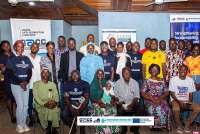
Beneficiaries of the Ghana Anti-Corruption Coalition’s (GACC) citizen engagement programme in the Kumbungu District of the Northern Region say the initiative has empowered them to demand accountability, monitor public projects and actively participate in local governance to help curb corruption.
During a refresher training at the OIC centre in Kumbungu, representatives of persons with disabilities (PWDs), assembly members, youth activists and traditional leaders shared how the anti-corruption training has transformed transparency and accountability in their communities.
A representative of the Persons with Disabilities Association in the district, Issahaku Mohammed Ussif, said that before participating in the training, members of the association were unaware that they had the legal right to be represented on the Kumbungu District Assembly Disability Fund Management Committee.
He explained that after learning about their rights, the association engaged the Social Welfare Department, which subsequently facilitated the inclusion of a PWD representative on the committee.
According to him, the development has significantly improved transparency in the management of the Disability Fund by ensuring beneficiaries have a voice in decisions affecting the allocation and use of the resources.
“We didn’t know that we needed to have someone representing us on the Assembly Disability Fund Management Committee to ensure the right things are done. After the GACC training, we engaged the Social Welfare Department and they agreed with us. We now have a representative on the committee. Before the training, the Assembly would allocate funds without consulting us or letting us know the total amount available. Now, with our representative on the committee, there is greater transparency and accountability.”
Mr. Ussif commended the Ghana Anti-Corruption Coalition for the initiative and appealed for similar training programmes to be extended to more communities across the country.
Assembly Member for the Nwogu Electoral Area, Hon. Abubakari Habib Wumpini, also credited the training with strengthening community oversight of public projects.
He said although he and members of his Unit Committee had always monitored government projects, the knowledge acquired through the 2025 GACC training has enabled them to conduct more effective monitoring to ensure contractors comply with quality standards.
He disclosed that community monitors recently compelled a contractor to suspend refurbishment works on a dilapidated school building at Mbanayili after detecting the use of substandard construction materials.
Hon. Wumpini added that the training has also empowered him to confidently request official documents from the District Assembly, thereby promoting transparency and accountability in local governance.
A youth activist from Tibung, Madam Asanatu, said she has been educating residents on the dangers of bribery and corruption while encouraging young women and girls to report cases of sexual abuse and other abuses of power.
She noted that many community members are now aware of the appropriate institutions for reporting corruption-related offences, including the Commission on Human Rights and Administrative Justice (CHRAJ), the Office of the Special Prosecutor (OSP) and other relevant state institutions.
Executive Secretary of the Ghana Anti-Corruption Coalition, Emefa Narteh, stressed that changing public attitudes toward corruption is essential to reducing the menace.
She urged participants to remain committed to integrity, noting that corruption continues to undermine national development and deprive citizens of essential public services.
Ms. Narteh assured participants that GACC would continue its advocacy efforts across the country and encouraged them to apply the knowledge they had acquired in their daily lives.
She further emphasised that fighting corruption is a collective responsibility and encouraged citizens to actively engage public institutions, including district assemblies, by demanding accountability and transparency.
Assistant Programmes Officer at GACC, Dorcas Affum Tenkorang, explained that the engagement was organised to refresh participants’ knowledge and reinforce the skills acquired during previous training sessions under the Strengthening Accountability, Rule of Law, and Institutional Responsiveness in Ghana (SARIS) project.
She said the project seeks to empower citizens, particularly women and persons with disabilities, to identify and report corruption while promoting community participation in governance.
According to her, the engagement also aims to equip participants with the skills to organise community sensitisation programmes and educate the public on corruption, accountability and available reporting mechanisms.
Ms. Tenkorang disclosed that similar engagements are being implemented in eight other districts across the country and urged participants to put their knowledge into practice by sharing it within their communities.
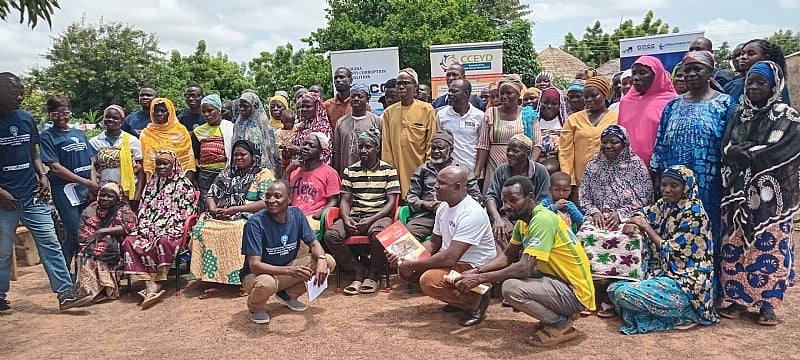
The Coalition as part of the training, held a community engagement at Kochim, a farming community in Kumbungu District designed to deepen participants’ understanding of corruption and its consequences, strengthen knowledge of citizen reporting mechanisms, build local capacity to promote transparency and accountability, and empower community members to lead anti-corruption awareness campaigns.
Speaking on behalf of the Chief of Kochim, Wulana Adam expressed appreciation to GACC for the initiative, describing the training as timely and beneficial.
He acknowledged that corruption remains a challenge within many communities but expressed optimism that the knowledge acquired through the programme would help residents identify, prevent and report corrupt practices, ultimately contributing to more accountable local governance.
The activities are being implemented by the Ghana Anti-Corruption Coalition (GACC) in partnership with the Ghana Centre for Democratic Development (CDD-Ghana) and Transparency International Ghana, with support from the European Union.