
Let’s move from promises to action on disability rights — Dr Apaak
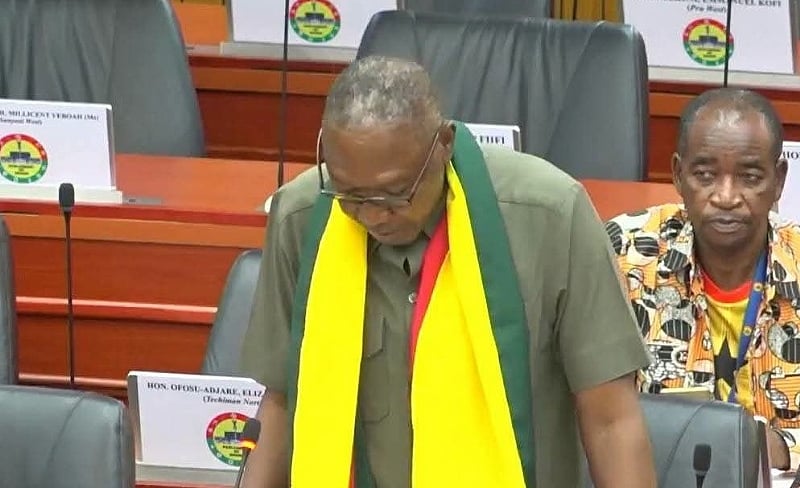
Chairman of Parliament’s Disability Caucus, Dr. Clement Abas Apaak, has called for urgent action to enforce disability rights and remove barriers that continue to hinder the full participation of persons with disabilities in Ghana.
He said the country must move beyond policy declarations and legislative commitments to practical measures that improve the lives of persons with disabilities.
The Builsa South Member of Parliament made the call on the floor while delivering a statement to mark the National Day of Persons with Disabilities commemorated on Tuesday, June 23.
“This year’s theme, ‘From Act to Action: Finalizing Reforms and Enforcing Disability Rights Now,’ could not be timelier. It challenges us to move beyond policy declarations and legislative intentions and focus instead on tangible outcomes that improve the lives of persons with disabilities,” he said.
According to him, more than two million Ghanaians are living with one form of disability, citing figures from the 2021 Population and Housing Census.
He noted that behind the statistics are people with talents, aspirations and skills who continue to face barriers in education, healthcare, employment, transportation and access to public services.
Dr. Apaak acknowledged that Ghana has made progress through the enactment of the Persons with Disabilities Act, 2006 (Act 715), and the ratification of the United Nations Convention on the Rights of Persons with Disabilities.
However, he said many persons with disabilities still encounter discrimination, exclusion and inadequate accessibility in public spaces.
The lawmaker stressed that disability inclusion should not be treated as charity but as a matter of rights, equality and justice.
“Disability inclusion must never be viewed as an act of charity or benevolence. It is fundamentally a matter of human rights, equality, and justice,” he stated.
The Deputy Education Minister urged stakeholders to promote accessible schools, workplaces, healthcare facilities, transportation systems and public spaces while ensuring that persons with disabilities are involved in decisions that affect their lives.