
Anthony Head made the flawed father figure impossible to hate
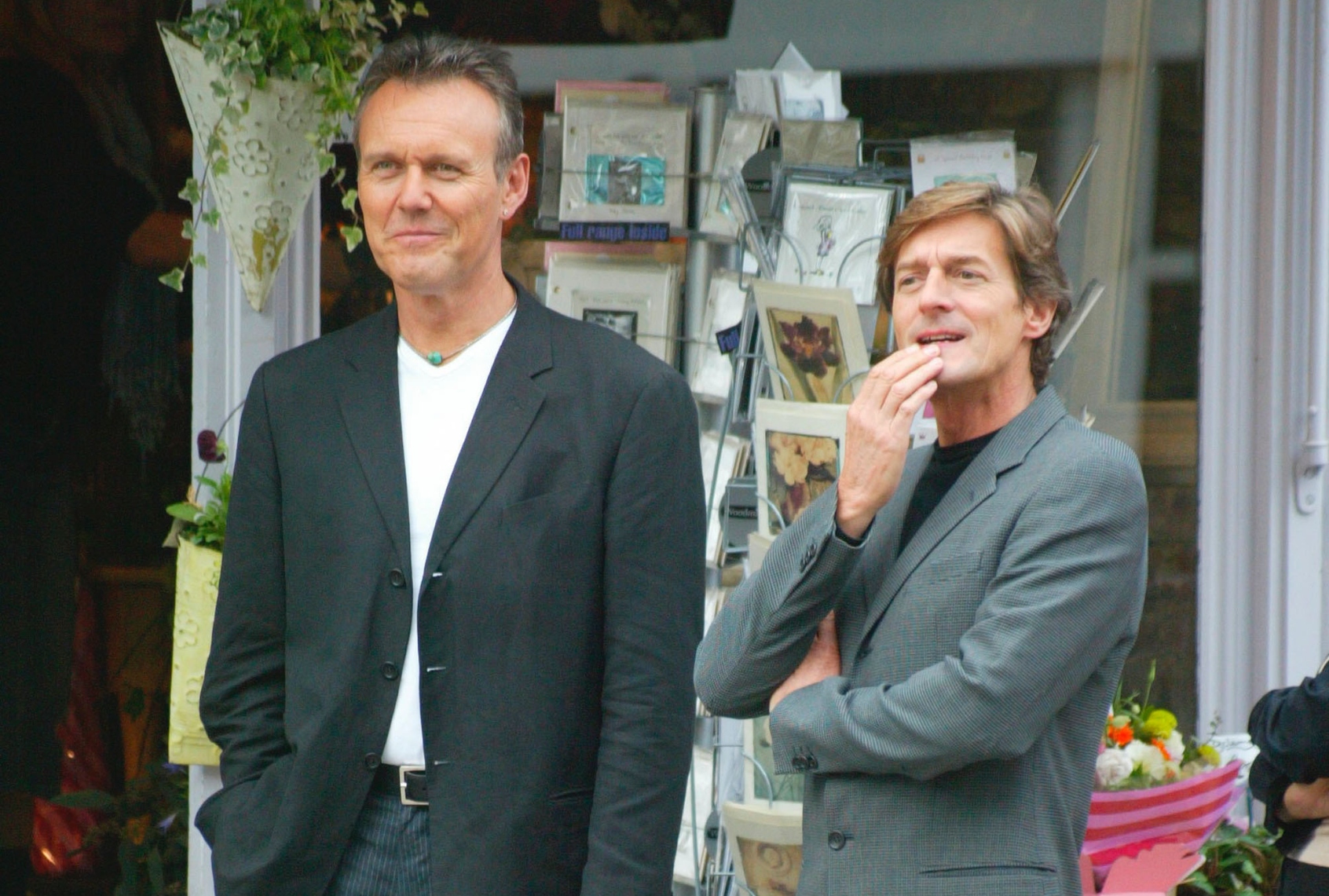
Grasping the essence of Anthony Head’s magnetism boils down to knowing the tale of two Ruperts.
There’s Rupert Giles, the tweedy Sunnydale High School librarian who mentored Buffy Summers on “Buffy the Vampire Slayer.” As the Slayer’s Watcher, Giles keeps Buffy battle ready, advises her and occasionally gives her a fatherly shoulder to cry on. He’s also an emotional anchor. Without him, as Buffy. Willow, Xander and the rest of the Sunnydale Scoobies discover in the show’s sixth season, the world starts to crumble around them.
No matter where Head turned up, whether expected or as a surprise, his presence lit a spark of familiarity, even delight.
And there’s the leering, preening Rupert Mannion from “Ted Lasso” — multimillionaire soccer team owner, inveterate philanderer and incurably vindictive divorcé. This Rupert’s talent for finding new lows is bottomless, but his main diversion is preying on those he views as weak. That includes Ted’s “Wonder Kid” assistant coach, Nate Shelley, a one-time pushover that Rupert seduces to the dark side to coach his new team, West Ham, which he buys expressly to pound the hopes of his ex-wife and her optimistic Coach Lasso into the dirt.
Since Rupert Mannion was played by the man who embodied Rupert Giles, it’s impossible to write him off as irredeemable. That isn’t the “Ted Lasso” way, for one thing, and it also contradicts everything Head conditioned us to expect from his characters, regardless of how terribly they behaved.
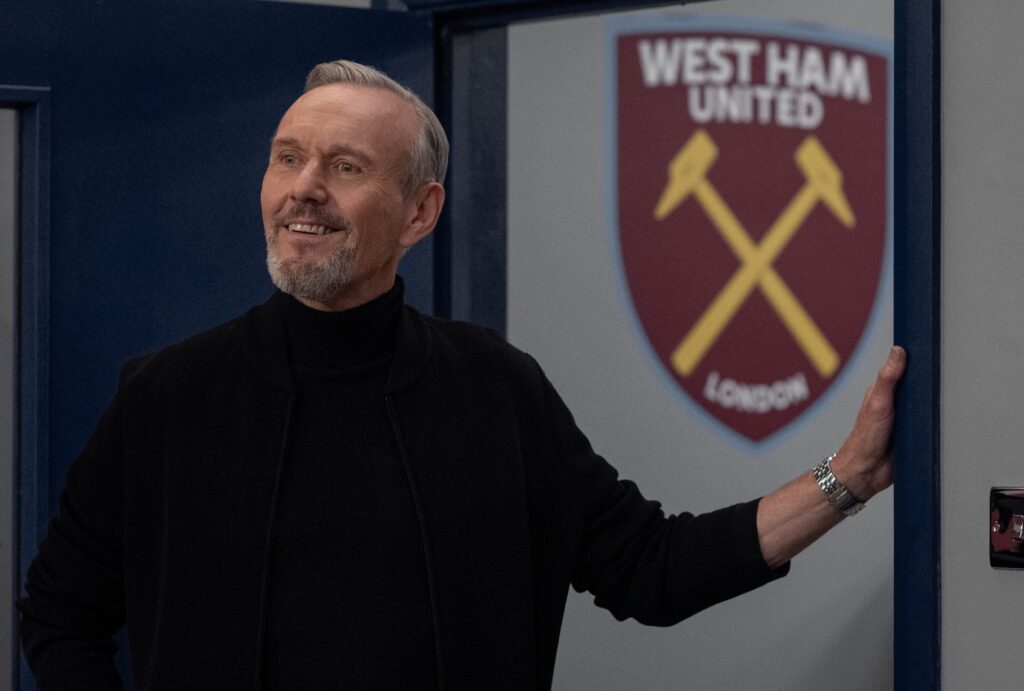
(Apple TV) Anthony Head
Head, who died June 1 at the age of 72, was the kind of actor we loved to see wherever he turned up. His charisma made him a worthy inheritor to the role of Dr. Frank-N-Furter in stage productions of “The Rocky Horror Picture Show,” which he reprised several times over the years. Early in his TV career, his purring voice and enchanting grin helped transform a string of coffee commercials into a serialized love story. More recently, he appeared as a lord in “Bridgerton.”
No matter where Head turned up, whether expected or as a surprise, his presence lit a spark of familiarity, even delight. That was even true in features commonly thought to be unwatchable.
Shortly after his death, people mounted casual watching parties linked to, of all titles, “Repo! The Genetic Opera,” a 2008 rock musical-meets-Grand Guignol from “Saw” director Darren Lynn Bousman. Head plays a protective father, Nathan, who is forced to repossess people’s organs by hunting them down and vivisecting them, crooning his conflicted feelings in a velvety baritone all the while.
“Repo!” is about as far from a quality film as one might push that definition. Nevertheless, Head fully commits to his character’s self-loathing, which he endures to shield his daughter from the nastiness of their dystopian surroundings.
I’ve no doubt that Head signed on to that gore circus for the fun of it and out of a desire to shake up his image yet again. Still, regardless of who he played in the years following “Buffy” or how odiously that character behaves, Giles was never far from our minds, especially as we matured and increased our emotional distance from Sunnydale.
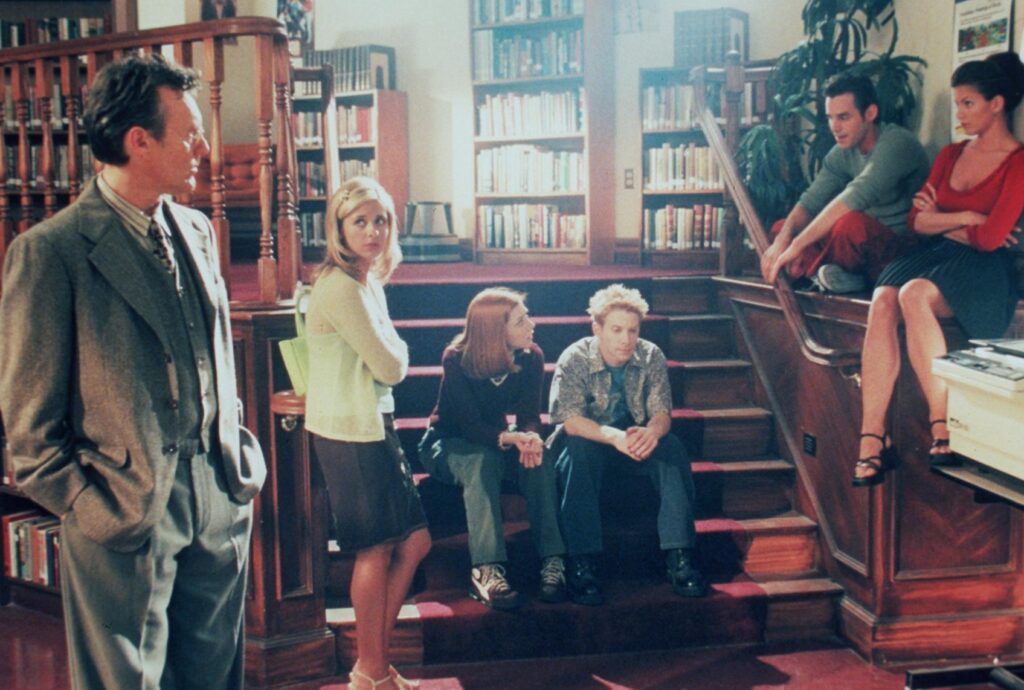 (Courtesy of Getty Images)
In the ‘80s and ‘90s, Head co-starred in a slow-to-boil romance that played out in a series of instant coffee commercials, of all things. In Nescafé’s serialized Gold Blend romance, which aired in the U.S. as the Taster’s Choice saga, he brewed up the romantic hero almost too well.
“He’s clearly sick of talking about the ads, purring ‘God bless you’ to a reporter for not beginning an interview with a barrage of Taster’s Choice questions,” noted a San Francisco Chronicle reporter who spoke to him in 2002.
A portion of the “Buffy” fandom thought of Giles as a smokeshow.
Because of that popular campaign, a portion of the “Buffy” fandom thought of Giles as a smokeshow on top of appreciating his vision of what being the only adult in the room looks like. In that capacity, Head cemented Giles in our minds as a positive father figure without meeting the strict definition of a TV dad. Plus, his performance let us in on the secret most grown-ups know: that many seemingly stiff people have at least flirted with teen degeneracy.
Giles has a past so brutal that it was nearly enough to build a spinoff around it, as Head hinted by wearing an ever-present hint of exhaustion and despair on his skin. The Sunnydale gang fought monsters and demons, even dating a few. Meanwhile, when he was their age, young Giles, nicknamed Ripper, terrorized London by summoning hell spawn for fun. (Alas, “Ripper” never evolved beyond the development stage.)
Within a show built on parable and metaphor, Head’s librarian showed us that the gentlest men might hide a well of anger – and that bottled-up capability can be tapped to keep the souls of those they care about spotless. That was never far from our minds and never made Head’s signature persona any less heroic, just more human.
While Head’s portrayals of Uther Pendragon on “Merlin,” or a ruthless senator on “Dominion,” kept his association with his genre fandom going strong through the aughts and 2010s, his ensemble work in 2002’s “Manchild” poured his sensual commercial persona into the mold of a strutting midlife crisis. James is a dentist who launches into his 50s by divorcing his wife and oozing into his sleaze era, chasing younger women and undergoing penile enhancement surgery to cure his performance issues.
The BBC Two series was too caustic to last for more than two seasons. Those of us who faithfully watched “Manchild” enjoyed it because of its brutal, validating portrait of badly behaved men of a certain age and the way it humanized characters like James by forcing them to deal with the consequences of their relentless tomcatting around. James is wealthy and a good time in limited amounts, but he’s also insecure and only fitting company for his three most loyal male friends.
“[Ultimately], it’s about how there is a little boy in all men, much to the chagrin of women who have to put up with them,” he told the Chronicle in that 2002 interview, not realizing how aptly it would explain one of his last unforgettable characters — the other Rupert, introduced to us 18 years later in “Ted Lasso.”
Want more from culture than just the latest trend? The Swell highlights art made to last.
Sign up here
Rupert Mannion is a creature of corrosive spite, lording his recent divorce over his ex-wife throughout Season1 and popping around to cut her back down to size whenever she seems to be doing well.
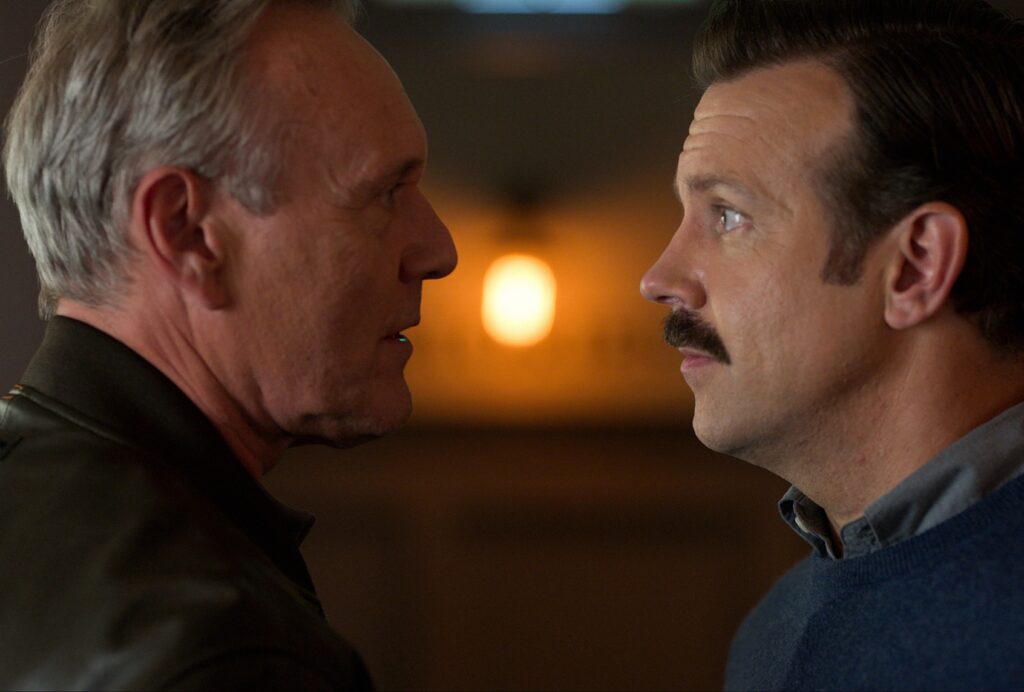
(Apple TV) Ted Lasso
In those moments — indeed, every time Head chews the scenery as this toxic villain — he shows us someone who’s more broken than purely evil, which means we can never entirely take our eyes off him. That is, until his selfish acts rebound on him at the end of Season 3, when his new wife divorces him and his televised assault on his own team’s manager makes him a pariah in the sports world.
Head was nothing like that fiction, demonstrated in the many remembrances that are still circulating in the wake of his death, which follows that of his wife, Sarah Fisher, by a matter of months.
“We know how dearly he will be missed by friends, colleagues, and fans of the shows he was in,” said his daughters Emily and Daisy Head in an official statement released on June 5, adding, “[He] loved his job very much, and he always considered himself incredibly lucky, to have been able to work alongside such exceptionally talented people, in such wonderful productions, across a career that spanned several decades.”
That includes nearly 30 years bookended by figures we’ll never forget, along with the star who made them real parts of our lives.
Read more
about this topic