
“I Shot Andy Warhol” channels our rage
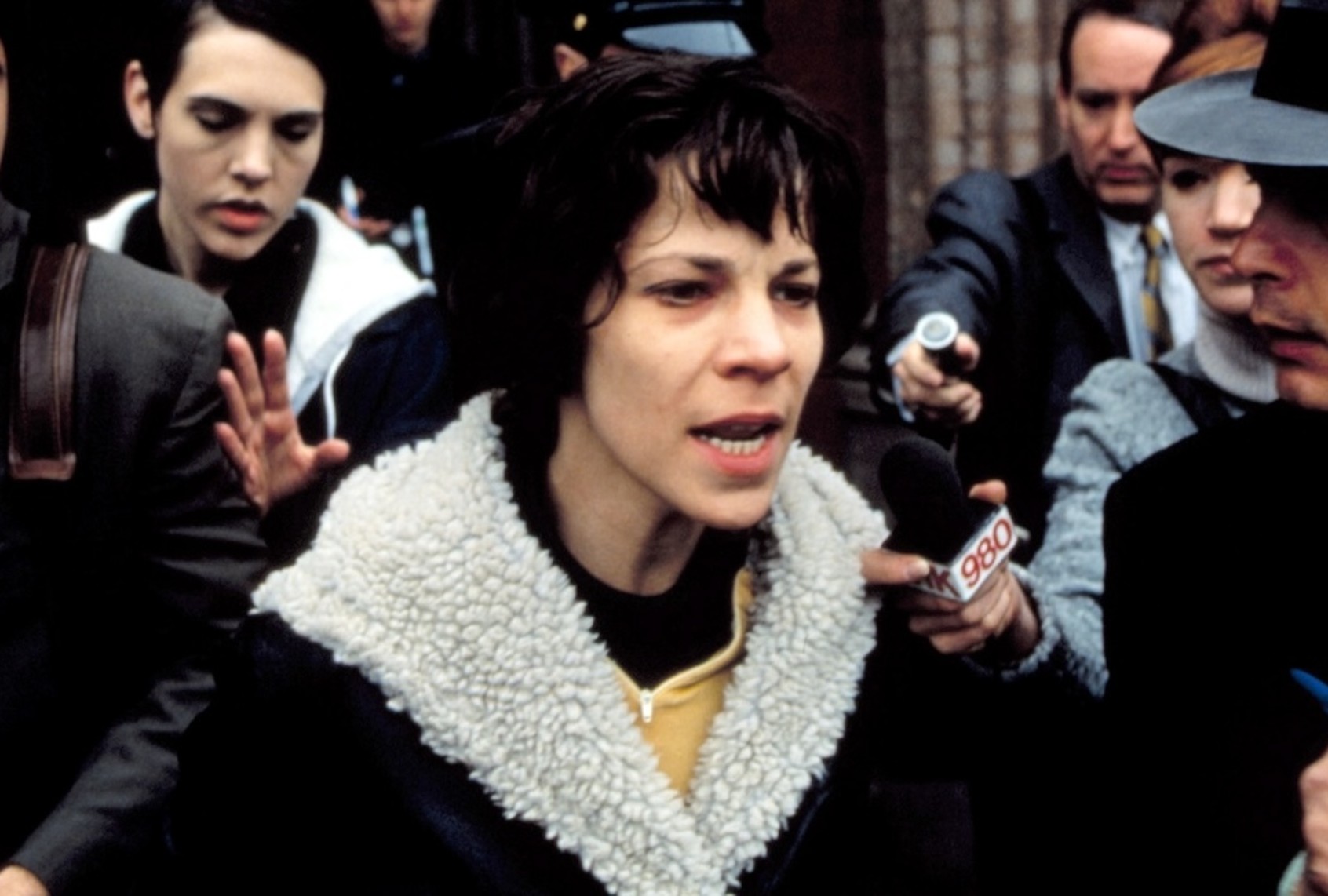
When asked by reporters why she hated prolific pop artist and filmmaker Andy Warhol enough to shoot him with a pistol, Valerie Solanas — one of the many young, destitute and desperate people fading in and out of Warhol’s glamorous circle — simply replied, “Because he’s him.” Later headlines would say that Solanas believed Warhol “controlled her life” and that he had “legal claim” over her self-published writing, which she frequently badgered him to read. By all accounts, Solanas was furious with Warhol for refusing to produce her written works for the stage or screen. That assumed motive would follow her until she died in 1988, and beyond, making Valerie Solanas permanently synonymous with the patriarchal idea of the disgruntled woman.
But examined more broadly, Solanas’ reasoning speaks to her belief in the collective futility of men. “Him” is not just Warhol, but all men — members of society obsessed with power and sex, and so deeply afraid that they’ll never have either ever again that their fear turns them into sniveling children or violent animals. Warhol might’ve been different, seemingly unique in his performance of manhood. But when it all came down to it, at least for Solanas, he was just another man ruled by his sex, generous only when it benefited him, and withholding whenever something didn’t.
Versions of these ideas appear in Solanas’ famous “SCUM Manifesto” (a would-be acronym for “Society for Cutting Up Men,” though Solanas denied that definition), a scathing and brilliant work that became a critical feminist text overnight. Some see “SCUM Manifesto” as a straightforward parroting of Solanas’ philosophy; others view it as a satirical riff on Freud’s concept of “penis envy,” which argues that women covet the male sex organ and see their own as a mistake of biology. In the manifesto, Solanas flips Freud’s theories to argue that men are weak-minded because their second X chromosome is incomplete, and thus, their organic makeup makes them inferior beings. “Life in this society being, at best, an utter bore and no aspect of society being at all relevant to women, there remains to civic-minded, responsible, thrill-seeking females only to overthrow the government, eliminate the money system, institute complete automation and destroy the male sex,” Solanas wrote in the self-published issues of “SCUM.”
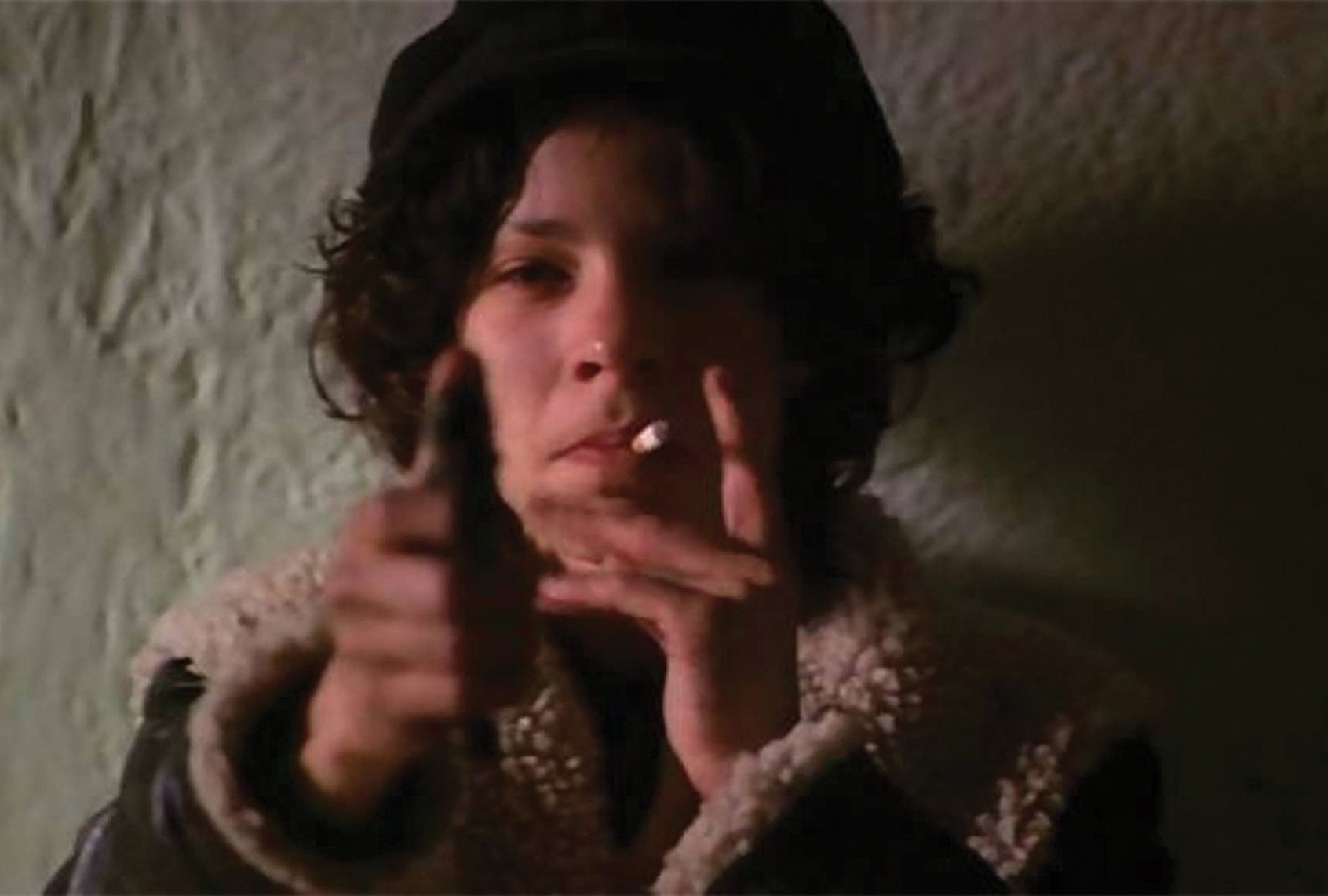
(Courtesy of Killer Films) Lili Taylor as Valerie Solanas in “I Shot Andy Warhol”
“I Shot Andy Warhol” characterizes Solanas in a way that neither the press nor her manifesto could. Harron asserts that Solanas’ actions were not the result of a brief, blind rage, but of a chronic discontent — a state of mind that looks all the more familiar two decades later.
The problem with being catapulted to an instant tabloid sensation for violent acts of radicalism is that the violence is all anyone wants to look at. Understandable, considering the sensational world we live in. But reducing extreme ideas to their brutal implementation ignores all the events that precede the bullet. In the late ’60s, the media portrayed Solanas as just another radical member of the divisive second-wave feminist movement taking hold in America. To the press and the people, she was a disturbed lesbian, a failed artist and/or a symbol of extremism’s fallibility.
In the decades since, not much has changed. Look at Luigi Mangione, whose alleged assassination of UnitedHealthcare CEO Brian Thompson resulted in more conversations about his appearance than his motives. Mangione’s reasons succinctly reflect a society where consistently reliable healthcare is a virtual impossibility without millions of dollars at your disposal. And yet, the thoughtful op-eds written in the wake of Thompson’s death were buried by Google searches for “Luigi Mangione shirtless.”
Want more from culture than just the latest trend? The Swell highlights art made to last.
Sign up here
Smack in the middle of sensation and observation is Mary Harron’s trailblazing debut film, “I Shot Andy Warhol,” released 30 years ago this month, with a timely restoration rolling out theatrically this summer. Unlike so many retellings of famous assassinations, attempted or otherwise, Harron’s movie gets to the heart of its subject’s discontent without dwelling on dramatizations of Solanas’ fragile psyche. It’s compelling, but not overblown, unconcerned with convincing the viewer that the film knows anything more intimate about Solanas than is readily available through a bit of old-fashioned research. Instead, Harron engages with Solanas’ work inside the context of the world in which Solanas created it, depicting her with far more empathy than the tabloids ever afforded. “I Shot Andy Warhol” characterizes Solanas in a way that neither the press nor her manifesto could. Harron asserts that Solanas’ actions were not the result of a brief, blind rage, but of a chronic discontent — a state of mind that looks all the more familiar two decades later.
Written with clear compassion and boasting a robust performance by Lili Taylor, “I Shot Andy Warhol” portrays Solanas as a product of modern alienation. Neglected by her mother and abused by her father and grandparents, Valerie escapes a tormented childhood with a matter-of-fact worldview that lends itself to her eventual collegiate study of philosophy. To be a great philosophical mind — that is, someone who can convince others of their beliefs about the human mind and our larger nature — one must also be a salesperson. It’s not enough to come barrelling into a conversation with a long-winded explanation of your personal dogma; you must also confidently push the value of those ideas, too.
Valerie’s problem lies in her approach. She’s forward and caustic, with a sharp wit and a hefty Jersey accent that doesn’t exactly scream “therapist’s office” — unless your therapist is Dr. Melfi from “The Sopranos,” in which case, lucky you. Valerie has no intention of disguising her sexuality or performing femininity, and that idiosyncrasy points her toward New York’s bustling art scene, where anyone can be as weird as they like, as long as they’re willing to pay the cost. For Valerie, the price is bouncing between cheap community houses and sleeping on the street, where the bleak conditions further mold Valerie’s nonconformist personality. Valerie’s worldview is reflected every time she engages in sex work for meager pay or tries to peddle her writing, getting almost nothing in return. Practically every man she meets proves himself a reliable vendor of disappointment.
That is, until she meets Warhol (Jared Harris) muse Candy Darling (Stephen Dorff), who introduces Valerie to the man who could change her life. Warhol’s a radical like she is, choosing to move away from the pop art that made him famous toward experimental films. It seems an ideal match. But Warhol is fickle and finicky. When he’s not pretending to entertain Valerie’s writing, he’s refusing it altogether, treating her like someone whose time is a far less precious resource than his own.
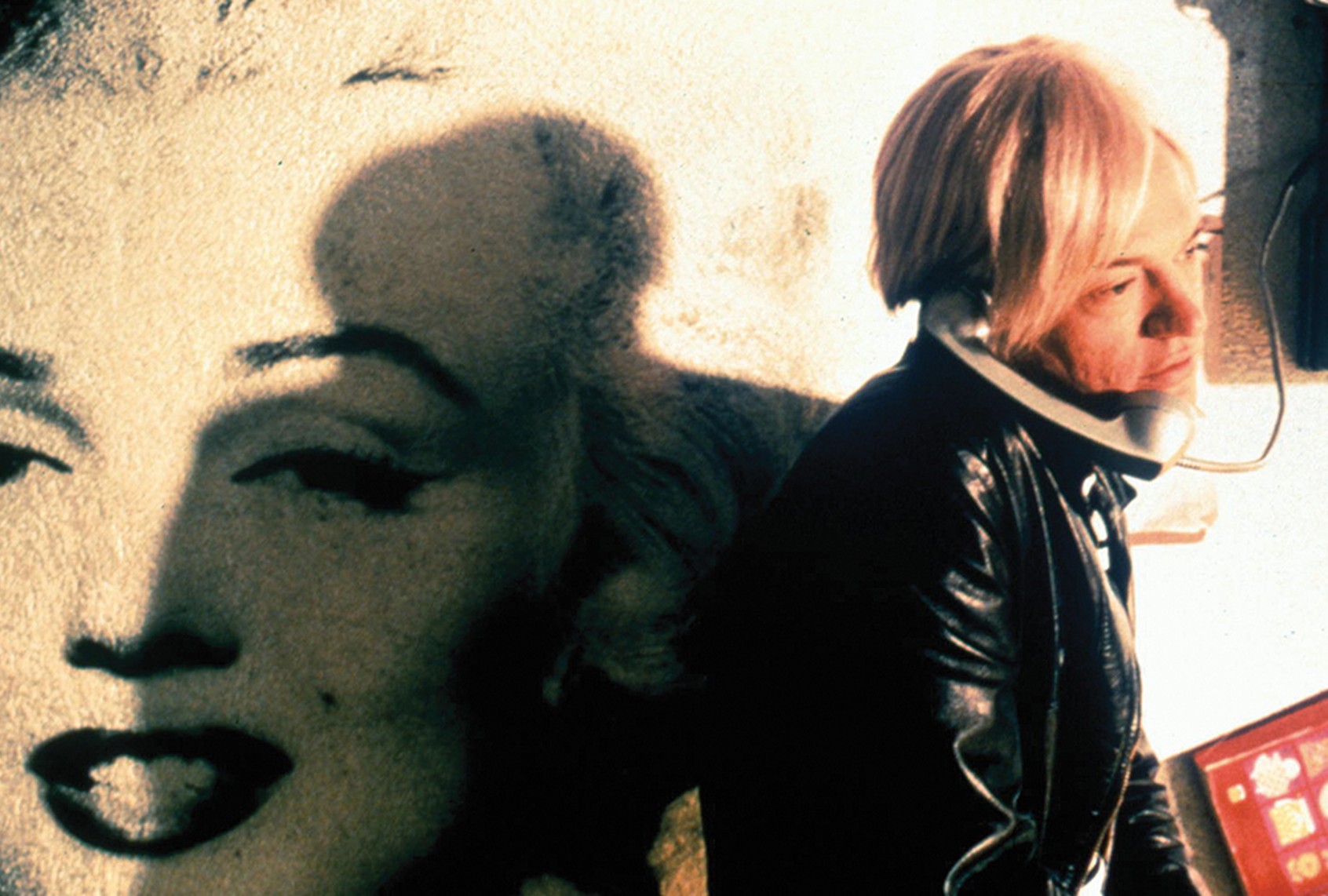
(Courtesy of Killer Films) Jared Harris as Andy Warhol in “I Shot Andy Warhol”
Harron’s depiction of Warhol’s studio, the Factory, removes the air of glitz that it’s so often remembered with. In her vision, Warhol’s Factory is a literal assembly line, where actors and artists come to be molded and assembled into products, only to be cast out when they’re deemed defective. His art, as fascinating as it is, is tinged with a type of patriarchal violence invisible to the naked eye. Only Valerie and those who get an intimate look can see the casual savagery in Warhol’s practice. To her, it’s a shock. Even a seemingly progressive and auteur-minded artist — someone whose existence as a gay man within a heterosexual society should ostensibly negate the patriarchy’s cruelty — can still, at his core, subscribe to a man’s ethos.
Solanas’ attempted murder wasn’t so much altering the rules as it was a refusal to play, smacking the game board off the table, sending fake money and movable pawns flying everywhere. Was it wrong? Sure. But was it justified? That’s what “I Shot Andy Warhol” wants the viewer to ascertain.
Why wouldn’t a realization like that produce a vicious rage? It’s only rational to be angered by someone who isn’t who they say they are, who doesn’t uphold the values they purport to champion. Lies, deceit and manipulation might be the core principles of our modern world, but that doesn’t make them any less infuriating. If the president doesn’t have to follow the constitution he swears to abide by, or a healthcare CEO doesn’t actually prioritize care and health for his customers, or an artist treats his subjects with all the dignity of a worn-out paintbrush, how can anyone be expected to respond with anything less than pure wrath? “I Shot Andy Warhol” represents Solanas’ actions as extreme, but it also sees her attempted assassination as nothing short of logical. “Violence today is in the air everywhere,” a woman at the Factory tells a reporter at the outset of the film, just after Warhol is shot. “Andy got hurt in the big game of reality.”
A game, that’s all it really is. Every war, every battle of the sexes, every disagreement, all produce new casualties in a big, cosmic contest we’re all forced to participate in. The rules are simple and must be followed, except when they change, which is often. Solanas’ attempted murder wasn’t so much altering the rules as it was a refusal to play, smacking the game board off the table, sending fake money and movable pawns flying everywhere. Was it wrong? Sure. Was it the product of the patriarchy’s crushing heel? Definitely. But was it justified? That’s what “I Shot Andy Warhol” wants the viewer to ascertain.
In the decades following Solanas’ crime and years since Harron’s film was first released, the world has only proven to be a more difficult place to live, let alone find success. We live in a time of looksmaxxing and genetic hacking, of self-obsessed incel culture mirroring a man’s cowardice, which he, in turn, willingly shows off to the public. It’s far easier now to recognize the evil that men do, and the violence that their power innately perpetrates.
But what an ideal moment for a film like “I Shot Andy Warhol” to be restored and rereleased, when Solanas’ life and words deserve the complex reconsideration that Harron’s movie affords them. Whether seeing a film like this in a theater will do any more than remind audiences how little things have changed is debatable. But there’s something to be said for seeing your rage reflected on the screen. When she pulled a gun on Warhol, Solanas’ type of radicalism was only starting to take root in the culture. She was still isolated, pushing her views to people and hoping they’d stick. “I Shot Andy Warhol” might not be able to make “SCUM Manifesto” a reality, but it could at least make a life spent toiling under the patriarchy that much less lonely.
The 4K restoration of “I Shot Andy Warhol” opens June 12 at New York’s IFC Center, with a national rollout to follow.
Read more
about feminist rage in film