
Steven Soderbergh’s AI contradiction
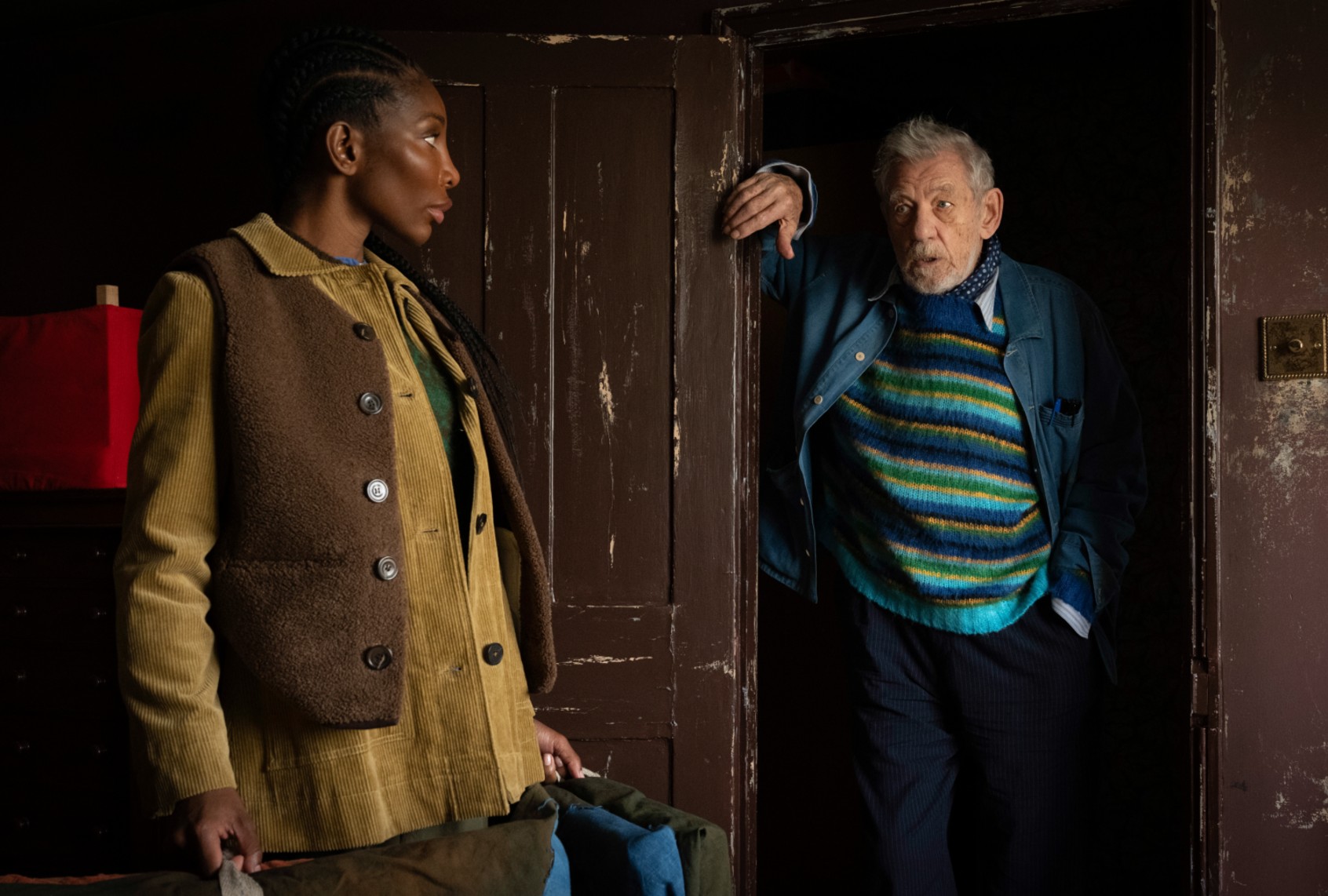
Steven Soderbergh is a man of both expedience and innovation. In the last 15 months, he’s had three films in theaters — “Presence,” “Black Bag” and now, “The Christophers” — all with their own unique directorial style and individual ambitions. “Presence” was a ghost story about teenage loneliness, filmed from the perspective of a spirit haunting the house a grieving family has just moved into. “Black Bag” tore up spy movie conventions with its emphasis on fidelity in the field, becoming one of the genre’s most scintillating new films in years. And with “The Christophers,” Soderbergh unhurriedly wades through the art world with a sweet tale of a fading painter, Julian Sklar (Ian McKellen), and his new assistant, Lori (Michaela Coel), who’s been covertly hired by Julian’s children to finish (aka forge) the last of his most beloved series of portraits.
Throughout the film, the question of what gives art its value appears in several forms, challenged by Lori and Julian when their initially stilted working relationship transforms into something more intimate. As they grow closer, Lori wonders if the difference between restoration and forgery becomes moot when the person working to complete a half-finished work of art, in the original artist’s style, is doing so with the artist’s blessing. The film, written by Soderbergh’s frequent collaborator Ed Solomon, quietly asks the questions confounding creatives in the tech-obsessed age. For those concerned that artistic prowess is being deprioritized for AI, and filmmaking might soon become just another piece of content creation, left to fight for its existence in a sea of vertical videos, “The Christophers” is a modern and compelling interrogation of the future.
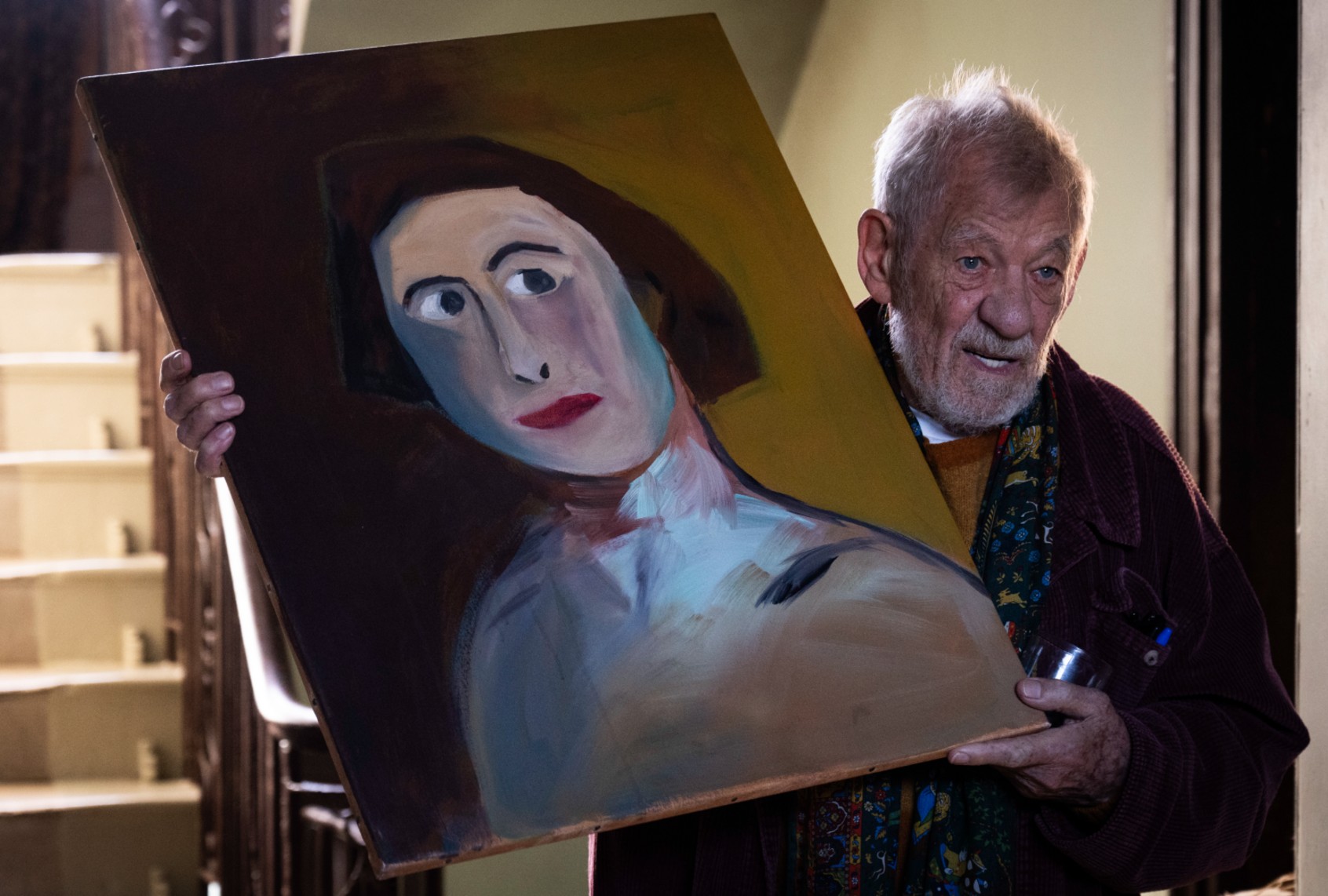
(Claudette Barius/NEON) Ian McKellen in “The Christophers”
By being so willfully averse to acknowledging the ways AI and art conflict — not to mention its ramifications for others in his industry — Soderbergh’s take on an artist losing his touch in “The Christophers” is disappointingly apt.
Ironically, the film’s release is frustratingly soured by recent comments Soderbergh has made about generative AI. In an interview with Filmmaker Magazine, Soderbergh revealed that he’d been “working with AI lately” on an upcoming documentary about John Lennon and Yoko Ono, using genAI programs to create dreamlike imagery that evokes its subject’s philosophical musings. “AI has been helpful in creating thematically surreal images that occupy a dream space rather than a literal space,” Soderbergh said. “And it’s been really fun because you need a Ph.D. in literature to tell it what to do.” Soderbergh relented that generative programs require “very close human supervision,” before going on to admit that he’s also using “a lot of AI” for an upcoming film about the Spanish-American War, to generate images of archaic warships and God knows what else.
Anyone who’s followed Soderbergh’s filmography, even tangentially, may not be surprised by the director’s affinity for AI. Throughout his career, Soderbergh has sought out new technology and filmmaking techniques to play around with, lending his work an exciting sandbox quality where anything goes. His 2018 film “Unsane” was among the first widely released theatrical films to be shot on an iPhone. “Presence” and his television show “Mosaic” utilized unique storytelling formats, with the latter co-released as an app that allowed users to choose which perspective the story was told from.
But just because Soderbergh jumping at AI could be seen from a mile away doesn’t make it any less disappointing, nor does it excuse his reluctance to thoughtfully engage with others’ criticisms about the technology. If “The Christophers” is to be believed, art that tries to imitate a certain style is little more than hollow, emotionless posturing. Generative AI is the same: mere mimicry, devoid of the humanity that makes art . . . well, art. And by being so willfully averse to acknowledging the ways AI and art conflict — not to mention its ramifications for others in his industry — Soderbergh’s take on an artist losing his touch in “The Christophers” is disappointingly apt.
When Lori first begins her work with Julian, she’s tasked with locating the unfinished series of Christopher portraits, using what’s already on the canvas to complete the paintings so they’ll have more monetary value after his death. Julian began the series in the early ’90s after coming out, dedicating his work to his lover, Christopher. The paintings were a massive hit, catapulting Julian to a new echelon of fame, but isolating Christopher and ultimately driving him away, leaving the third and final series incomplete. Julian’s children, Sallie (Jessica Gunning) and Barnaby (James Corden), intend to use the money from Lori’s forged Christophers as their inheritance, offering her a cut of the final sum. For an artist like Lori, who works part-time at a Chinese food truck while painting and writing art criticism on the side, the job is both a dream and a nightmare. She and Julian have a past (unbeknownst to him), and working alongside him is bound to be uncomfortable. It is, however, a novel use of her forgery skills, and an assignment she’s too curious to pass up.
But Lori soon learns that the situation is more complicated than it seems. Julian wants to destroy the unfinished Christophers, but can’t bring himself to douse the canvases in kerosene and light the match. They’re too important to him; not just because they’re his most respected works, but because they represent a time when the world was at his fingertips. Love was new and delightfully consuming. It inspired him like never before. But after Christopher left, Julian became a shell of his former self — a cantankerous curmudgeon, known more for his Simon Cowell-esque criticism on the long-running reality show “Art Fight” than his work. Now, he’s relegated his studio space to a spot for recording Cameos, perched in front of a ring light rather than an easel.
Want more from culture than just the latest trend? The Swell highlights art made to last.
Sign up here
As it turns out, what Julian really needs is the motivation that Lori’s tough spirit provides. In her company, Julian sheds most of his ego, engaging in intellectual tête-à-têtes about his past works and whether a forgery can ever really capture an artist’s intention and energy. Together, Julian and Lori discover that there’s an art to becoming someone else, an authenticity that can only be achieved by a symbiotic relationship where one creator has the other’s blessing.
With generative AI, that kind of approval isn’t necessary. The largest genAI programs like Grok, OpenAI, ChatGPT and Claude are trained on vast amounts of third-party data, including but not limited to text, images and films. These programs scrape hundreds of hours of painstaking, human-made art to replicate the style of an artist on a whim, so users who have been dying to see themselves “drawn” in Studio Ghibli style, or “dressed” like a Wes Anderson character, can live out their fantasies for one fleeting moment.
On a larger scale, AI data centers are at the forefront of local protests and environmental concern, with the megaprojects polluting acres of once peaceful land, using up precious resources and driving up electricity prices. And then there are the ramifications of AI in creative spaces. Just this week, Disney announced sizable layoffs under the guise of “streamlining operations,” canning a large percentage of Marvel’s award-winning visual effects team that has been with the studio for years. Fans suspect that by “streamlining,” execs mean that they’re working on ways to integrate AI, which wouldn’t be a shock considering Marvel’s reputation for overworking its effects teams.
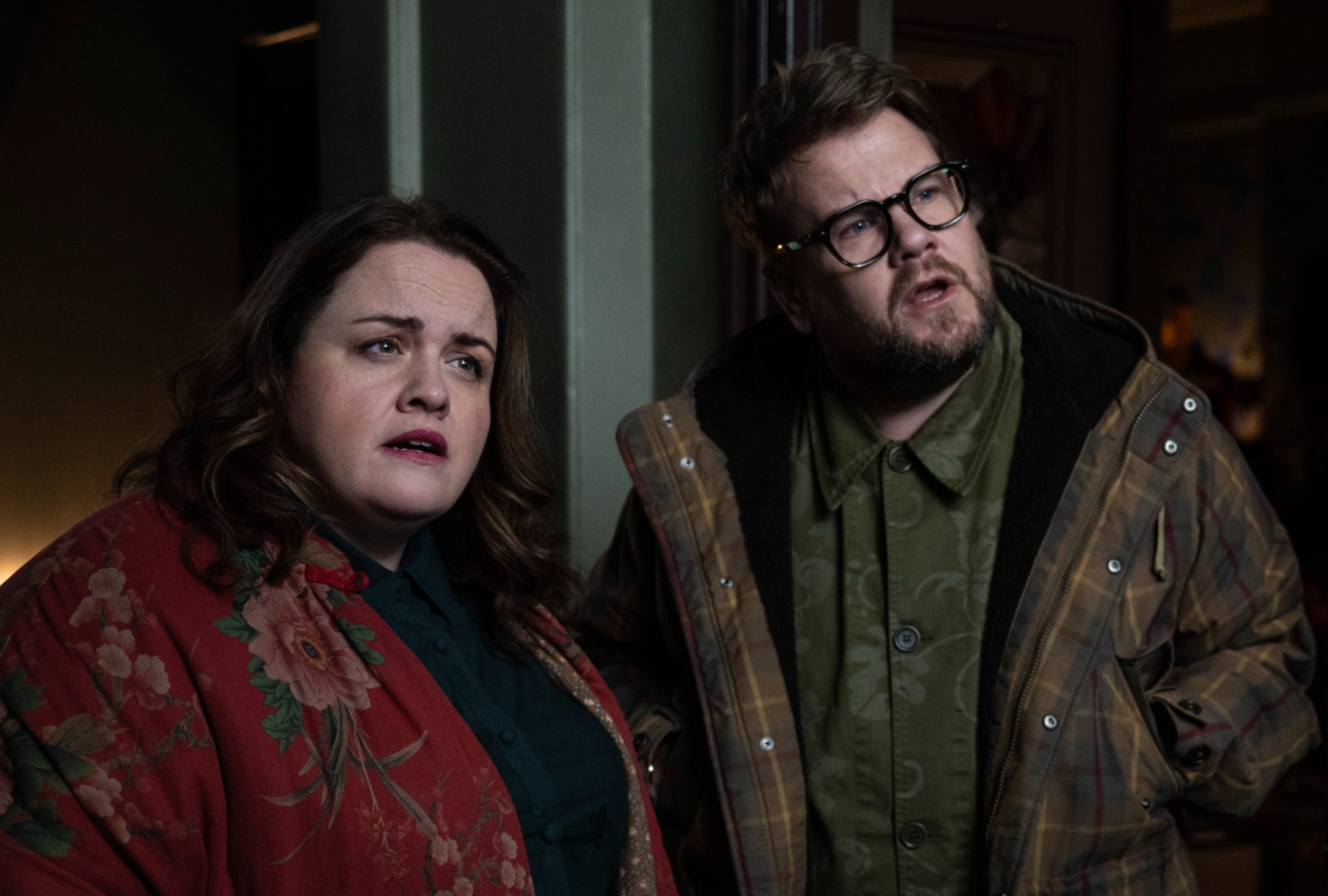
(Claudette Barius/NEON) Jessica Gunning and James Corden in “The Christophers”
In a follow-up chat with Variety, Soderbergh expanded on his initial comments about using AI in future films. “I’m just not threatened by it . . . Ten years ago, I would have needed to engage a visual effects house at an unbelievable cost to come up with this stuff,” he said. “No longer. My job is to deliver a good movie, period. And this tool showed up at a moment when I needed it. I don’t think it’s the solution to everything, and I don’t think it’s the death of everything . . . There are some people that I have absolute love and respect for that refuse to engage with it. That’s their privilege. But I’m not built that way. You show me a new tool, I want to get my hands on it and see what’s going on.”
Therein lies the multitude of problems with using generative AI for mainstream theatrical filmmaking, and Soderbergh’s myopic reasoning for implementing it. To not be threatened by the influx of AI in creative spaces is to speak from a place of immense privilege. Soderbergh has his legacy and his name. They already mean something, and that isn’t likely to change. But for below-the-line creatives who work in the technical side of filmmaking, or screenwriters trying to sell their scripts, the threat of AI — or, rather, how quickly executives are to defer to AI to cut costs — is very real.
As genAI has proliferated creative spaces over the last few years, its rise has been accompanied by the strange, baseless idea that people have a creative imperative to try out new technology, which is nothing more than smoke and mirrors to cloud a lack of moral character.
Yes, Soderbergh would’ve needed to hire a VFX team to produce images of a Spanish warship. And sure, it may have been expensive. But I don’t buy that money was a barrier for entry for a director whose net worth is closing in on $100 million, nor do I think there aren’t far more interesting and artful ways to get around the problem of grand filmmaking on a budget. For “The Testament of Ann Lee,” Mona Fastvold shot a stunning, highly choreographed sequence onboard a real Swedish ship, all while clinging to a limited budget of $10 million. When filmmakers harness real, creative ways to bring their visions to life over technological shortcuts that diminish the skill and value of visual effects artists, that’s when movies leave us awestruck. The craft is part of what gives cinema its merit. There’s no marvel in something created by feeding a prompt to a genAI program, never mind that 99% of the time, the result looks revolting and unnatural.
At a pivotal point in “The Christophers,” Lori explains how she can see that Julian was phoning it in during his later series of the titular paintings. To the naked eye, they may have looked similar. But peer a little closer, and one could see that the brushstrokes lost their consistency and that the lines were harsher, more aggravated. These Christophers were the result of Julian trying to copy his own style, to regain the ebullient spark lost after his muse left his side. “The lightness was forced, and the joy was a lie,” she tells him. To put it plainly: Julian’s imitations lacked the vivacity that made his art unique, resulting in an uncanny dissonance between idea and result.
As the characters debated, a similar conversation sprang to mind. A few years back, I stopped into my favorite vintage poster shop to splurge on a 1987 one-sheet for “Fatal Attraction,” designed by Polish artist Maciej Kalkus. It was expensive, but worth every penny — a beautiful, abstract rendering of the film’s themes, displayed in a bewitching graphic style I couldn’t get out of my mind after coveting the poster online. More recently, I was asked why I didn’t just buy a reprint online for cheap, and momentarily balked at the question. To me, the poster’s value comes from its age and its story. The paper has yellowed with age, and its creases remind me that, at one time, someone folded it up after the movie finished its run in Polish theaters, uncertain of where it would end up next. But for a while, it was admired, maybe even adored by onlookers. It traveled the world to end up in my home. A reprint wouldn’t have any of that history. It would simply be a copy, made to make money instead of telling a story.
During “The Christophers,” as I weighed the film’s discussion of authenticity against Soderbergh’s views on AI, I thought of his words, “You show me a new tool, I want to get my hands on it and see what’s going on.” As genAI has proliferated creative spaces over the last few years, its rise has been accompanied by the strange, baseless idea that people have a creative imperative to try out new technology, which is nothing more than smoke and mirrors to cloud a lack of moral character. Artificial intelligence isn’t akin to the forced switch from film to digital projection; no one is demanding that filmmakers of Soderbergh’s caliber incorporate AI into their process.
But what AI does present is a choice between authenticity and convenience, ideas and creative sterility. As Lori and Julian near the end of their time together, they begin to understand that, with patience and a human touch, the Christophers can be finished without being forged. Time revealed a path forward that doesn’t demand artistic debasement. The easiest option isn’t the best one, after all. Here’s hoping Soderbergh realizes that, too.
Read more
about films that spark creativity