
World set to breach 1.5C climate limit as UN urges rapid reversal

The UN Environment Programme (UNEP) said the 1.5C threshold was the more ambitious goal countries agreed to pursue under the 2015 Paris climate agreement, alongside a commitment to keep warming well below 2C.
Average global temperatures have already risen by about 1.4C above pre-industrial levels.
Current national climate policies and trends would put the planet on course for around 2.6C of warming by the end of the century, the report said.
Once warming exceeds 1.5C, “there are no good outcomes”, UNEP executive director Inger Andersen told journalists. Despite the expected breach, the target “is still the goal”, she said.
Farm workers face a ‘double-edged sword’ of extreme heat and pesticides
The long way back
The UN is calling for an “overshoot, peak and decline” pathway – limiting how far temperatures rise above 1.5C, keeping the period above that level as short as possible and then bringing them back down.
“We must make the overshoot as small and short as possible,” UN Secretary-General Antonio Guterres said in a statement. That means “limiting how high temperatures rise and how long they remain above 1.5C”.
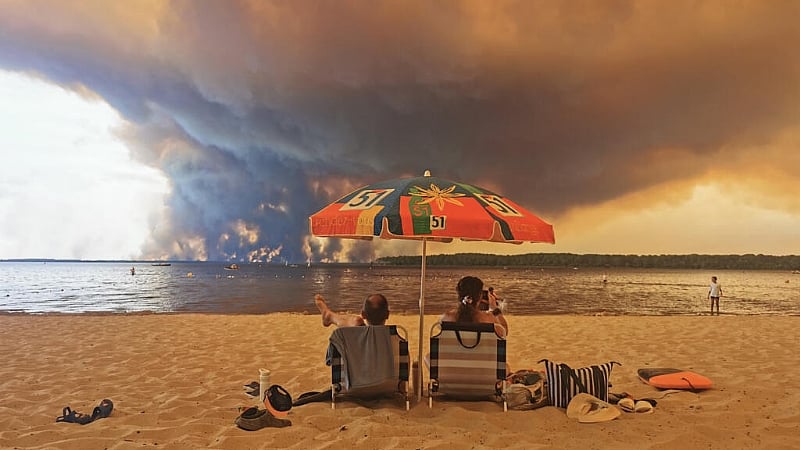
Every fraction of a degree and every year above 1.5C would increase exposure to climate hazards and the risk of irreversible damage, the report warned. Heatwaves, floods and wildfires would become more frequent and extreme, while glaciers and polar ice would melt faster and sea levels would rise.
“What we need to do is limit the peak of warming and shorten the period of overshoot,” Debra Roberts, one of the report’s lead authors, added. That would require drastically cutting greenhouse gas emissions.
Millions in France report eco-anxiety after summer of heatwaves and wildfires
A 1.8C ceiling
Bringing temperatures back towards 1.5C would also require removing carbon dioxide from the atmosphere and storing it for the long term, Roberts said.
The authors considered 1.8C “the kind of maximum” from which temperatures could be brought back to 1.5C, Roberts told reporters. Beyond that, “the feasibility of the responses then become really, really questionable”.
Warming at that level would also cause “irreversible cascading changes”, Roberts added. Even under optimistic scenarios, reversing a single decade of warming could take about 50 years, while some changes including polar ice loss and sea-level rise would be irreversible.
“This is by no means an acceptable or preferred pathway,” the report said. “It is simply the best remaining option.”
Think this summer is hot? El Nino could push temperatures even higher
Carbon removal challenge
The report says removing carbon dioxide from the atmosphere could involve planting forests or using technology to capture it from the air. But current industrial capacity for carbon removal is extremely limited.
Such measures must be used “in addition to, not instead of, sustained reductions in residual greenhouse gas emissions”, the report said.
Cutting emissions in the near term is therefore central to limiting the overshoot.
“Near-term emissions reductions can limit overshoot and reduce harm,” Joeri Rogelj, a professor at Imperial College London and one of the report’s authors, said.
“Inadequate mitigation will push communities and ecosystems beyond their ability to adapt.”
The report also calls for societies and communities to prepare for the greater climate risks expected while temperatures remain above 1.5C.
“Adaptation takes decades to build, so overshoot-calibrated plans must be designed and implemented now, ahead of impacts,” Shobha Maharaj, an adjunct professor at the University of Fiji and another co-author, said.
(with newswires)