Four medical laboratories shut down in Bolgatanga over regulatory breaches
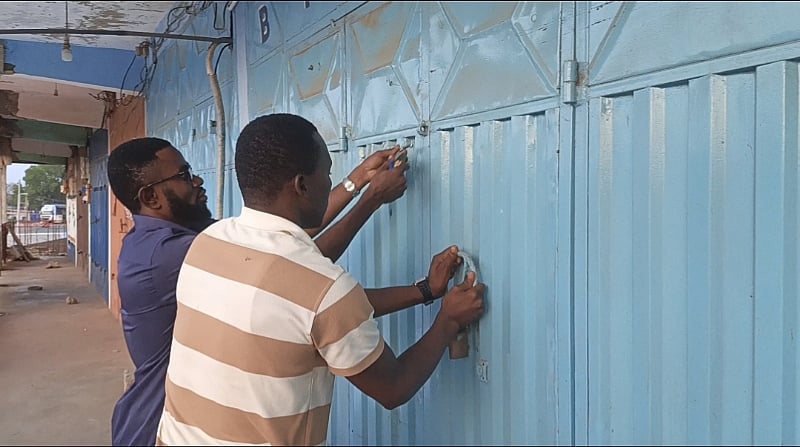
The Allied Health Professions Council (AHPC) has shut down four medical laboratories and is preparing to impose sanctions on several health facilities and practitioners following an unannounced compliance and enforcement exercise in the Bolgatanga Municipality of the Upper East Region.
The facilities closed are Plebet Diagnostic and Supplies, Medi Lab Services, Rogerscan Diagnostic and Bio Lab Services.
The operation, led by the Registrar of the AHPC, Professor Shiraz Issahaku, targeted facilities suspected of operating outside the Council’s regulatory framework.
During the inspection, the Council identified several violations, including the operation of unregistered facilities, non-compliance with required professional standards and the engagement of unqualified personnel in the delivery of health services.
According to Professor Issahaku, a number of medical laboratories and a diagnostic centre were found to be operating without valid registration from the Council, contrary to legal requirements governing allied health practice in Ghana.
The team also observed that some facilities had failed to comply with standard operating procedures and protocols prescribed by the Council, while others employed individuals who were neither qualified nor registered to provide allied health services.
As a result, the affected facilities were ordered to cease operations immediately pending compliance with regulatory requirements.
Professor Issahaku warned that health professionals and facility operators found to be practising without registration would face sanctions under the Health Professions Regulatory Bodies Act, including fines and possible prosecution.
He stressed that the Council would continue to enforce professional standards to protect public health and ensure that only qualified and licensed practitioners provide healthcare services.
The Registrar noted that registration with the Council is essential to guarantee quality healthcare delivery, maintain professional standards and protect patients from the risks associated with unregulated practice.
He explained that registered facilities are required to meet minimum standards relating to equipment, safety and hygiene, while practitioners must possess verified qualifications and training before being allowed to offer services.
Professor Issahaku emphasized that adherence to standard operating procedures and the use of qualified personnel are non-negotiable requirements in the healthcare sector.
The enforcement exercise forms part of the AHPC’s nationwide efforts to sanitize the allied health sector and strengthen public confidence in healthcare delivery.
The Allied Health Professions Council is mandated by law to regulate the training and practice of allied health professionals, including medical laboratory scientists, radiographers, physiotherapists, optometrists and other practitioners.
The Council conducts routine and unannounced inspections to ensure compliance with professional and regulatory standards.
Affected facilities will remain closed until they regularize their operations and satisfy all regulatory requirements. Individuals found practising without registration are expected to face the full sanctions prescribed by law, including possible prosecution, fines and restrictions on future practice.