
How I cook without relying on dairy
A visit to the cheese shop is, for me, what I imagine a museum is like for a very good painter—except instead of brushstrokes, I’m clocking the tiny, sandy sparkle of tyrosine crystals on a wedge of parmesan; instead of composition, the way blue-green veins in a favorite bleu intersect like a little map of the L; instead of technique, the jaunty zigzag of a manchego rind (beautiful, sadly inedible).
I have always loved cheese, but during the pandemic, I decided to love it formally. I enrolled in a cheesemongering certification course through the UK-based Academy of Cheese and spent months with notecards on curds and whey, then more months learning how to taste with intention. In November 2021, I received a small pin and certificate to prove it.
Looking back, that might have been the beginning of the end.
A few years later, I was managing an autoimmune condition and some stubborn cystic acne when my doctor suggested I try reducing dairy — just to see what happened. I went to my binder of go-to seasonal recipes and realized, with a kind of dawning horror, that nearly all of them leaned on it. Not restaurant-level butter quantities (as Anthony Bourdain once put it, “If you eat at any good restaurant, assume you’ve eaten a stick of butter”), but enough to tell a story: creamy chicken and rice soup finished with half-and-half; cottage pie capped with parmesan-flecked mash, broiled until crisp; a “Bear”-style omelet with Boursin and crushed Ruffles.
I’m not one for sweeping resolutions, so I started small: one week without dairy. Then two. Then a month. I felt better — my stomach, my skin — and, more surprisingly, I didn’t feel deprived.
Want more great food writing and recipes? Sign up for Salon’s free food newsletter, The Bite.
These days, I’m not fully dairy-free, but I’ve tipped the balance. Most of my go-to recipes don’t include it, and when they do, it’s because it’s worth it (don’t worry—I still visit the cheese shop). Here are seven things that made the shift easier:
I chose new lead flavors
In the winter, my default craving is creamy. Pastas, casseroles, soups—they all live quite happily in that soft, velvety register. But cooking without dairy taught me that you can shift a dish the same way you’d refresh a room: not by tearing everything out, but by changing the color on the walls. Choose a new lead flavor, and suddenly the whole space feels different.
Think about the dishes you love most. What’s the note that makes them sing? Brightness, from lemon or lime? Smoke or heat? A hit of herbs? Nuttiness? Deep, savory umami?(And if your favorites lean creamy, look just underneath that richness—there’s always something else going on. What happens if you bring that forward instead?)
For me, it was a combination of umami and lemon—salty, savory, a little sharp. The kind of flavor that wakes everything up.
Once I had that, the rest got easier. I started reaching for recipes that lived in that pocket: lemony chicken soup instead of creamy; brothy beans slicked with olive oil and garlic instead of something finished with cream. Same comfort, different light.
I cooked from my neighborhood
I live on a stretch of Vietnamese restaurants — pho, noodles, bún bò huế — punctuated by a killer arepa spot and a shawarma stand. It’s the kind of block where you can eat very well just by walking a few doors down.
As I started looking for dairy-free inspiration, I realized that many of the dishes I already loved were built that way: cozy chicken congee topped with egg and scallions; lemony hummus piled with crispy beef and lamb; bright rice noodle salads dressed in punchy nước chấm.
When I want to go out, I support them. When I want to stay in, I follow their lead. I’ve started shopping at the same local grocers that supply those kitchens and trying my hand at simpler, at-home versions—nothing fussy, just borrowing the logic of the flavors.
A few cookbooks have been especially helpful guides along the way: Andrea Nguyen’s “Ever-Green Vietnamese“; “Di An: The Salty, Sour, Sweet and Spicy Flavors of Vietnamese Cooking with TwayDaBae“; and “Đặc Biệt: An Extra-Special Vietnamese Cookbook,” by Nini Nguyen with Sarah Zorn.
Boom, roasted
The idea of a comedy roast makes my skin crawl (I’d much rather spend an evening in the strange, buoyant universe of Chris Fleming), but in the kitchen, I can’t stop roasting things.
Vegetables, especially, reward a little intensity. I made a deeply satisfying, dairy-free sauce by roasting carrots, sweet potatoes, and onions in a cast iron skillet until caramelized at the edges — then tossing them with generous glugs of olive oil, a few pats of white miso, lemon zest, red pepper flakes and oregano before blending everything with coconut milk until silky. It ended up spooned over chicken, rice and greens, the whole thing rich without ever touching cream.
Another night, we had tacos with three different oven-roasted salsas: tomato; a smoky, porky black bean and corn; and peach, jammy and just a little charred.
When you take something away from your cooking, it helps to push somewhere else. Turn up the heat. Let things caramelize. Go a little further than you normally would.
My blender became my co-conspirator
I’ll admit it: I think our collective weeknight blender hatred is a bit overblown. My mini-blender has long been a quiet ally — mincing onions when my joints aren’t cooperating, blitzing together a very good chickpea salad in no time.
(And cleaning it is not the ordeal people make it out to be. A squirt of dish soap, a cup of hot water, a few pulses to loosen the worst of it—then a quick pass with a brush. Done.)
But once I started eating less dairy, our relationship deepened.
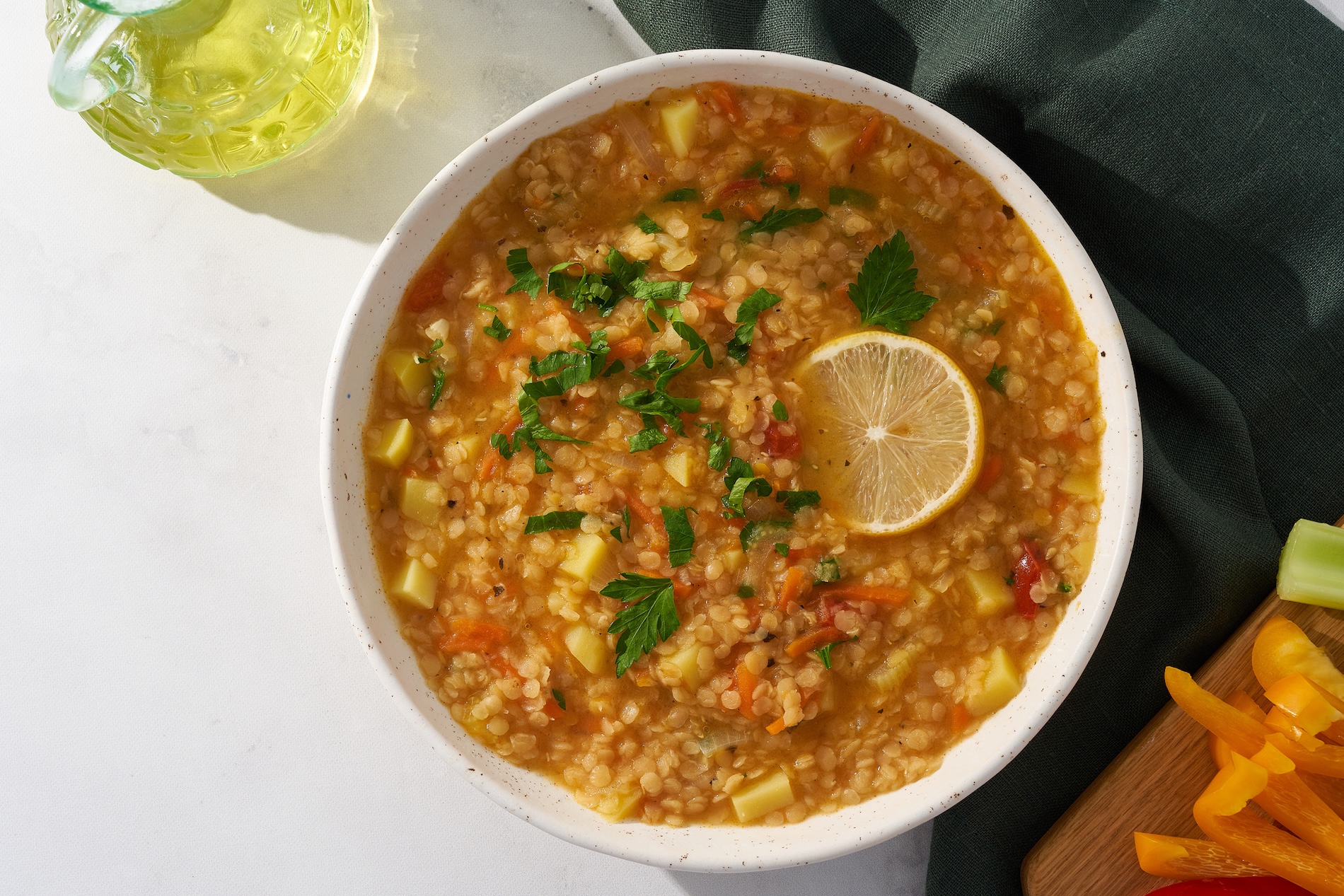
Soups that might have leaned on cream — lentil, potato, corn — turned velvety when I blended half the pot and stirred it back in. Pasta sauces found richness from cannellini beans or chickpeas, whirred until smooth. Even a simple vinaigrette could become something a little more luxe, fully emulsified.
It’s a small shift, but a powerful one: instead of adding richness from the outside, you build it from within.
Tahini, everywhere
Tahini has a kind of quiet luxury to it — less sweet than nut butters, less showy, with a soft, earthy depth that can tip, just slightly, into bitterness in a way that feels intentional. It doesn’t shout; it hums. And when you whisk it into something, especially with a little acid, it loosens, lightens, turns almost plush.
I fell for it outside of hummus in a tahini-miso ranch from Bon Appétit that I now make on instinct, and since then, it’s found its way into everything. A spoonful stirred into chicken salad for something creamier without the weight. Swirled into sesame noodles until they go glossy. Even oatmeal, where it melts in and makes the whole bowl feel a little more grounded, a little more complete.
Cashew-coconut yogurt (don’t knock it)
I went through a vegan phase in high school, back when soy reigned supreme in the plant-based aisle. Now, a decade and a half later, it’s kind of astonishing to see how much more nuanced things have become — blends that actually account for texture, flavor, and how you’ll use them.
One I keep coming back to: cashew-coconut yogurt. (The one from Forager Project is particularly good.) It’s tangy, softly rich, and versatile in a way that sneaks up on you—a perfect base for a parfait, a natural starting point for dressings and dips, even a stand-in for sour cream alongside a bowl of chili.
It’s the kind of ingredient that makes the whole dairy-free thing feel less like a workaround and more like an upgrade.
I finished like a chef
I am, at heart, a garnish maximalist. Give me a meal that’s as much about what goes on top as what’s underneath — chili night, a loaded baked potato situation, an old-school salad bar — and I’m happy.
When I started paying attention to how I finished dishes, I realized I had a habit: reaching for dairy as the final touch. A pat of butter melting into everything, a scatter of cheese, a cool spoonful of sour cream.
So I gave myself more options. Crunch, acid, herbs, spice — little hits of contrast that make a dish feel complete. Crispy bacon bits, poppy pickled onions, hunks of avocado, corn nuts, everything bagel seasoning, za’atar, toasted breadcrumbs, torn herbs.
The sky, truly, is the limit.
Read more
about this topic