
Shoova Initiative launched to promote environmental restoration and community development
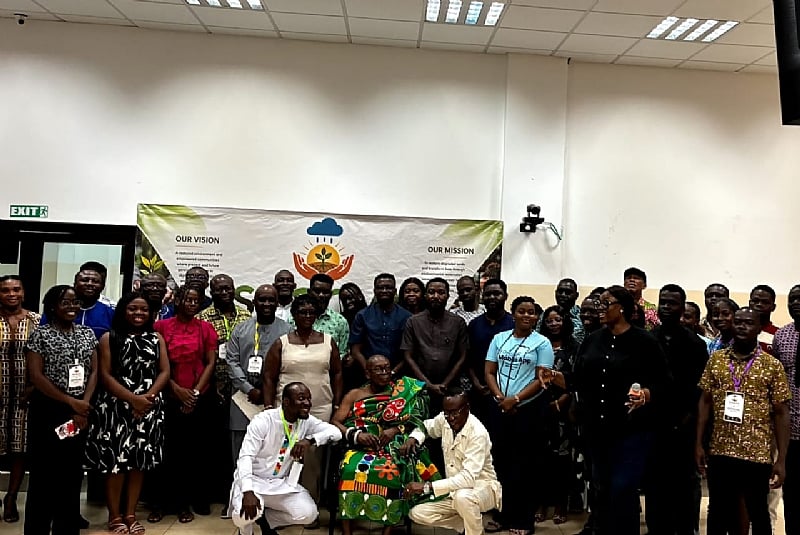
The Shoova Initiative, a Ghanaian environmental and community development movement, has been launched with a mission to raise awareness about the protection of natural resources and tackle threats that endanger human lives and livelihoods.
The initiative seeks to restore degraded environments and damaged natural resources while promoting sustainable solutions that protect the ecosystems upon which human existence depends.
The official launch took place at the Cedi Conference Centre of the University of Ghana in Accra.
Founder and President of the Shoova Initiative, Mr. William Agyekum, a US-based Project Manager, said the time had come for a concerted rescue mission to address the growing threats to Ghana’s natural environment.
He expressed concern about the pollution of water bodies, increasing pressure on forests and productive landscapes, soil degradation and the destruction of other natural resources essential to human survival.
“If Shoova restores the lands, water bodies and damaged soil without touching human life, or restores human life without restoring the environment, we have still done nothing. As Shoova Initiative, we believe that through Shoova, lives and lands must be restored together,” he said.
Mr. Agyekum explained that the initiative was founded on the conviction that society must go beyond simply opposing harmful activities and instead create practical alternatives that enable people and communities to thrive.
“ We must not be satisfied with merely opposing what is harmful, but we must build what should exist,” he said.
He noted that for young people whose livelihoods are under pressure, simply telling them to stop engaging in harmful activities would not be enough without providing dignified and sustainable alternatives.
“For any young person whose livelihood is tight, saying ‘no’ or ‘stop’ is not enough if there is no dignified pathway. A better future must be practical, with improved skills, professions, enterprise, opportunities, responsibility and hope,” he added.
According to him, Shoova was therefore established to create pathways into productive work while developing people, institutions and communities capable of sustaining those opportunities.
“Shoova is not building only for employment but building for stewardship,” he stressed.
Mr. Agyekum further explained that the initiative was not intended to operate merely as a conventional school but as a Restoration Institute.
He said its academic and architectural concept would bring together four interconnected schools: the School of Engineering and Technical Systems, School of Agriculture and Environmental Stewardship, School of Business and Entrepreneurship, and School of Leadership and Public Service.
He explained that the four schools were designed to function as an integrated system because environmental restoration requires technical expertise, productive land depends on agriculture and environmental stewardship, sustainable livelihoods require viable businesses and markets, while all these areas depend on responsible leadership, effective institutions, public service and good governance.
Mr. Agyekum said every learner would also undergo a common restoration foundation covering well-being, character, leadership, stewardship, community responsibility and the values needed to apply professional knowledge responsibly.
Chairperson for the occasion, Nana Baafuo Adu-Yeboah, Adwareasehene of the Dormaa Traditional Council, described the emergence of Shoova as timely, particularly amid the growing threat posed by illegal mining, popularly known as galamsey.
He said although it was unfortunate that the initiative was being launched at a time when illegal mining had become widespread, the circumstances made its mission even more relevant.
“We should allow Shoova to command support from every person, and there should be more Shoovas in our local districts,” he said.
Nana Adu-Yeboah called for the initiative to extend its activities to communities affected by illegal mining and similar environmental threats, including areas beyond Ghana’s borders.
He stressed that government alone could not address the environmental challenges facing the country and urged individuals and organisations to support initiatives capable of complementing government efforts.
He further advised the leadership of Shoova and its founder not to operate merely as an NGO dependent on financial support from donors.
Instead, he urged them to demonstrate practical results on the ground that could attract the necessary support and inspire confidence in the initiative’s ability to contribute to Ghana’s development.