
Avon screens documentary spotlighting fibroids as survivor recounts 10-year ordeal
By Chioma Obinna
Avon Medical Practice has used the story of a Nigerian woman who endured a decade-long battle with uterine fibroids, culminating in the removal of 17 growths, to spotlight the impact of the condition on women’s quality of life and the importance of timely medical care.
The healthcare provider recently screened a documentary: “Overcoming Fibroids: A Journey of Care and Compassion”, chronicling the experience of Moyo Awotile, who was first diagnosed with fibroids in 2018 but initially did not consider the condition serious.
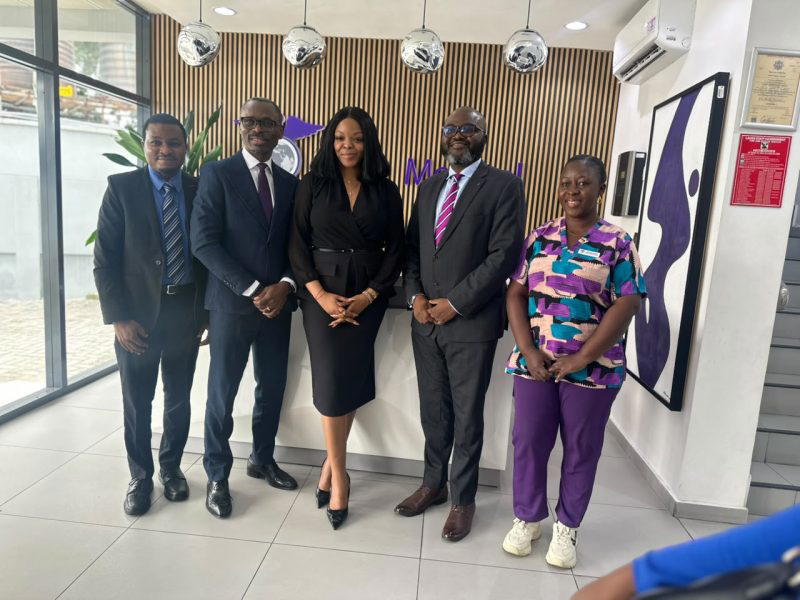
The documentary screening, held in Lagos, brought together healthcare professionals and media to discuss fibroids, treatment options, fertility concerns and the need for women to seek appropriate medical attention when symptoms persist.
In his welcome address, the Chief Executive Officer of Avon Medical Practice, Dr Akinbiyi Oke, said the initiative was part of the organisation’s focus on clinical excellence, patient experience and health awareness.
“Fibroids are not just medical statistics. They are significant factors in the life of a woman, and this affects her quality of life and overall wellbeing,” Oke said.
He described the documentary as a way of putting a human face to a condition that affects many women.
“What we are about to watch is not Nollywood or Bollywood. It is a story about real people, real patients and real doctors,” he said.
According to Oke, sharing real patient experiences can help create awareness and encourage people experiencing similar challenges to seek medical attention.
“Essentially, healthcare is about the quality of your life, and people have to be intentional about their health,” he added.
Oke said the documentary was part of Avon Medical Practice’s wider commitment to health awareness and thought leadership.
He disclosed that the organisation had designated 2026 as its “Year of Consolidation and Thought Leadership”, with a focus on maternal and child health, patient experience, health and wellness, technology and automation.
For Awotile, the documentary captures a journey that began after she missed her menstrual period for a month in 2018.
She consulted a doctor and was referred for an ultrasound, which revealed fibroids.
But despite the diagnosis, she said she continued with her normal life because she did not consider the condition urgent.
“I didn’t take it seriously. I just kept living my life. And I noticed that over the years, my periods got progressively worse,” she recalled.
The symptoms eventually became difficult to ignore.
Awotile said she began experiencing severe menstrual pain, debilitating cramps and heavy bleeding that affected her ability to work, travel and carry out everyday activities.
“I was in pain almost all the time. I could not sit down for long. Working in the office was a nightmare. I could not fly for long, and I could not walk for long. Everything was painful,” she said.
As the fibroids grew, the condition became increasingly distressing.
“One was protruding from my abdomen. I would lie down and look at my stomach and wonder what was happening because I had never seen anything like it before,” she said.
Eventually, she returned to Avon Medical Practice, where she had initially been diagnosed.
Awotile said she had sought care elsewhere but eventually returned to Avon because she trusted the facility and its doctors.
The decision ultimately led to surgery.
“The fibroids were massive. Seventeen fibroids were removed from my body. I was experiencing shooting pains in my legs in addition to the heavy periods and cramps” Looking back, Awotile said her initial attitude towards the diagnosis was influenced partly by the belief that fibroids were common and therefore not necessarily serious.
“I knew from 2018 that I had fibroids. Because I was small and younger, I didn’t care. I thought everybody has it,” she said.
Her experience, however, changed her perspective.
She now believes that women should pay closer attention to persistent or unusually severe symptoms rather than normalising them.
“I would tell every Nigerian woman, and indeed every African woman, that having painful periods is not normal. Having excessively heavy periods is also not normal,” she said.
“You are not meant to suffer in silence.”
In his explanation on fibroids in the documentary, the Consultant Obstetrician and Gynaecologist at Avon Medical Practice, Dr Peter Nwabuokor, explained that a pelvic ultrasound showed that Awotile had multiple uterine fibroids located within the uterine muscle and beneath the lining of the uterus.
He said fibroids can cause pain and abnormal or heavy menstrual bleeding, although some women may have no symptoms and may only require monitoring.
“Some patients may only require observation, especially if they do not have symptoms,” Nwabuokor said.
He explained that other treatment options may include medication to manage pain or bleeding, uterine artery embolisation, high-intensity focused ultrasound and surgical procedures.
For women who have completed their families and do not wish to preserve fertility, hysterectomy may also be considered.
In Awotile’s case, Nwabuokor said she consented to an open abdominal myomectomy after undergoing the necessary investigations.
Also speaking, Consultant Obstetrician and Gynaecologist, Dr Akintomiwa Bankole, addressed one of the concerns that often troubles women diagnosed with fibroids — whether surgery will affect their ability to have children.
He said fibroid surgery does not automatically mean that a woman will lose her fertility.
“Fibroid surgery does not automatically mean that a woman will be unable to get pregnant,” Bankole said.
He explained that fertility is influenced by several factors and that women can conceive after appropriate fibroid treatment.
“We have managed patients who have gone on to conceive after fibroid surgery,” he said.
Bankole cited a case of a woman who underwent surgery and subsequently conceived twice.
He urged women whose symptoms were significantly affecting their quality of life to seek medical attention rather than continuing to endure them.
“Some women experience severe bleeding and may develop significant anaemia. In severe cases, patients may require blood transfusion.”
He also warned against unverified herbal preparations and other unregulated treatments, saying these could create complications and make subsequent medical treatment more difficult.
For Awotile, the difference between life before and after treatment has been significant.
She said she now lives without the severe menstrual pain that once dominated her daily routine.
“I do not even know when my period is coming anymore. Apart from the normal hormonal changes, there is no pain. It has been very good, and the surgical scar is almost gone.”
She also praised the follow-up care she received after surgery.
“Nobody knew who I was, yet they were happy to take care of me,” she said.
“After my discharge, the aftercare has also been very good. I keep getting calls and check-ups. I have come back a couple of times, and even though I have been discharged, they still check on me to find out how I am doing.
“My advice is that women should not be scared. Go to the hospital and speak to your doctors. Go to the right doctor and get the right medical attention,” she said.
Her decade-long experience, now captured on film, has become a reminder that while fibroids may be common, persistent pain and excessively heavy menstrual bleeding should not simply be accepted as part of being a woman.
Representing Avon HMO, Dr Adeyemi Adeyinka, Group Head of Medical Services, said health education and awareness were also priorities for the organisation.
He said Avon HMO works with healthcare providers across its network to organise health outreaches and awareness programmes addressing women’s health and chronic conditions such as hypertension and diabetes.
According to him, the organisation has a network of more than 2,000 healthcare providers and uses the network to identify health trends and support health education.