
U.S ends indefinite stay for foreign students, journalists
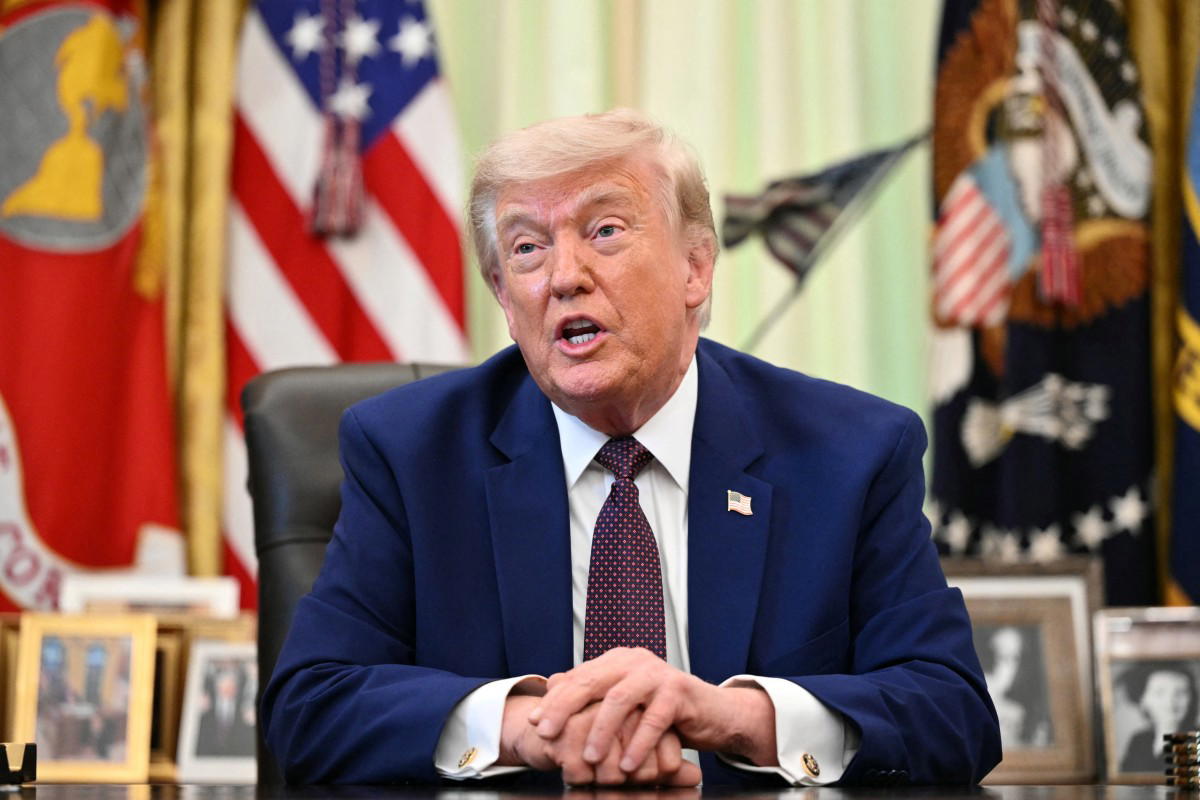
File: US President Donald Trump speaks to the press in the Oval Office of the White House in Washington, DC, on June 3, 2026. Photo by Mandel NGAN / AFP.
… Sets 4-year limit on visas
By Nkiruka nnorom
The United States has announced a new rule ending indefinite stay for foreign students, exchange visitors and journalists, and capped their period of admission at a maximum of four years.
The final rule, announced Thursday by the Department of Homeland Security in a statement, scrapped the “duration of status” policy that allowed holders of F, J and I visas to remain in the U.S for as long as they maintained enrollment or programme requirements without regular government review.
According to DHS, the reform was aimed at restoring integrity to the U.S immigration system, curbing visa abuse and strengthening national security through routine vetting.
DHS stated that the measure aligned U.S student visa policy with other non-immigrant visa categories that already operate fixed admission periods.
“For nearly half a century, the outdated duration of status system has compromised national security and created an environment ripe for immigration fraud,” DHS Secretary, Markwayne Mullin, said in the statement.
“For decades, foreign students have been admitted into the U.S indefinitely, allowing thousands to abuse our immigration system by perpetually enrolling in courses to avoid having to leave the U.S. By implementing clear, finite limits on these visas, the United States is reclaiming its ability to properly screen, vet, and monitor individuals within our borders,” Mullin added.
Under the new regulation, non-immigrant students on F visas and exchange visitors on J visas will now be admitted only for the length of their specific academic programme, up to a maximum of four years.
Students who need more time to complete their studies would be required to formally apply for an extension of stay directly with U.S Citizenship and Immigration Services (USCIS). The process, according to DHS, would subject applicants to biometric screening, background checks and fraud review, moving oversight from university officials back to federal authorities.
The rule also reduced the post-graduation grace period for F-1 students from 60 days to 30 days to either depart the U.S, transfer schools, or change visa status. In addition, strict limitations have been placed on academic programme changes.
DHS said current visa holders under the old “duration of status” system will automatically transition to the new framework, with their authorized stay capped at four years from the effective date of the rule.
The final rule will be published in the Federal Register in the coming days and will take effect 60 days after publication.
The Student and Exchange Visitor Program (SEVP), managed by U.S. Immigration and Customs Enforcement, will oversee implementation. SEVP tracks schools and international students in F and M visa categories through the Student and Exchange Visitor Information System.