
FG moves to decriminalise attempted suicide, targets 15% reduction by 2030
—-Okays Revised National Biotechnology Policy 2026
By Johnbosco Agbakwuru
ABUJA— THE Federal Government on Wednesday, moved to decriminalise attempted suicide in Nigeria, targeting a 15 per cent reduction in suicide cases by 2030 as part of efforts to shift the country’s response to mental health challenges from punishment to care and support.
This is as the Minister of Innovation, Science and Technology Mr. Kingsley Udeh, SAN, has said that the Federal Executive Council (FEC) has approved the revised National Biotechnology Policy 2026.
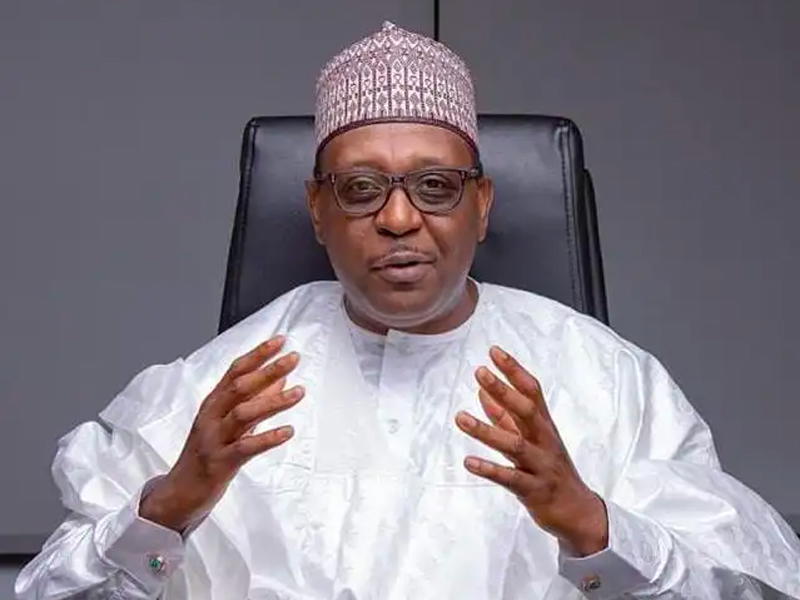
Briefing journalists at the end of the council meeting at the presidential Villa, Abuja, Coordinating Minister of Health and Social Welfare, Prof. Muhammad Ali Pate, said the Council had approved an amendment to the National Mental Health Act to remove the criminalisation of attempted suicide.
Pate said the move was designed to end the application of colonial-era laws under which people who attempted suicide could be arrested and prosecuted, despite often requiring medical and psychological intervention.
He said the existing legal framework treated people experiencing severe psychological distress as offenders rather than persons in need of care.
“Within the context of those colonial-era laws, you can arrest them and, in fact, prosecute them for breaking the law. While these are people who are actually ill, it is like getting somebody who has tuberculosis and saying, ‘Why did you have tuberculosis?’” he said.
“So, it is changing the paradigm to one whereby they require care and support if there is an attempted suicide. Hopefully, that will reduce episodes of suicides that are successful or even attempted.”
The minister said the government’s target was to achieve a 15 per cent reduction in suicide cases by 2030.
According to Pate, the proposed amendment followed extensive consultations involving mental health advocates, the Attorney-General’s Office, the Ministry of Justice, the Ministry of Health and Social Welfare, as well as a task force established to work on the issue.
“After extensive deliberation, including by mental health advocates, there was consensus to actually make this amendment,” he said.
“With the Attorney-General’s Office, Ministry of Justice, ourselves and the task force that was set up, and with the support of the National Assembly, we think this bill will make a major difference from a public health perspective and help us deal with the burden of mental ill health that afflicts many Nigerians.”
He said the amendment, having received FEC approval, would now be transmitted to the National Assembly for legislative action.
Pate said the reform was also intended to address the inconsistency between the criminal justice framework and the National Mental Health Act, 2021, which provides for supportive care, protection and treatment for people at risk of self-harm.
The minister said the World Health Organisation estimates that suicide accounts for more than 7,000 deaths annually in Nigeria, with about 300,000 suicide attempts recorded each year.
He added that more than 450,000 Nigerians require psychosocial support annually, underscoring the need for a public health response rather than criminal sanctions.
Pate also addressed questions concerning the procurement processes for the major projects approved for the National Hospital, Abuja, and the National Institute for Cancer Research and Treatment (NICRAT).
He said the funds for the projects had been appropriated by the National Assembly and were being managed through the relevant institutions.
According to him, the projects were not domiciled directly in the Federal Ministry of Health and Social Welfare but were being implemented through NICRAT and the National Hospital.
He said the institutions followed due process and obtained the necessary clearances through competitive procurement procedures overseen by the Bureau of Public Procurement (BPP).
“They looked at companies that have the capability for specialised construction of hospital and health infrastructure that can be able to do it within the timeframe allotted,” he said.
Pate added that the procurement criteria and processes remained open to scrutiny, stressing that FEC reviewed the contracts without objection from the BPP and received assurances that the contractors had the capacity to execute the projects.
He described the investments as unprecedented against the backdrop of what he called Nigeria’s historical underinvestment in health infrastructure.
“This is unprecedented because, to be honest, Nigeria has not invested significantly or seriously in health infrastructure,” Pate said.
“You go to many of our facilities every day; people are complaining. So, you need to make that leap of faith to get the resources appropriated, which has been done.
“Now the challenge will be to secure the financing before you commit a contractor. But that contractor has to have the capability.”
The minister said the increased investment in health infrastructure was part of a broader effort to reverse years of neglect that had left many primary healthcare centres and general hospitals with dilapidated infrastructure and inadequate equipment.
He noted that while government routinely committed hundreds of billions of naira to road infrastructure because of its importance to economic growth, comparable investments in health had historically been lacking.
“If you look at roads, there are hundreds of billions that are being awarded every day for roads, and they are very necessary for the economic growth of this country. But when it comes to investing in health, we’re not used to those major investments,” Pate said.
“Now we’re beginning to change that, and thanks to His Excellency, Mr President, as you hear from the Minister of Finance, as our economy continues to grow and as revenue continues to grow, inevitably we need to be spending more on health.”
He attributed the historical neglect of the health sector at both federal and state levels partly to inadequate government revenue.
“When we did not have the revenue, health had oftentimes been neglected, both by the Federal Government as well as states,” he said.
“When you go to primary healthcare centres or general hospitals, you tended to see decrepit infrastructure and no equipment. But these are things that we have to fix as a people.”
Pate said the Federal Government was now committed to ensuring that approved resources were effectively deployed to transform the National Hospital and deliver a befitting cancer treatment and research centre at NICRAT.
“So now we are on that path, and so long as the resources are available, our goal is to ensure that they are executed, and that Nigerians can be able to see the transformation of the National Hospital as well as a befitting cancer centre here at NICRAT,” he said.
Also briefing, the Minister of Innovation, Science and Technology, Mr. Udeh, SAN, said implementing the revised National Biotechnology Policy 2026, will position Nigeria to harness opportunities presented by the global bio-economy, enhance national competitiveness, attract investment, strengthen food and nutrition security, and accelerate sustainable economic growth.
He added that FEC approved the adoption and implementation of the policy as the national framework for the development, application, regulation, and commercialization of biotechnology in Nigeria.
Udeh further stated that the policy was approved to enable the country to become a member of the Global Bioenergy Partnership through signing the attached Global Bioenergy Partnership Terms of Reference.
He said FEC approved designating the Energy Commission of Nigeria as the lead implementing agency for the Nigeria Bioenergy Partnership.
The council also approved periodic reporting on implementation progress through the Ministry of Innovation, Science and Technology as the coordinating ministry.