
Secondhand book sales are booming. Is it because of AI?
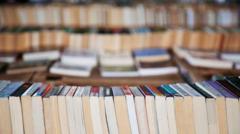

Something mysterious has been happening in the world of secondhand books.
Over the last few months independent booksellers have been observing a strange pattern of purchases which have seen scores of their novels being shipped to far-off warehouses.
In a typical week, Stuart Manley, from Barter Books, in Northumberland, would sell two or three thousand books. But one recent single bulk order from a Canadian company equalled what he would expect to move in seven days.
He says he has “never seen the like of this after 30 years in the second-hand book trade”.
Mr Manley is not alone. Booksellers from around the world have been reporting similarly unusual mega orders.
They aren’t sure what the final destination for their books is.
But the suspicion is that they are not being bought for avid overseas readers but instead something else with a voracious appetite for new information: AI.
The court battle over books
The idea that the secondhand sales boom is being driven by the explosive growth of AI can be traced back to a court ruling in the US.
In 2025, a judge ruled using books purchased in this way to train AI software was not a violation of US copyright law.
The decision was the result of a lawsuit brought against AI firm Anthropic by three authors. In his ruling, Judge William Alsup said Anthropic’s use of the authors’ books was “exceedingly transformative” and therefore allowed under US law.
When court documents were unsealed last month it also emerged books were being destroyed in the process of training Anthropic’s AI chatbot, Claude.
“Claude is trained on a mix of publicly available web data, commercially acquired datasets, and data we generate ourselves,” a spokesperson said.
They insisted sourcing books for training was a widely used approach across the AI industry.
“None of our data acquisition programs buy and destroy rare or antiquarian books,” they added.
Nonetheless, the idea that books are being pulped is causing unease.
David Tobin, runs Walden Books in north London, has also had unusual sales.
“In some ways it’s very nice to sell some of these titles which haven’t been sold for many years, but it would be sad if they are ultimately destroyed,” he says.
Destructive scanning
The court documents relating to the Anthropic case revealed the project of ingesting old books was referred to in internal company communications as “Project Panama.”
The documents indicated the company’s aim was to “destructively scan all the books in the world”.
Destructive scanning is the process of shipping books to locations where they can be digitised at an industrial scale.
It includes removing a book’s spine so all the pages can be scanned rapidly – and the remains recycled.
“A lot of mystery surrounds Project Panama,” Manley, from Barter Books, says.
“The name is new to me, but the reality of the project is not, and has been the subject of much discussion on the bookseller forums.”
He does not know that his books are being bought for it or similar projects by other AI firms.
But he says it’s also difficult to account for the sales, which appear random with “no rhyme or reason.”
They have varied from obscure Latin texts to cowboy novels.
Experts say the diverse subject matter also points to AI, as unusual and rare texts could provide fresh material to improve the training of large language models, the tech which underpins generative AI tools like chatbots.
Professor Emily Hudson, intellectual property specialist at Oxford University, says copyright laws in the UK are different to those in the US.
“The starting point in the UK is that all these acts of copying – creating the training library and doing the training – require the permission of the copyright owner,” she says.
Ethical concerns
For the booksellers, it poses a dilemma.
They are uncomfortable with the idea of books being destroyed – even if they admit not every title needs to be saved.
“A recent academic text published in only 100 copies, 75 of which are already in libraries, may be very rare on the market – but it is perhaps not such a great loss if one copy is destroyed,” says Derek Walker, owner of Edinburgh bookshop McNaughtan’s.
“But we have, and have sold, books which are for example the only known surviving example of an edition from the 18th century.
“It would be a much more significant problem if one like that were to be bought for destruction, having survived this long.”
And Manley says recycling books is a good solution for many titles which the public no longer want on their shelves – especially when it comes with a bump in trade.
“Some may have ethical concerns about where the books end up and if they’re destroyed,” he says.
“But the world no longer needs five million copies of The Da Vinci Code.
“I’ve had books advertised for 20 years on the web which haven’t sold until now”.

Sign up for our Tech Decoded newsletter to follow the world’s top tech stories and trends. Outside the UK? Sign up here.