African Court embraces the AI revolution, partners UNESCO to shape justice in Africa
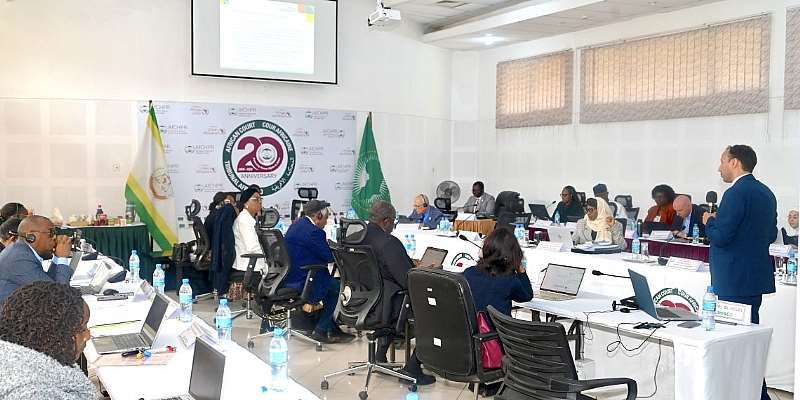
In a decisive move to future-proof human rights justice on the continent, the African Court on Human and Peoples’ Rights has joined forces with the United Nations Educational, Scientific and Cultural Organization (UNESCO) for a high-level, four-day capacity-building seminar on Artificial Intelligence and the Rule of Law.
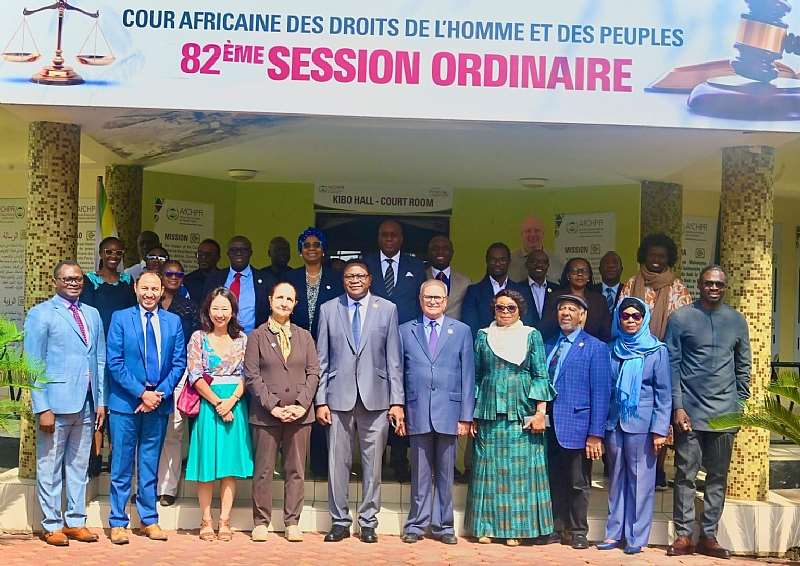
The strategic training was held at the Seat of the African Court in Arusha, Tanzania, convened within the framework of its 82nd Ordinary Session between August 31 and September 25, 2026.
It was attended by over 50 key personnel, including judges of the Court, Legal Officers, and specialists from the Language, Documentation, Library, Communication and Information Technology Units.
A statement made available to issue in Arusha, Tanzania, by the African Court Senior Communication and Information Officer and copied to the Communication for Development and Advocacy Consult (CDA Consult) in Accra, Ghana, said the seminar marks a critical turning point in how Africa’s premier human rights court engages with emerging technologies.
The programme was anchored in UNESCO’s authoritative Global Toolkit on AI and the Rule of Law for the Justice Sector. Its core objective is to equip the Court to deploy AI responsibly to enhance judicial efficiency, accelerate access to justice, and strengthen safeguards against the inherent risks of bias, discrimination, opacity, and threats to fundamental rights.
Opening the seminar, the President of the African Court, Hon. Justice Blaise Tchikaya, delivered a compelling call for proactive, ethical engagement with AI.
He noted that artificial intelligence is already reshaping the administration of justice globally, with the potential to transform legal research, jurisprudential analysis, and day-to-day administrative functions, reduce chronic case delays, and expand access to justice for ordinary Africans.
“The African Court cannot remain on the sidelines as artificial intelligence increasingly shapes the administration of justice. We must harness its benefits responsibly, guided by ethics, transparency, due process, and the rule of law, and ensure that technology strengthens our mission to protect human and peoples’ rights in Africa,” Justice Tchikaya declared.
He cautioned, however, that technology is not neutral and responsibility remains squarely with its users. Its application in the sensitive domain of justice and human rights must be governed by strict ethical guardrails.
In her opening remarks, Ms. Misako Ito, UNESCO’s Regional Adviser for Communication and Information in Africa, laid bare the urgent global reality facing judiciaries.
Citing a recent UNESCO survey, she revealed that 44 percent of judicial operators worldwide are already using AI tools such as ChatGPT in their work, yet only 9 percent have received any formal guidance or training on their responsible use.
“Strengthening understanding of AI among judges is one of the most effective ways to safeguard human rights in an era of algorithmic governance,” Ms. Ito said. “We must ensure that these systems do not perpetuate existing biases or violate privacy rights.”
She stressed that judicial institutions must be fully equipped to assess risks to fairness, transparency, and privacy. UNESCO, through its Global Judges Initiative, has already worked with over 38,000 judicial actors in 160 countries on international standards relating to freedom of expression, access to information, and now AI and the rule of law.
The Registrar of the African Court, Dr. Robert Eno, reinforced the imperative of preserving human agency in the digital age.
According to Dr. Eno, while AI presents immense opportunities to accelerate legal research, improve case management, and expand access to justice, judicial institutions must confront critical questions of transparency, accountability, algorithmic bias, and data protection.
“Our task is not to choose between innovation and tradition but to ensure that innovation strengthens tradition, that Artificial Intelligence becomes a servant of justice, never its substitute,” Dr. Eno affirmed.
The training focal points, Dr. Kamel El Hilali, AI and Rule of Law Specialist at UNESCO Headquarters in Paris, and Dr. Mwiza Nkhata, Principal Legal Officer at the African Court, said the programme was meticulously designed to empower the Court to make informed, sovereign decisions on AI adoption—balancing transformative benefits with potential risks to justice and human rights.
The seminar underscores the deepening strategic cooperation between the African Court and UNESCO in advancing justice, human rights, and freedom of expression in the age of digital transformation.
The African Court is a continental court established by member states of the African Union to ensure the protection of human and peoples’ rights in Africa. It complements and reinforces the functions of the African Commission on Human and Peoples’ Rights.
Composed of eleven judges elected in their individual capacity from AU member states, the Court has jurisdiction over all cases and disputes concerning the interpretation and application of the African Charter on Human and Peoples’ Rights and any other relevant human rights instrument ratified by the States concerned.