
Madison police killing shows accountability can’t stop at ICE
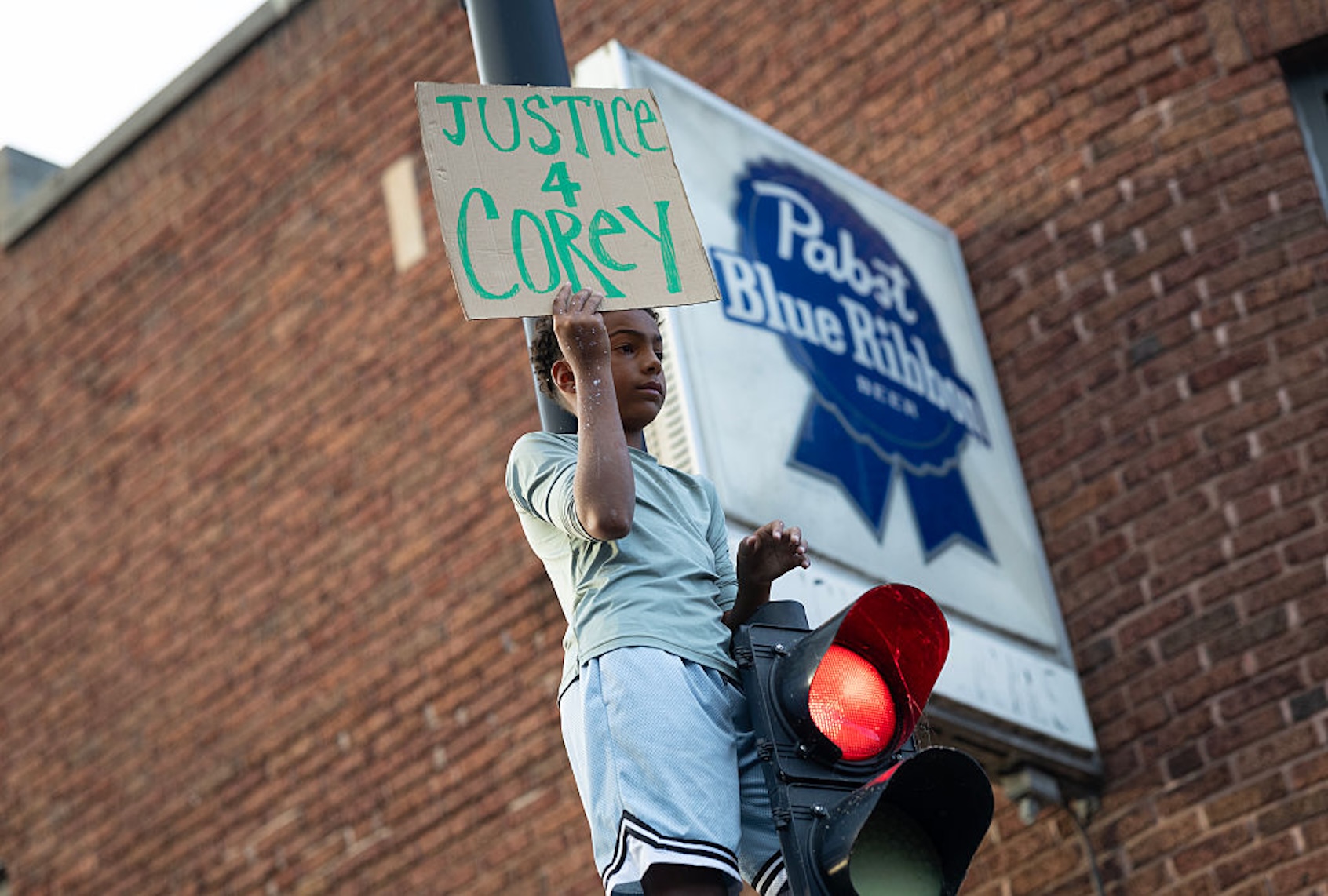
After the killings of Lorenzo Salgado Araujo, Alex Pretti, Ruben Ray Martinez, Renee Good and too many others, a familiar scene is unfolding in Madison, Wisconsin. Following yet another fatal shooting by law enforcement in broad daylight, the streets are full of protesters while social media is aflame with horrifying videos.
The difference is that this time, those responsible are local police — not Immigration and Customs Enforcement.
The United States has watched federal immigration agents wreak havoc and fear in communities, shooting eight people to death in public on the streets since January and allowing more than 50 people in detention to die on their watch since 2025. The nation is justifiably angry, with nearly two-thirds of Americans saying ICE has gone too far.
Being overlooked is the violence being brought by local law enforcement. On July 22, four police officers in Madison held down Corey Ruiz, a 38-year-old Black man, and shot him three times during an attempted arrest. Tens of thousands have now seen the videos circulating on social media platforms: bystanders screaming in the background, the attempted arrest turning violent within seconds, another person killed by police.
Ruiz’s killing is a painful reminder that state and local police have been left out of the conversation about violence and accountability.
This is nothing new. Ruiz’s killing is a painful reminder that state and local police have been left out of the conversation about violence and accountability. Much of the country has moved on from the mass protests in 2020 after George Floyd was murdered by a Minneapolis police officer.
But police violence has never slowed.
Police continue to kill around 1,300 people every year, with at least 689 killings in 2026 already. Much media attention has gone to ICE’s traffic stops, but far less to the 93 people killed by police in traffic stops this year. While the enthusiasm behind police accountability in 2020 resulted in some important changes — including state bans on chokeholds and no-knock warrants — we never saw the “major changes” 58% of Americans called for, including reforms that would protect everyday people from police brutality. Congress failed to pass even modest police accountability legislation in George Floyd’s name after bipartisan negotiations broke down, and most federal lawmakers have shown little interest in returning to the issue.
Under the Biden administration, the federal government remained an important force for police reform, including executive orders that increased accountability and prioritized deescalation and alternatives to use of force. These orders quickly fell after Donald Trump returned to office, alongside consent decrees designed to curb police violence, leaving communities to fend for themselves.
Part of the reason the issue has fallen off the national radar has to do with a (perverse) relative comparison. ICE has made local police look astonishingly well-trained, well-behaved and accountable, leading Senate Democrats to take action. In January, Nevada Sen. Catherine Cortez Masto introduced a bill to redirect $75 billion in federal funding from ICE to local police. Her colleague and fellow Nevadan, Sen. Jacky Rosen, said, “It’s simple: ICE should be held to the same standards as our local police departments.” Rosen and Cortez Masto, and their colleagues like Senate Minority Leader Chuck Schumer are correct, but we should hold ICE and police to a significantly higher standard of accountability.
A majority of voters agree. Extensive polling by Vera Action has found that the most popular position on policing is “supporting police who put their lives on the line for us everyday and holding those who use excessive force or abuse their power accountable.” This message consistently ranks far above simply adding more police officers or funding. The majority position on policing is one of support and accountability — better policing, not simply more policing.
Start your day with essential news from Salon.
Sign up for our free morning newsletter, Crash Course.
Six years ago, the country’s demand for police accountability was subsumed by a muddled debate over “defunding the police” and valid concerns about rising crime. In 2026, we are past that conversation. The country is in the middle of a quiet public safety revolution, in which police departments, despite having fewer officers, are working with partners like mental health crisis response and community violence intervention to drive record-low crime rates.
Many people have become numb or indifferent to — or even defensive of — police violence. But ICE violence continues to shock us. The killing of Ruiz is a reminder that both problems persist — and can be solved with similar measures. As lawmakers propose accountability measures for ICE like better use-of-force standards, ending qualified immunity, improved training and more budgetary oversight, these same accountability measures should apply to police. We should also demand more than the tools, like body cameras, that have failed to stem police violence.
The officers who killed Corey Ruiz should and may face accountability. Madison Mayor Satya Rhodes-Conway said, “Our community deserves full transparency and accountability,” and the killing is being investigated as a homicide.
But it will be a rare exception. One ICE officer recently told a reporter that the Trump administration has empowered aggressive behavior by officers because they know “they’re going to be protected.” Until accountability becomes the norm across all levels of law enforcement, this violence will continue.
The message should be clear: If America wants accountability from federal law enforcement, it is time to demand real accountability for police as well.
Read more
about law enforcement