
The mail-order catalog disappeared. Can it be revived?
Charlotte was cleaning out her parents’ garage last summer when she found a box of catalogs, circa 1996–1999. dELiA*s, MoxieGirl, Alloy — they were all there. “Instant flashback,” she says, describing how she sat right down on the concrete floor to page through them. Growing up in what she calls “rural suburban” Pennsylvania, Charlotte and her older sister made yearly pilgrimages to the Urban Outfitters flagship store in Philadelphia to spend their summer-job money on baby tees and suede Converse One-Stars. But in between, Charlotte, now 43, says they fought over who got the first look at the mail-order catalogs that, at the time, were the first to cater specifically to a tween and teen-girl audience.
Before the advent of yawning, warehouse-sized big-box stores, print catalogs served as portals to the future.
Flipping through them three decades on, she realized what made dELiA*s and its ilk so different from the other mail-order catalogs that materialized every few months in her family’s mail pile like L.L. Bean, J. Crew, Tweeds and Talbot’s. “The whole thing was very Girl Power. [The models] looked their age and made goofy faces or looked like they were shouting. It wasn’t like ‘okay, stand there and look pretty.’” The catalogs delivered a rush, Charlotte said, because “It felt like they were telling a story that regular teen magazines kind of couldn’t.”
Want more from culture than just the latest trend? The Swell highlights art made to last.
Sign up here
These days, nostalgia for a more analog world keeps growing, even for those who weren’t alive during much of it (one marketing survey found that more than a third of Gen Z is nostalgic for the 1990s) and that might explain the Instagram Reels, Reddit forums, YouTube videos, and Tumblrs that look wistfully or snarkily or earnestly back to a decade when everything was so much slower. The internet was slower and the information more avoidable; both waiting and anticipation were part of the standard framework of living. And shopping was something that required time, planning and forethought. Before the advent of yawning, warehouse-sized big-box stores, print catalogs served as portals to the future: Just opening one, Charlotte’s sister, Aimée, says, “was a completely different experience than walking into a store, because you were alone with your imagination and immersed in possibility.”
As a form of media, mail-order catalogs themselves were a story of longing and aspiration that came to define shopping as an American way of life. What you bought and where you bought it from was a statement about who you were and who you could be. This was as true of the inch-thick catalogs from department stores like Sears (whose holiday-season edition was upgraded from mere catalog to “Wish Book”) as it was of the thousands of specialty retail catalogs, from J. Crew and Tweeds to Swiss Colony and Fingerhut, that followed its lead.
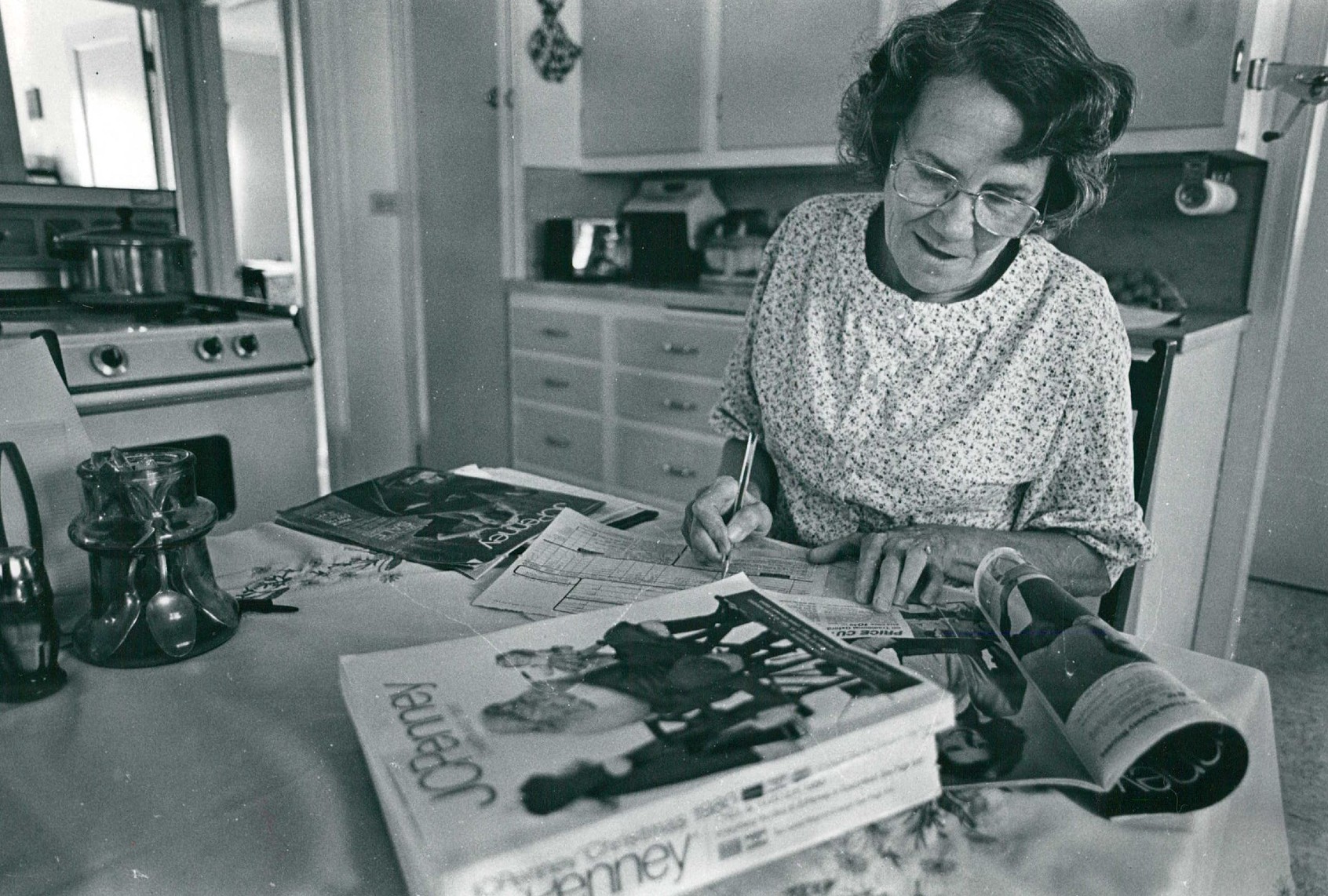
(Denver Post via Getty Images) A woman shopping from a JCPenney catalog
Aimée thinks that Millennials in particular have so much nostalgia for catalogs because they were the generation that witnessed e-commerce overtake mail order. “We didn’t know at the time that the internet was going to basically turn into a 24-7 shopping mall,” intent on making shopping quotidian and constant, she says. “I think a lot of us weren’t prepared for the way that having tons of choices for what to buy and where to buy them would become kind of paralyzing.”
But there’s also a nostalgia for catalogs as self-contained and curated; a static set of choices rather than pages and pages of search results. There’s a stark contrast between the frantic sense of urgency online retail often whips up a (It’s limited edition! This item never goes on sale except right now! OMG there’s only one pair left in your size!) and the catalog’s invitation to flip, peruse, think, rethink — basically, to shop deliberately rather than reflexively.
For a long time, the only catalogs that mattered to me were the ones from Scholastic Books handed out in elementary school classrooms, and the catalog from a little shop in Vermont called The Enchanted Dollhouse. The former was purpose-driven, with check boxes next to each book; the latter, pure fantasy that was much more inspirational than acquisitive. Then, at the home of my Friend With Cool Parents, I got a load of catalogs from Think Big!, a 1980s-era retailer devoted to giant versions of normally-small things (crayons, paper clips, forks) and Esprit, whose catalogs were the first I’d ever seen that featured real people (often Esprit employees), modeling the label’s bright sweatshirts and shorts.
The first ever Delia’s Catalog, Winter 1995.
Don’t say you didn’t read it… pic.twitter.com/fDsuubYcjn
— Pulp Librarian (@PulpLibrarian) October 6, 2024
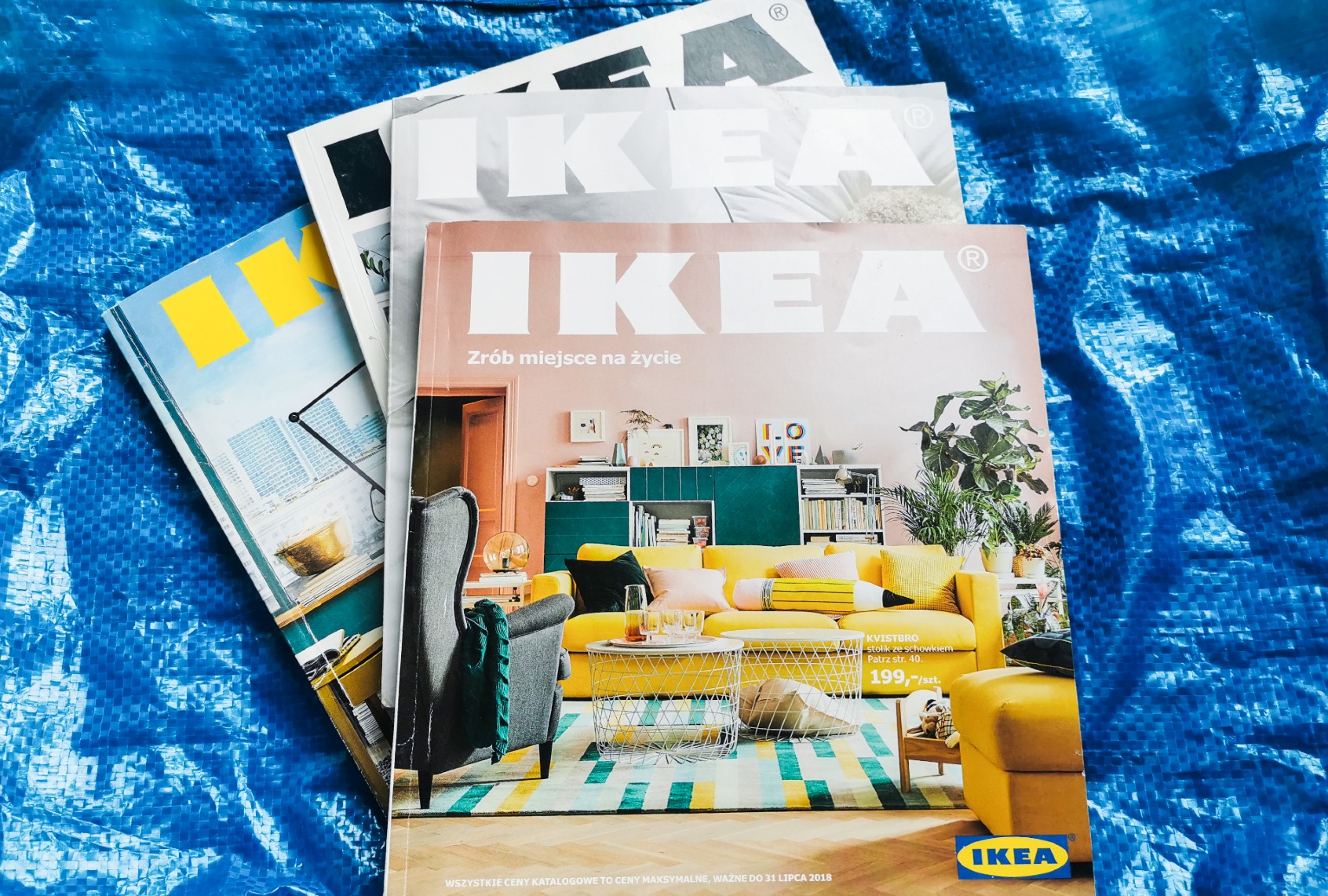
Catalogs have long had a formative impact on would-be consumers, offering a sense of aspiration on behalf of a future self, or a peek into the pasts of their loved ones. J. Crew was a revelation to one friend who was elated, at age 15, to have pages and pages of unisex garments — barn jackets, rugby shirts, roll-neck sweaters — that could be emulated with some judicious thrifting. Another noticed that his father always seemed to be in a good mood when a catalog from Orvis showed up in the mail, and was able to slowly piece together a close relationship that started when he asked his dad to explain fly fishing. A longtime IKEA enthusiast, meanwhile, described a moment of heartache when she ordered something from the company and found out that not only does the company no longer pack its latest catalog in the box with merchandise, there are no more paper catalogs at all. “The stores always stressed me out. I could go through [the catalog] in the peace and quiet of my own apartment and actually be able to breathe while browsing, then make a list, with aisle numbers, for what I wanted to buy. They have digital versions of their catalogs now, but I just can’t see that process being as fun.”
It’s too simple to say that the internet killed the catalog, especially since the demise of mail-order retail was consistently predicted as early as 1990, in a New York Times piece reporting that “Even for J. Crew, the Mail-Order Boom Days are Over”: “[T]hese are tremulous times for consumer buying, and the years of dynamic growth for mail-order catalogs are dusty memories. Even the fabled Lands’ End, one of the most successful and envied mail-order catalogue operations, has been struggling with sinking profits recently.”
The diminishing returns of instant gratification might explain why catalogs are nearly always, according to trade publications and business journals, on the verge of a renaissance.
Mail-order retailers actually embraced the internet fairly early on, in part because so many of them already had the fulfillment infrastructure and marketing to transition catalog customers smoothly online. In many cases, it wasn’t the internet that changed their fortunes, but financial restructurings involving private equity that turned fulfillment protocol away from customer service and toward speed and efficiency. (One former J. Crew call-center employee recalls “wanting to explain to people why they were paying more money for increasingly bad quality even though I had nothing to do with it.”)
1979 Sears catalog bathroom carpeting. Pick the one you want to die on. pic.twitter.com/myDy1B09wQ
— Nick Prueher (@nickprueher) September 1, 2016
By 2005, when the trade publication Catalog Age changed its name to Multichannel Merchant to reflect the rise of e-commerce, even legacy brands like Lands’ End and L.L. Bean could see that the future of mail-order retail was online, even if many of their customers remained staunchly analog. E-commerce scaled and sped everything up; even dELiA*s successful proto–fast-fashion model, which gave customers access to trends while they were still peaking, couldn’t match the European fast-fashion juggernaut of H&M, Zara, Mango and more that arrived in the United States in the early 2000s. Charlotte wonders if what resonates with Gen-Z about dELiA*s-era mail order might be the gap between when items were ordered and when they arrived: “You had a few weeks of imagining how this cargo skirt or that track jacket was going to make you just a little bit more confident, and that was a lot of the magic.” It’s not that the clothes were ever disappointing, she clarifies — it’s just that the anticipation was such a big part of the process.
The diminishing returns of instant gratification might explain why catalogs are nearly always, according to trade publications and business journals, on the verge of a renaissance. Even Amazon can recognize the importance of a piece of direct mail that makes holiday shopping less likely to cause choice paralysis. But retail businesses have in many cases lost the consumer trust that originally made their catalogs a promise of consistency and quality. What customers are more likely to count on these days is that corporate restructuring will result in worse quality — erratic sizing, cheaper materials, and more slapdash production — and a matching level of customer service.
Meg and Hamilton Swan, the insufferable yuppies of “Best in Show,” are introduced in the mockumentary rhapsodizing about the ease of mail-order shopping (“We are so lucky to have been raised amongst catalogs”), particularly as it sidesteps the need of talk to strangers in person. It’s tempting to think that if the Swans were shopping in 2026, they’d be longing to once again hear the friendly tones of an L.L. Bean representative rather than deal with yet another AI assistant on a the website from a company whose parent company is plagued by data leaks.
Online shopping, says Charlotte, “is something I avoid, especially as I get older — I just don’t have the patience to decode the sizing differences of four different brands selling basically the same shirt.” She and Aimée have joked about the prospect of starting a dELiA*s for middle-aged former indie girls, but it always ends, she says, “with us on Instagram, looking for something we know is already out there.”
Read more
about clothing and culture