
UNICEF chief urges stronger investment in Nigeria’s children despite economic pressures
By Chioma Obinna
The Executive Director of UNICEF, Catherine Russell, has called for sustained investment in Nigeria’s children, describing the country’s youthful population as its greatest opportunity for future economic growth, innovation and national resilience.
Russell, who concluded a working visit to Nigeria on Thursday, said the country had made encouraging progress in key child development indicators but warned that global economic pressures, insecurity, displacement and climate-related shocks could undermine recent gains if investments in children are not sustained.
Nigeria is home to nearly 105 million children and adolescents, representing about half of its population, making investment in child health, nutrition, education and protection more critical than ever.
“Everywhere I went in Nigeria, I saw the strength, ambition and potential of children and young people despite continued challenges,” Russell said.
While acknowledging that many Nigerian children continue to face significant hardships, she commended government efforts to improve access to essential services.
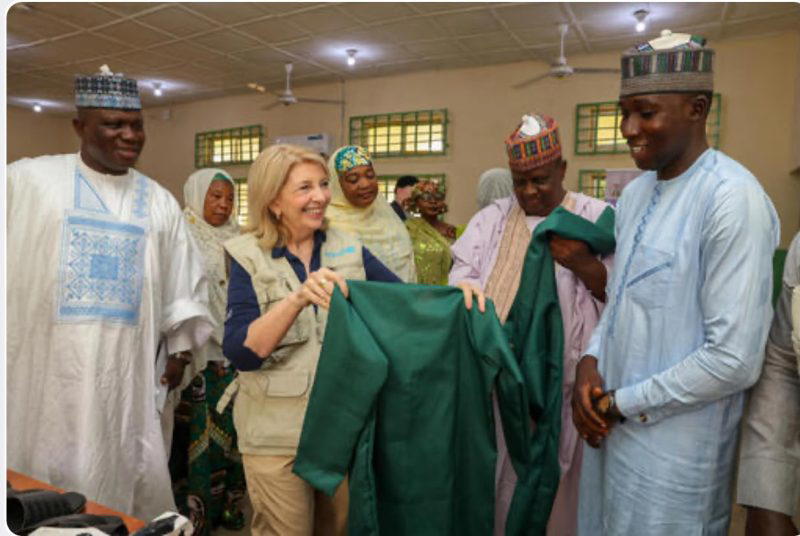
“There is no denying that many children face challenges, but I am encouraged to see the government-led response to provide critical services for children. In Sokoto, I met mothers at a UNICEF-supported health centre where children were being treated for malnutrition, helping them survive. I also met girls and boys who are getting a second chance in education through digital learning,” she added.
Russell noted that Nigeria has recorded measurable progress in areas including birth registration, social protection and school enrolment, saying the achievements demonstrate what is possible when children are placed at the centre of national development.
She, however, cautioned that funding constraints, the ripple effects of global economic instability, including the Middle East crisis, alongside insecurity and climate-related emergencies, pose growing threats to the wellbeing of millions of children.
According to her, continued investment in healthcare, nutrition, education, safe water, sanitation and child protection remains essential to prevent vulnerable children from being left behind.
“The first years of a child’s life are a critical window. Good nutrition, healthcare, early learning and protection help children develop to their full potential, building the foundation for stronger communities and a prosperous economy,” she said.
The UNICEF chief also welcomed the commitment demonstrated by the Federal Government and state governments towards improving children’s welfare and reaffirmed the organisation’s readiness to deepen collaboration with governments, development partners and the private sector.
She stressed that decisions taken today would determine Nigeria’s future, urging greater investment in children as a pathway to inclusive economic growth and sustainable development.
“Nigeria’s future will be shaped by the choices made for children today. Nigeria can be a positive example for shaping new models for investment in services and economic growth that benefit all children. UNICEF remains committed to supporting the country on this journey,” Russell stated.