
Nigeria’s debt profile troubling, Archbishop Onuoha warns
By Chidi Nkwopara
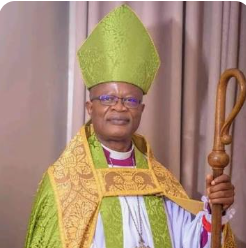
OWERRI — The Anglican Archbishop of Owerri, Most Rev. David O. C. Onuoha, has expressed concern over Nigeria’s rising debt profile, questioning the Federal Government’s continued resort to borrowing amid the country’s economic challenges.
Onuoha raised the concern on Thursday while flagging off the Provincial Council meeting at St. Paul’s Anglican Church, Avutu, Obowo Local Government Area of Imo State.
He expressed concern over what he described as the willingness of the National Assembly to approve more borrowing requests by the present administration.
His words: “We are disturbed at the debt profile of Nigeria and the penchant, as well as willingness of the National Assembly to give approval for more borrowings by the present administration.
“Recent release by the Debt Management Office, DMO, on September 25, 2026, shows that every Nigerian is owing between N702,185 and N716,822.
“This was arrived at by simply dividing the nation’s total public debt of N166.79 trillion, as at June 2026 across an estimated population of roughly 237 million people.
“The same office also stated that in the first half of 2026, Nigeria spent N5.28 trillion on domestic debt service and $1.82 billion on external debt service.
“Note that these humongous amounts are not debt repayment, but servicing.”
The cleric blamed corruption for what he described as the failure of Nigerians to enjoy the benefits of loans obtained by successive administrations, despite the burden of repayment being passed on to future generations.
He questioned why the government continued to borrow without making deliberate efforts to tackle corruption in the country.
Onuoha further argued that reforms, regardless of their intentions, could not deliver the desired results in an environment where corruption persisted.
“No reform, no matter how well intentioned, will produce the desired result in any society where corruption thrives,” he said.
The archbishop also criticised the government’s economic policies, saying they had worsened poverty, hardship and suffering among Nigerians.