
How Donald Trump hijacked America’s birthday
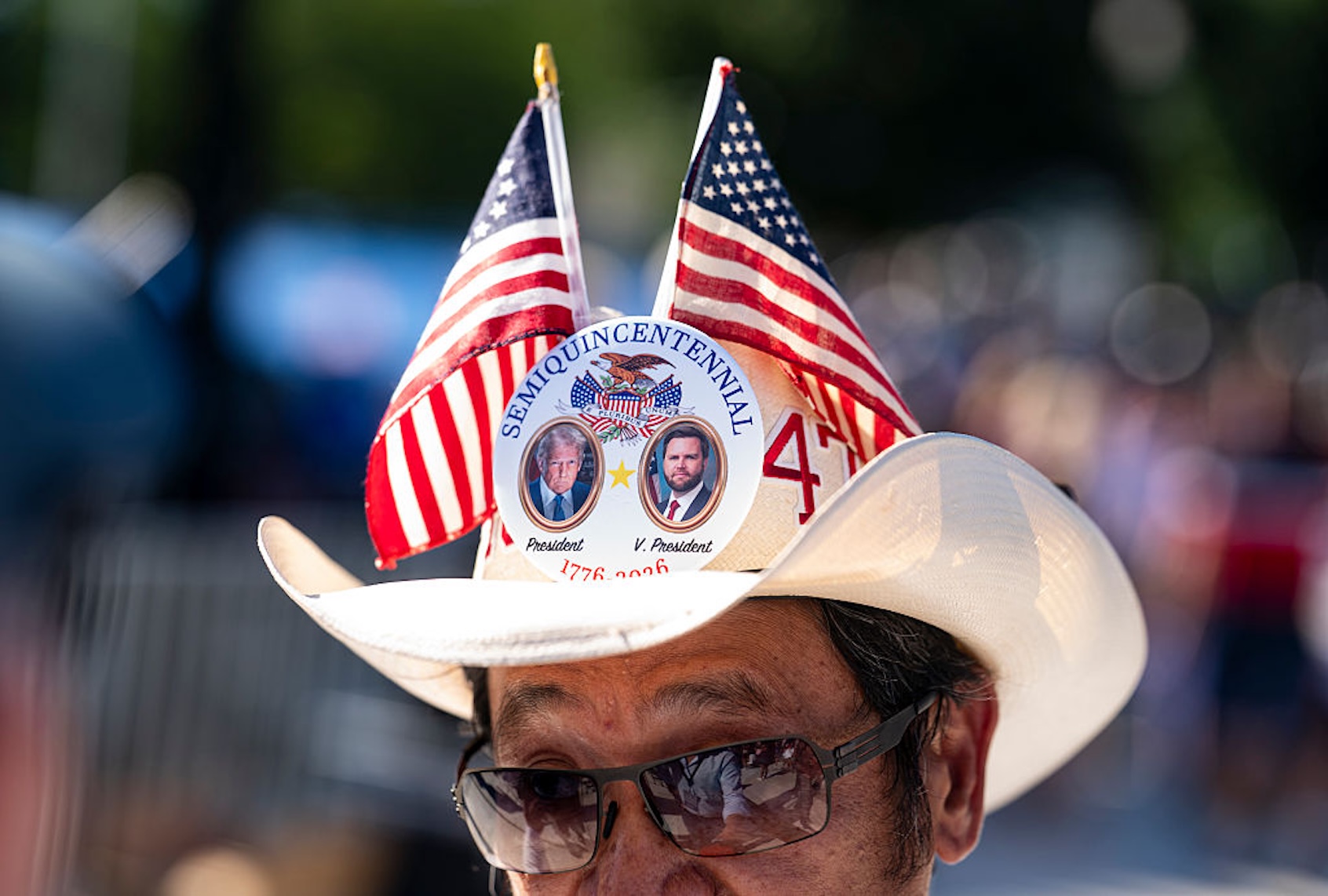
It’s a cruel quirk of fate, or maybe just a tragic irony, that we are celebrating America’s semiquincentennial during one of the most surreal periods in American history. We’ve certainly been through tougher economic times, and our latest war in the Middle East is not as ambitious as even the ones we waged earlier in this century. But I don’t think things have ever been as downright strange on both a domestic and global level as they are in the era of Donald Trump. Celebrating the Declaration of Independence under these circumstances is downright phantasmagoric.
Perhaps that’s why it doesn’t feel like any kind of celebration as much as an otherworldly requiem for a country that no longer exists.
At 250 years old, the United States is the oldest continuous modern democracy, which is startling when you realize that, by historical standards, we are still a pretty young country. The fact that America is so powerful and has such an outsized influence on the rest of the world is as much a function of its bounteous resources as it is the ideals that informed the Declaration of Independence and the Revolution. But throughout these last 250 years, many have looked to America as a beacon of hope, opportunity and freedom from places that had too little of all of that.
It’s the people — the “tempest-tossed,” as Emma Lazarus refers to them in “The New Colossus,” the poem engraved on the Statue of Liberty’s pedestal — who have made America unique among all the modern democracies.
It’s the people — the “tempest-tossed,” as Emma Lazarus refers to them in “The New Colossus,” the poem engraved on the Statue of Liberty’s pedestal — who have made America unique among all the modern democracies. Except for Native Americans, we’re all the descendants of immigrants, every last one of us, which makes this “celebration” in the midst of what is more and more looking like a slow-motion ethnic cleansing all the more disorienting. The Supreme Court’s ruling, issued June 25, allowing the deportation back to failed states and war-torn countries of millions who have made lives here drives that point home.
So here we are, 250 years on, watching our president direct a lame, uninspiring spectacle with him at the center of it as if he were George III, the monarch we overthrew for all the right reasons. The founders probably wouldn’t be totally surprised it has come to this, but they would surely be depressed to know how incredibly nonsensical it all is.
On America’s 50th birthday, when the country really was new and no one was quite sure if it would last, a commission was assembled, headed by the mayor of Washington, D.C., who invited all the remaining signers to come to the Capitol. John Adams, aged 90, and Thomas Jefferson, 83, replied that their health was too poor for them to travel, and both coincidentally died on the Fourth. The country went into mourning, and a memorial service was held four days later. Perhaps Adams and Jefferson, two old men of very different temperament who had carried on a lively correspondence for the previous half century, figured that if the country had made it to 50, maybe it stood a good chance of making it in the long run, and they could rest easy.
In 1876, the country was in a different place. Still in the shadow of the Civil War, which had ended 11 years before, and dealing with a still-divided country, the federal government decided to put on a big show to bring people out of the doldrums of the political upheaval and deep economic depression that had marked the previous three years. The first World’s Fair held in America would be happening at the same time in Philadelphia, so the city was also chosen as the site of the centennial events. Eight million people showed up to see the fair, which featured Alexander Graham Bell’s telephone and Thomas Edison’s telegraph, a fitting tribute to American innovation. When President Ulysses S. Grant sent the Declaration of Independence to Philadelphia to be displayed, the public was appalled by its condition, which led the government to establish the National Archives.
The 150th anniversary in 1926 again featured a World’s Fair in Philadelphia, but is best remembered for the speech given by President Calvin Coolidge, which set the table for the modern conservative movement and what came to be known as “originalism.” Rejecting the idea of a “living Constitution” and the progressive politics that had defined the previous decades, Coolidge claimed that the Declaration was based upon the Christian convictions of the founders. Since the 1920s were a time of unsettling social change, his call to a return to traditional values resonated with many Americans.
In 1976, having come through the tumultuous period of the Vietnam War, Watergate and massive social change, the country seemed to be in the mood to pretend they had all never happened. The bicentennial celebrations took place over the course of a couple of years and memorably included the 26-car American Freedom train, which carried historical artifacts across the country. There were concerts and festivals in various venues on the Fourth that featured superstars including the Eagles, Fleetwood Mac, Queen, The Who, Elton John and Elvis Presley. In retrospect, it presaged the flag-waving and jingoism that were at the heart of the Reagan Revolution.
Start your day with essential news from Salon.
Sign up for our free morning newsletter, Crash Course.
Preparations for the 250th bash started in 2016 with the intention of making it on par with those earlier celebrations. America250, the bipartisan planning commission, sought to make the events nonpartisan. According to Time, “[e]vertyhing changed when Trump began his second term.” What was to include “a jubilant cultural festival organized by the Smithsonian” was replaced with Trump’s Great American State Fair after his own group, Freedom 250, took charge of the events. Celebrations now include a group of 18-wheelers called the Freedom Truck, which are touring the country showcasing exhibitions created by the right-wing PragerU, the organization behind a conservative curriculum designed for schools that promotes revisionist ideas, including an animated video for children in which the abolitionist Frederick Douglass refers to slavery as “a compromise between the Founding Fathers and the Southern colonies for the benefit of the U.S.” A series of concerts were cancelled when many of the performing artists backed out after realizing the shows had morphed into celebrations of Trump more than America.
Over the weekend, the fair was plagued with sparse attendance and power outages, even as it featured a depressing food court with expensive food and a series of MAGA-affiliated booths offering everything from baptisms to Trump merchandise. The only ride was a massive Ferris wheel that didn’t work half the time.
It’s tempting to say that the celebration has become a metaphor for Trump’s second term — but then everything from the tariffs to the Iran war to the Reflecting Pool is the same metaphor, which pretty much says there’s no need for metaphors. Because of course, our national 250th birthday celebrations would be botched. Everything is.
But maybe this shoddy display isn’t really as reflective of the country as we might think. As it happens, Americans are showing another side of themselves throughout the nation. The real celebration of America 250 is happening in cities across the country that are hosting World Cup games. One might have assumed that a country that has spent the 18 months demonizing immigrants and foreigners would be unwelcoming, rude and dismissive of all these athletes and their fans from around the world, but the opposite has happened. Americans, who have been famously lukewarm about soccer and are generally in a foul mood about the state of our economy, politics and society, are enjoying all these foreigners, who seem to be enjoying us as well.
Reports from middle American towns — like Lawrence, Kansas, which has welcomed the Algerian national team, and the Algerian fans who have gathered there — may just tell us more about ourselves than the crass, political pageant taking place in Washington. Perhaps the ideals of the Declaration do still live in the hearts and minds of ordinary people who can see the shared humanity in all of us. Maybe, just maybe, this joyful embrace of the world and the sport that binds it together more than any other is the first real sign that, for all the noise and ugly divisiveness of the Trump era, there is still hope for us yet.
Read more
about Donald Trump’s Washington