
Int’l Day of Play: Fear steals play from Nigerian children – UNICEF
By Chioma Obinna
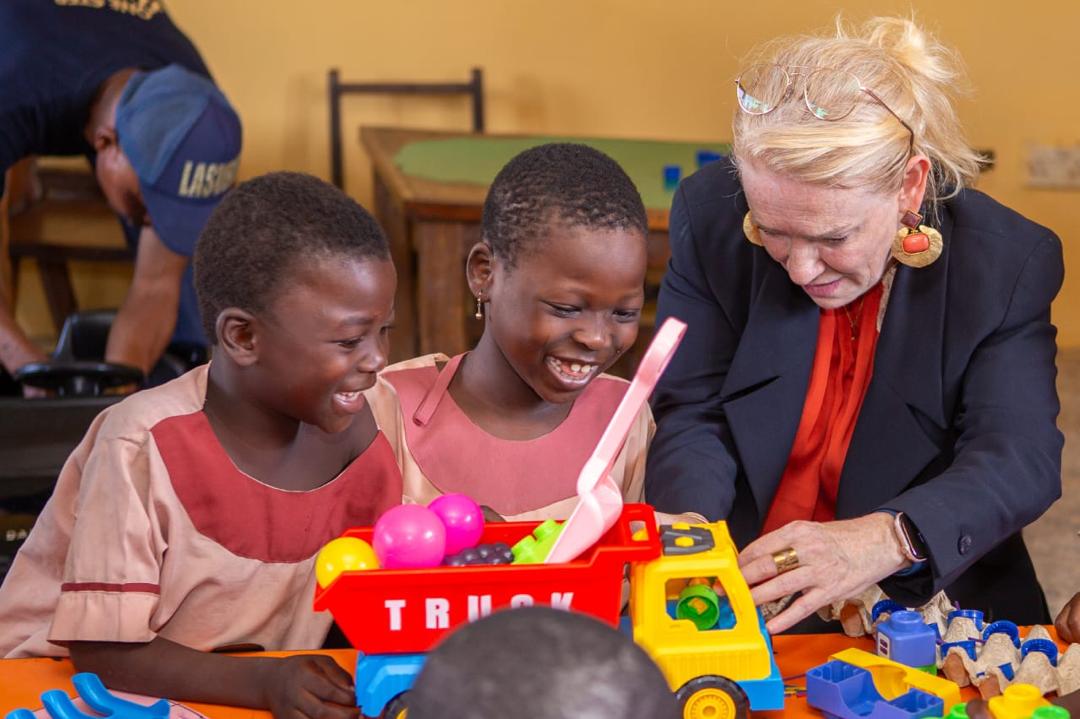
On this year’s International Day of Play, the United Nations Children’s Fund, UNICEF, on Thursday raised alarm over worsening insecurity, overcrowded classrooms, and growing fear in schools across Nigeria, warning that millions of children are being denied their right to play, learn, and develop properly.
Speaking during the 2026 International Day of Play held in collaboration with LASUBEB, in Lagos, themed: “Protect Play, Protect Childhood”, the Chief of UNICEF Lagos Field Office, Celine Lafoucriere, lamented that school kidnappings and unsafe learning environments were redefining childhood in Nigeria.
According to her, recent abductions of schoolchildren in Borno, Niger, Kebbi, and Oyo states have left many children traumatised while some victims are yet to return home.
“Right now, across this country, there are children who cannot say they are safe.
“In recent months, children have been taken into captivity from their schools in Borno State, Niger, Kebbi, and just last month, in nearby Oyo State. Unfortunately, some of those children have not come home yet.
“This is the reality of childhood in the country in 2026. And we cannot stand here, on International Day of Play, and pretend otherwise,” Lafoucriere said.
The UNICEF official noted that, beyond insecurity, many children are also unable to play because of overcrowded schools, a lack of materials, and the absence of safe recreational spaces.
“You will agree with me that too many children in the country are not playing. Some cannot play because their schools are overcrowded. Some because there is no space, no time, no materials. And some because they are too afraid to come to school. Their parents are too afraid to send them.
“The school compound, which should be the safest place in a child’s life, has become a place of fear,” she added.
Despite the growing challenges, Lafoucriere said stakeholders must refuse to allow fear define children’s future, insisting that play remains critical to learning and brain development.
“When a child plays, their brain grows. When they explore and build things and laugh with their friends, they are learning.
“No worksheet can do what play does. Play is not a reward for finishing work. Play is the work.”
She stressed that denying children opportunities to play could affect their emotional, social and intellectual development.
“No child should be denied that. Not by overcrowded classrooms. Not by anyone with a gun,” she stated.
Calling for urgent action from governments, parents, journalists and communities, Lafoucriere said child protection and quality education must go hand in hand.
“A child who is not safe cannot learn. A child who cannot play will not grow into who they are meant to be.
“These two things are connected, and both of them need fixing now. Our children are watching, let us not let them down,” she said.
Lafoucriere further stressed that protecting children’s right to play and education requires collective responsibility from government, parents, schools and communities.
According to her, the growing insecurity across the country makes it even more urgent for stakeholders to unite in defending children’s rights.
“In the current context in Nigeria, where children are under threat with the different kidnappings we have seen everywhere in the country, including now in the Southwest, it is very important that we rally together, stay together and defend the rights to education and the rights to play for our children,” she said.
She explained that early childhood development begins from birth and must be supported both at home and in schools through safe environments, proper learning materials and parental involvement.
“It takes a village to educate a child. Government is in the driving seat, but parents, education partners, family members and communities all have roles to play.
“As soon as children are allowed to play, their brains begin to develop and their capacity to learn improves. That is why play is extremely important.”
Lafoucriere also raised concerns over Nigeria’s growing out-of-school children crisis, insisting that education remains a fundamental right for every child.
“We must ensure children remain in school because Nigeria still has a very high number of out-of-school children. It will take an inclusive and holistic solution from all partners to make sure every child is in school, but it starts with play,” she added.
Also speaking, Executive Chairman of the Lagos State Universal Basic Education Board, SUBEB, Dr. Hakeem Shittu, said governments and stakeholders must continue to prioritise children’s happiness, safety and development.
Shittu commended UNICEF for sustaining advocacy around early childhood development and inclusive education, stressing that children learn faster and better through play and social interaction.
“When children are happy, they learn more. When they interact, it improves their communication and mental development.
“That is why play is very important in early childhood development. Children can only fully express themselves in an environment where they are free to play,” he said.
The LASUBEB boss said Lagos schools remain inclusive, noting that every child, regardless of background or physical condition, is entitled to equal learning opportunities.
“Our schools are inclusive. We do not discriminate. Every child is given equal opportunity to learn, interact and develop.
“Without toys and learning materials, children at that tender age cannot learn effectively. That is why government continues to provide books, uniforms, sandals, writing materials and bags free of charge.”
Responding to questions, UNICEF Education Specialist, Yetunde Oluwatosi, said the organisation had continued to support government through playful parental engagement programmes aimed at strengthening learning both at home and in schools.
According to her, the initiative helps parents understand how children can continue learning outside classrooms while also ensuring schools provide safe and supportive learning environments.
“It is about engaging parents at home and linking them with what is happening in the school. Children should be able to continue learning even while at home,” she said.
Oluwatosi noted that quality early childhood education also depends on properly trained teachers, adequate nutrition and child protection both at home and in school.
“Early childhood development is multisectoral. It links with health, nutrition and protection. Teachers must also have the capacity to deliver play-based learning effectively for children at that level,” she stated.