
Trump trashes Colbert’s high-rated finale as “no ratings”
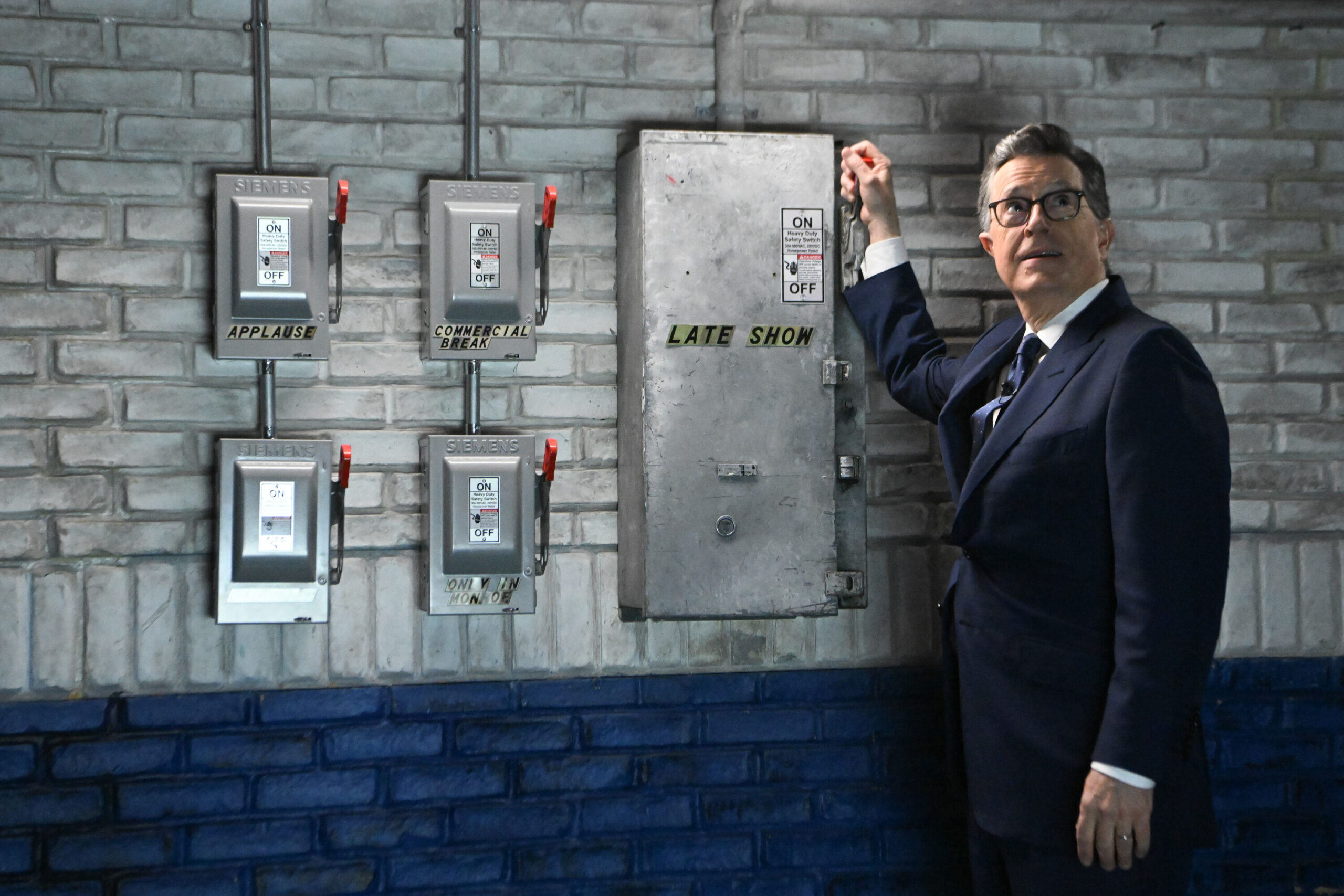
President Donald Trump spent the week insisting that Stephen Colbert had “no ratings.” The numbers told a different story.
“Colbert is finally finished at CBS,” Trump wrote on Truth Social after the late-night host’s final episode of *The Late Show*. “No talent, no ratings, no life. He was like a dead person.”
But Nielsen data reported shows Colbert’s farewell broadcast drew roughly 6.74 million viewers — the largest audience of his tenure and a sharp spike compared with his typical viewership, which had hovered closer to the mid–2 million range in recent months. The finale also outperformed standard weeknight late-night competition by a wide margin, turning the sendoff into a notable ratings moment rather than a collapse.
It’s worth noting that another late night foe of Trump — Jimmy Kimmel — also saw over 6 million viewers in his own ratings for his return after a brief hiatus last year. This then normalized in weeks following.
Trump, however, continued to frame the departure as proof of cultural rejection. He called Colbert’s exit “the beginning of the end” for other late-night hosts and repeated claims that the comedian’s work had been unpopular and declining.
The feud escalated further over the weekend when Trump shared an AI-generated video on Truth Social depicting Colbert being thrown into a garbage can by Trump while a cheering crowd looks on. In the clip, Trump dances victoriously after the moment, turning the confrontation into a stylized spectacle of humiliation. The video quickly circulated online, where critics called it disturbing and supporters described it as trolling aimed at a long-time political critic.
Taken together, the posts marked a familiar but increasingly striking pattern in Trump’s online communication style. His Truth Social feed has become saturated with AI-generated imagery, altered photos and symbolic victory narratives depicting him towering over opponents, being celebrated by crowds or restoring order in dramatic visual form.
The Colbert video fits squarely within that ecosystem. It does not attempt to rebut ratings data or engage in traditional media criticism. Instead, it transforms the dispute into a visual narrative of dominance and disposal, an opponent not debated, but discarded.
Start your day with essential news from Salon.
Sign up for our free morning newsletter, Crash Course.
That contrast between narrative and data sits at the center of the story. While Trump insisted Colbert had “no ratings,” the finale delivered one of the strongest audiences of the show’s recent history. And while the broadcast ended a long-running late-night institution, the political argument around it has only intensified in the digital aftermath, increasingly shaped not by television numbers, but by AI-generated images designed for emotional impact and online circulation.
The only way Colbert and “The Late Show” responded to this criticism is a simple photo, with a simple caption: “thank you!”
Read more
about this topic