Show ID to eat? Todd Blanche makes awkward analogy to support federal voter ID law
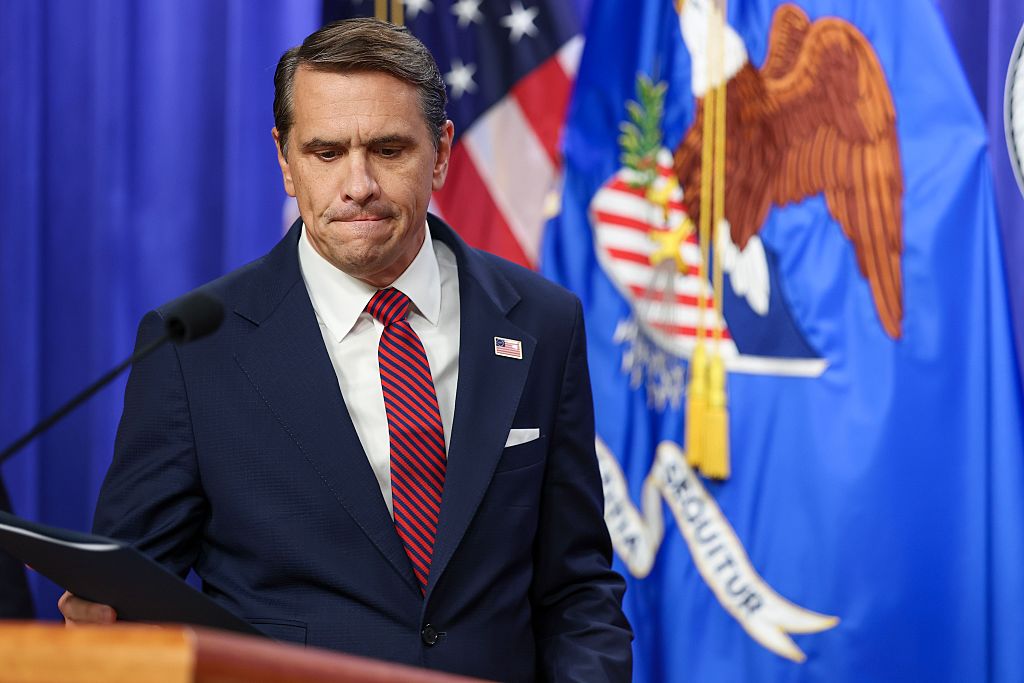
Amid a conversation about the indictment against former FBI Director James Comey, Acting Attorney General Todd Blanche sparked swift backlash for something related to the recent decision about voting rights. Blanche compared voter ID requirements to being asked for identification at a restaurant on Sunday’s “Meet the Press.”
Blanche made the remark while discussing the administration’s push for expanded voting verification rules under the proposed SAVE America Act, which would require proof of citizenship like a passport for federal voter registration.
“Showing ID to vote is like showing ID when you go into a restaurant,” Blanche said.
The analogy quickly spread across social media, where it was widely criticized for oversimplifying how identification actually works in everyday settings. Voting rights attorney Marc Elias responded by noting that he has “never been asked for ID to eat,” a comment that was widely shared in online reactions.
I must be going to different restaurants. I have never been asked to show ID to eat. https://t.co/7I05yPvvKd
— Marc E. Elias (@marceelias) May 3, 2026
This remark was reminiscent of when President Trump claimed in a rally in 2018 that people have to show identification when purchasing groceries. While ID is commonly required for specific restaurant-related activities — such as purchasing alcohol or entering age-restricted venues — there is no general requirement to present identification simply to eat at a restaurant. This makes the comparison central to the backlash and a continued reminder of how out-of-touch many in this administration are with the daily reality of most Americans.
Start your day with essential news from Salon.
Sign up for our free morning newsletter, Crash Course.
The comment came amid renewed debate over federal voting laws. Supporters of the SAVE America Act argue that expanded documentation requirements are necessary to strengthen election security and ensure uniform standards nationwide. Opponents counter that requiring documents like passports could create barriers for eligible voters who do not have immediate access to them.
While 36 states already require some form of identification at polling places, federal proposals would expand verification requirements to the registration process itself, intensifying long-running partisan disputes over election access and integrity.
The exchange underscores how political messaging around voting laws can quickly hinge on analogies that become flashpoints in their own right.
Read more
about this topic