
Supreme Court guts the Voting Rights Act in “Jim Crow 2.0” ruling
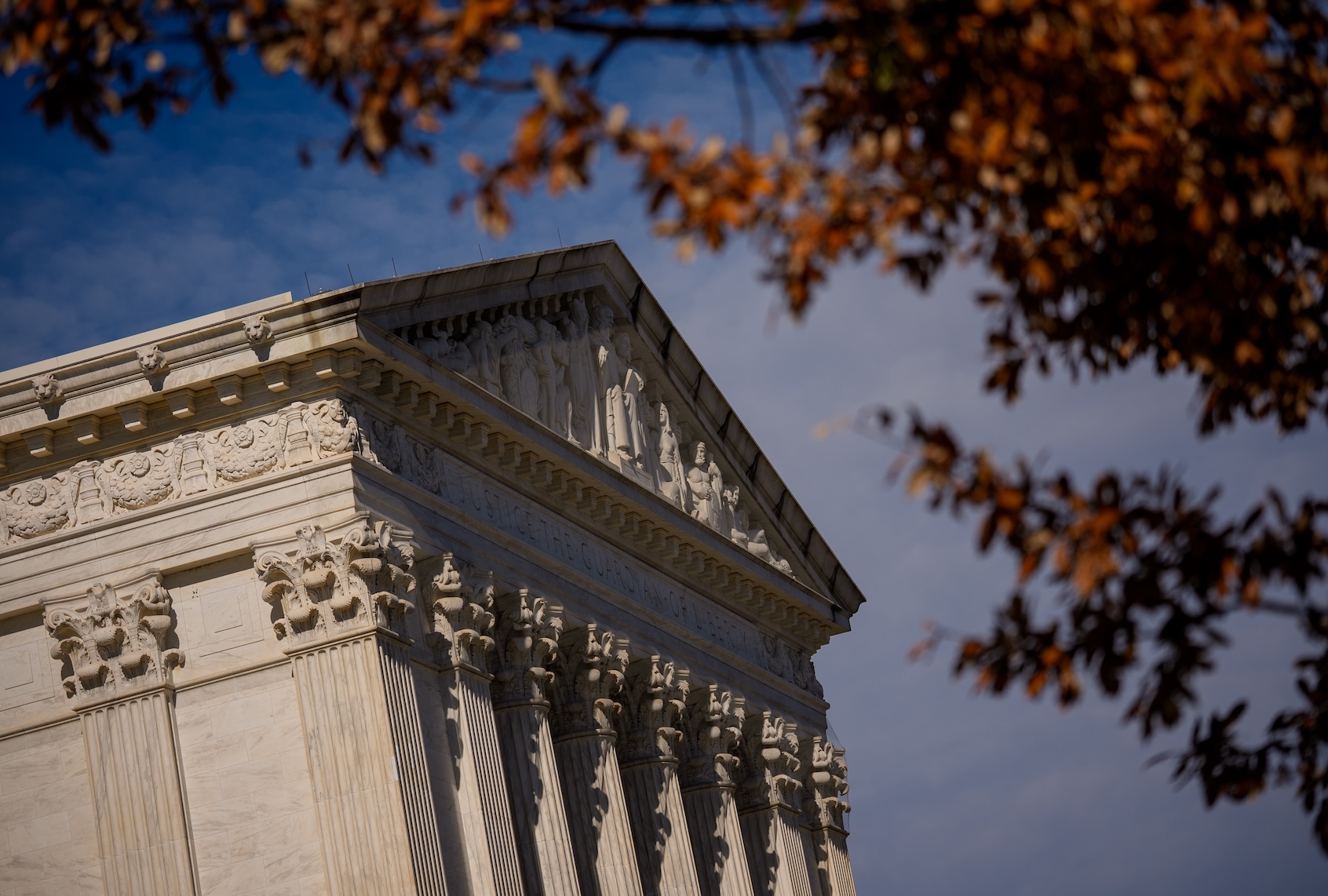
In its Louisiana v. Callais decision Wednesday, the Supreme Court nominally affirmed Section 2 of the Voting Rights Act of 1965, while simultaneously nullifying its intended effect, striking a devastating blow to voting rights in the United States, civil rights advocates and attorneys say, warning that it could thrust the United States back to a pre-civil rights era.
The Supreme Court handed down a 6-3 decision siding with a group of self-described “non-African American” voters in a case centering on whether the state had racially gerrymandered its congressional map by adhering to Section 2 of the Voting Rights Act and drawing a proportional number of majority Black districts to the percentage of Black residents in the state.
The case came on the heels of a long legal battle in the state stretching back to the 2020 census, which reported about 33% of the population is Black. The state then moved to draw just a single majority minority district. In a 2022 decision, federal courts ruled that the map was illegal under Section 2 of the Voting Rights Act, because the act requires states to give minorities the opportunity to elect the candidate of their choice. Given that Louisiana’s population is one-third Black, that would mean that the state should have two majority Black districts, of its six congressional districts.
In 2024, the state approved a new map with two majority minority districts, and in response, the group of non-African American voters sued, saying that they were being racially discriminated against by the new maps. That same year, a federal district court sided with these voters, ruling that the maps could not be used in 2024 or future elections. However, in May 2024, the Supreme Court temporarily paused the decision until now, ruling with the lower court’s decision.
In Justice Samuel Alito’s opinion, he justified the high court’s decision, writing that “the Constitution almost never permits the Federal Government or a State to discriminate on the basis of race.” In his assessment, the question of the case was “whether compliance with the Voting Rights Act should be added to our very short list of compelling interests that can justify racial discrimination.”
“The Supreme Court has gutted the last pillar of the Voting Rights Act. This decision doesn’t just weaken voting rights, it obliterates them.”
In siding with the group that brought the case, the conservative supermajority has sent the country back into a pre-Civil Rights Movement era in terms of voting rights, according to civil rights lawyers and those who advocate for civil rights in their state.
Alanah Odoms, executive director of the ACLU of Louisiana, which was a party in the case, told Salon that “Today, we lost one of the last seatbelts of our democracy.”
“The Supreme Court has gutted the last pillar of the Voting Rights Act. This decision doesn’t just weaken voting rights, it obliterates them,” Alanah Odoms said. “Black Louisianans fought, bled and died for generations to gain fair representation. Today, the court stripped it away. But Louisiana’s Black and brown communities will not be silenced. We will not accept this quietly. The fight for representation continues in the legislature, and in the streets, and in every election where our voices refuse to be silenced.”
Hilary Harris Klein, senior counsel for the Southern Coalition for Social Justice, told Salon in an interview that the Supreme Court has effectively gutted the act that was the “crown jewel” of the Civil Rights Movement.
“It was foundational and had such a wonderful impact in creating a more multiracial democracy where our representatives look more like the general population,” Klein said. “And I think today’s decision, in a few ways, takes us back to pre-1965 and tears that down.”
Start your day with essential news from Salon.
Sign up for our free morning newsletter, Crash Course.
Klein added that in establishing the intent of those drawing the map as the new standard for establishing racial gerrymandering — as opposed to the actual districts created by the maps — the Supreme Court has opened the doors for legislators to whitewash their attempts at racial gerrymandering.
Experts say it’s an echo of previous rulings. In the 2023 Alexander v. South Carolina State Conference of the NAACP decision, the court said that South Carolina had racially gerrymandered and that courts could not establish that racial gerrymandering had occurred through an analysis of the vote dilution a map inflicts upon minority communities.
“I think that this and the prior Alexander decision provide a way for legislators to whitewash racial gerrymandering and the dilution of minority voting power, because now they can just ensure that their populations are racially polarized and then just claim everything after that is all partisan,” Klein said.
“They can use racial appeals and elections,” Klein added. “They can use imagery and messaging to say, ‘We are essentially the party for preserving white power.’ They can message that in subversive ways and then racially polarize their elections and then claim everything after that is just partisan politics, because we have a two-party system.”
Civil rights activists in the South had a withering appraisal of the decision. Charles Taylor, a state organizer for the Mississippi NAACP, told Salon that he believes the court may be ushering in “Jim Crow 2.0.”
“If you ‘don’t consider race,’ you could gerrymander racially, and we could lose a great deal of the Black seats that we have in Mississippi,” Taylor said, adding that he’s expecting the government of Mississippi to not just target congressional seats, but to “do everything in their power to dilute Black voting power.”
“Today’s decision, in a few ways, takes us back to pre-1965 and tears that down.”
That may include state legislative districts and state supreme court districts, which would further dilute the representation and power of Black voters in the state. While the case focused on the voting power of Black Americans, Taylor noted that the decision impacts all minorities as well.
“Our governor has already said last Friday that he was going to call a special session 21 days after the Callais decision came down to redistrict our supreme court,” Taylor said.
Rhyane Wagner, the senior policy manager at the Black Voters Matter Fund, told Salon in an interview that she wasn’t surprised by this decision due to Chief Justice John Robert’s career-long crusade to dismantle the Voting Rights Act.
“Justice Roberts has been after the Voting Rights Act for at least 40 years — as long as I’ve been alive. He believes the Voting Rights Act to be a mistake, if you will, and that’s putting it lightly,” Wagner said. “The decision shifts the legal focus away from racially discriminatory outcomes and discounts the ongoing effects of historical societal discrimination.”
Roberts’ record, Wagner said, cuts against his reputation as a jurist seeking to preserve the legitimacy of the court — a legitimacy that has been in crisis due to Republican court packing and decisions like ensuring that Trump, as president, enjoyed unprecedented broad immunity for a broad swath of actions he took as president, that have been criticized as fiercely partisan. He’s also been the deciding factor in other voting rights cases, like Allen v. Milligan, another Section 2 case with distinct partisan implications.
“For me, John Roberts is basically being hypocritical. I am surprised that he did not make the final decision. So I don’t know if his thinking was, ‘Well, I was the deciding factor for the Milligan case. Well, I’ll just take a step back on this one,’” Wagner said. “I try not to get into his brain, but I was surprised that he didn’t make the final decision, given his history of animus towards the VRA.”
Wagner also highlighted the court’s decision to center the intent of those drawing the lines, as opposed to alleged impact, saying, “impact has historically been easier to prove for plaintiffs bringing voting rights cases versus intent, you can’t get into someone’s head.”
In Wagner’s view, the intent tactic is ironic given that the intent of the authors of the Voting Rights Act is well known, and oppositional to the court’s decision — especially considering that the Voting Rights Act was renewed as recently as 2006. The renewal passed 390 to 33 in the House and unanimously in the Senate, and was signed into law by President George W. Bush no less.
The renewal included the preclearance provisions, which have since been destroyed by the Supreme Court and even measures that went beyond the 1965 law, like a requirement that states provide bilingual ballots and election materials. It also included provisions that responded to previous Supreme Court decisions that had narrowed the scope of the Voting Rights Act.
In Wagner’s view, this decision is all part of a larger push to roll back civil rights, backed by Republicans and conservatives who have repeatedly used the language of civil rights to work against the intended effects of civil rights law.
“It was never controversial, regardless of party, to do so. Even under George W. Bush, it was not a controversial thing. It was just automatic to renew it,” Wagner said. “But now, in these last 10 years, with the exception of President Biden, there’s been this speeding up of efforts to basically eviscerate it using a reverse racism argument.”
Read more
about politics