
Trump’s moral crusade is dangerous for America — and the world
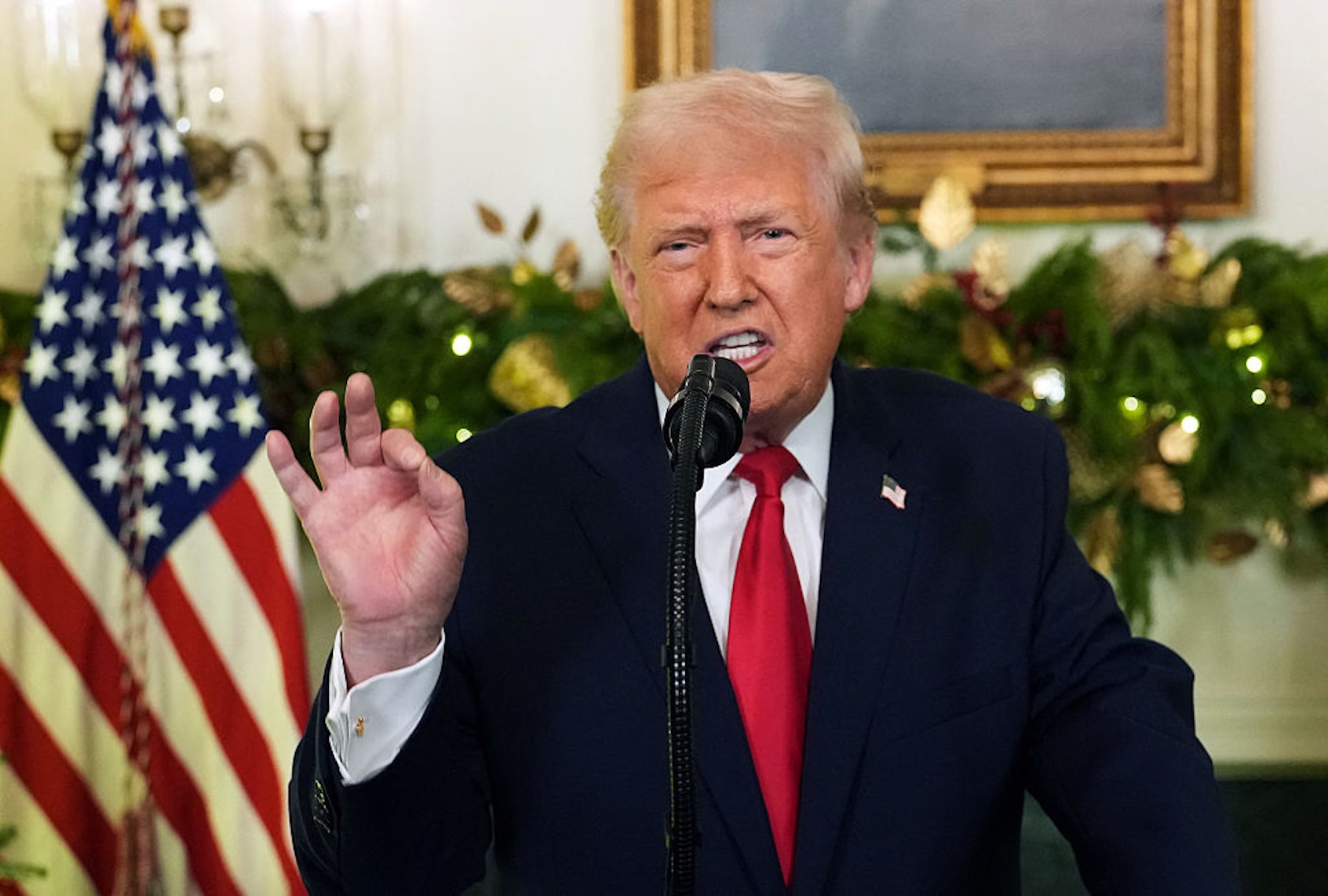
Donald Trump imagines himself as a moral crusader fighting the forces of evil at home and abroad. But his morality is not guided by ethics, humanism or respect for the common good. The president instead relies on himself, something he made explicit in a January 2026 interview with the New York Times. “My own morality,” he replied when asked if he observed any constraints on his power to use the military, including invading other countries. “My own mind. It’s the only thing that can stop me.”
In his mind, Trump is the beginning, end and final judge of what constitutes right and wrong — and he feels free to impose his dogma on America and the rest of the world. His is a totalistic mindset, and it’s one of the defining features of a personality cult like MAGA.
In the president’s framework, “good” is defined as those who support him and MAGA. “Evil” means those who dare to oppose him and his agenda. In this zero-sum view of the world, any perceived enemies must not merely be defeated but vanquished altogether. Now, in the wake of Trump’s expanding war with Iran, that framework has multiple faces at home and abroad.
Applied domestically, his belief is antithetical to American democracy and pluralism because it makes compromise, consensus politics and respect for institutions a virtual impossibility. You cannot negotiate with evil. Trump and other leaders on the right have repeatedly attacked Democrats, liberals, progressives and other perceived enemies as evil, “poison in the blood” of the nation and “the enemies within,” “takers” and “parasites,” and as un-American traitors. These phrases are examples of stochastic terrorism: language designed to inspire violence without directly ordering it. Research has shown that this kind of rhetoric encourages political violence and eliminationism.
Trump has institutionalized this immoral vision as a governing philosophy, where loyalty to him and MAGA — and not the rule of law, the Constitution or America’s democratic norms and traditions — are paramount.
Internationally, Trump’s simplistic, binary moral framework undermines the rules-based international order because it negates the role played by shared interests, pragmatism and common values.
Internationally, Trump’s simplistic, binary moral framework undermines the rules-based international order because it negates the role played by shared interests, pragmatism and common values. As seen in Iran, this mindset also encourages armed conflict and makes de-escalation difficult to impossible.
Trump and his spokespeople have justified the war against the Islamic Republic in explicitly moral terms, describing the regime as one of the vilest regimes in history and its leaders as evil. The administration has also reveled in killing them, even going so far as to create action movie and video game style propaganda celebrating the destruction of Iran’s government and military.
In a Saturday post on Truth Social, Trump threatened the country with complete destruction and death if they don’t surrender on his terms: “Today Iran will be hit very hard! Under serious consideration for complete destruction and certain death, because of Iran’s bad behavior, are areas and groups of people that were not considered for targeting up until this moment in time.”
The president’s moral crusade has a theological dimension that directly connects it to the war in the Middle East. His MAGA followers and supporters have repeatedly posted artificial intelligence-generated images of him as a medieval European crusader bound for the Holy Land to fight Muslims and other “infidels.” Trump himself has shared videos on social media declaring that he is chosen by God, and that he and MAGA are blessed and possess a divine destiny.
This imagery grows from fertile ground. Research by PRRI shows that White Christians are among Trump’s most loyal supporters. Many of them share Trump’s belief that he has been chosen by God to turn America into a White Christian theocracy.
Although such talk sounds absurd to outsiders, Christian nationalists and eschatologists truly believe that Trump’s war against Iran is not just a strategic necessity — it is demanded by Biblical prophecy. In their interpretation, such a war will bring about the prophesied End Times, the return of their God to Earth, the final defeat of evil and the Rapture of the saved.
Key policymakers in the Trump administration and the Republican Party, most notably Defense Secretary Pete Hegseth, are Christian nationalists who share these beliefs about waging a holy war in the Middle East. This is not fringe theology operating at a safe distance from power. It is central to the administration itself.
Trump’s fixation on evil is not grounded in deep contemplation, a coherent moral philosophy, historical understanding or any consistent ethical framework to, for example, make the world safe for democracy by abolishing fascism and other forms of real danger. Instead, it is wholly contingent and circumstantial, defined by what serves his own self-interest and corrupt needs and wants at any given moment. The same man who describes Iran’s leaders as making up one of history’s vilest regimes has also repeatedly praised Russian President Vladimir Putin, North Korea dictator Kim Jong-un and Chinese President Xi Jinping as “tough guys” worthy of admiration. Trump’s standard, then, is not evil. It’s whether someone has the kind of power he craves for himself and the MAGA movement.
Want more sharp takes on politics? Sign up for our free newsletter, Standing Room Only, written by Amanda Marcotte, now also a weekly show on YouTube or wherever you get your podcasts.
To be clear: There are governments, like Iran’s, that violate human rights, commit crimes against humanity, sponsor terrorism, and threaten global and regional stability. If necessary, their leaders should be removed through force of arms for the greater good, and for international stability and peace. But when possible, this type of regime change and revolution should be done by a country’s own people.
As seen in Iran, Venezuela and other parts of the world, the administration deploys language to cloak and justify an increasingly militaristic foreign policy as muscular or “flexible, practical realism.” In reality, it is closer to machtpolitik, the doctrine that power is its own justification, strength is all that matters, and violence, acts of vengeance and nihilism are to be celebrated.
Stephen Walt, a professor of international affairs at the Harvard Kennedy School and one of the foremost theorists of realism in international relations, was direct in a January interview with the New York Times about what this actually represents. “There are iron laws of world politics that they don’t understand,” he said. “Realism is all about realizing that in a competitive world, you want to be smart and go for genuine strategic advantage, not just pointless displays of power.”
Like other conflict entrepreneurs — leaders who manufacture and escalate conflict for political and personal gain — Trump deploys moral language to silence dissent at home and justify aggression abroad. The enemy within and the enemy without are both expressions of the same totalizing framework: Those who support Trump are good, those who oppose him are evil and evil must be vanquished.
The logic of domination abroad and authoritarian rule at home are not separate projects. They reflect the same authoritarian project. If Trump believes he is on a moral crusade — chosen by God, fighting evil, fulfilling prophecy — why would he ever let himself be restrained by public opinion, Congress, democratic norms or the rule of law?
This is not merely a democracy crisis. It is a moral crisis in the most precise sense. A leader has placed himself beyond moral accountability entirely. In the process, he has convinced tens of millions of Americans that this is not a catastrophe but a great crusade.
Read more
about Iran