
“The Swan” tested the waters for Mar-a-Lago face
Along with a few other TV critics, I have the dubious distinction of attending the last party at the late Hollywood producer Robert Evans‘ Woodland estate before its storied pool house burned down in 2003. There, I rubbed elbows with famous comedians and an assortment of UPN and WB starlets. But the guests I remember most clearly were a woman in her 40s, possibly, and her daughter, who was perhaps in her mid-20s. They were remarkable because they’d been surgically altered to look like twins. By that, I mean both women bore evidence of similar procedural enhancements, most noticeably lips plumped like party balloons and sharp cheekbones.
Plastic surgery is common in Hollywood, but this was something novel. This mother-daughter duo wasn’t in a show. They were there because they were part of Evans’ wealthy, powerful social circle. And they weren’t trying to maintain an existing aesthetic but to stand out with the best version of perfected artificiality money could buy.
That memory sat at the bottom of my mind’s darkest well until I watched Erin Lee Carr’s “The Swan: Behind the Mirror.” Indeed, I had blocked out most memories of that 2004 Fox reality train wreck until Carr’s documentary reached into my mind’s cobwebby attic and retrieved its cabinet of horrors.
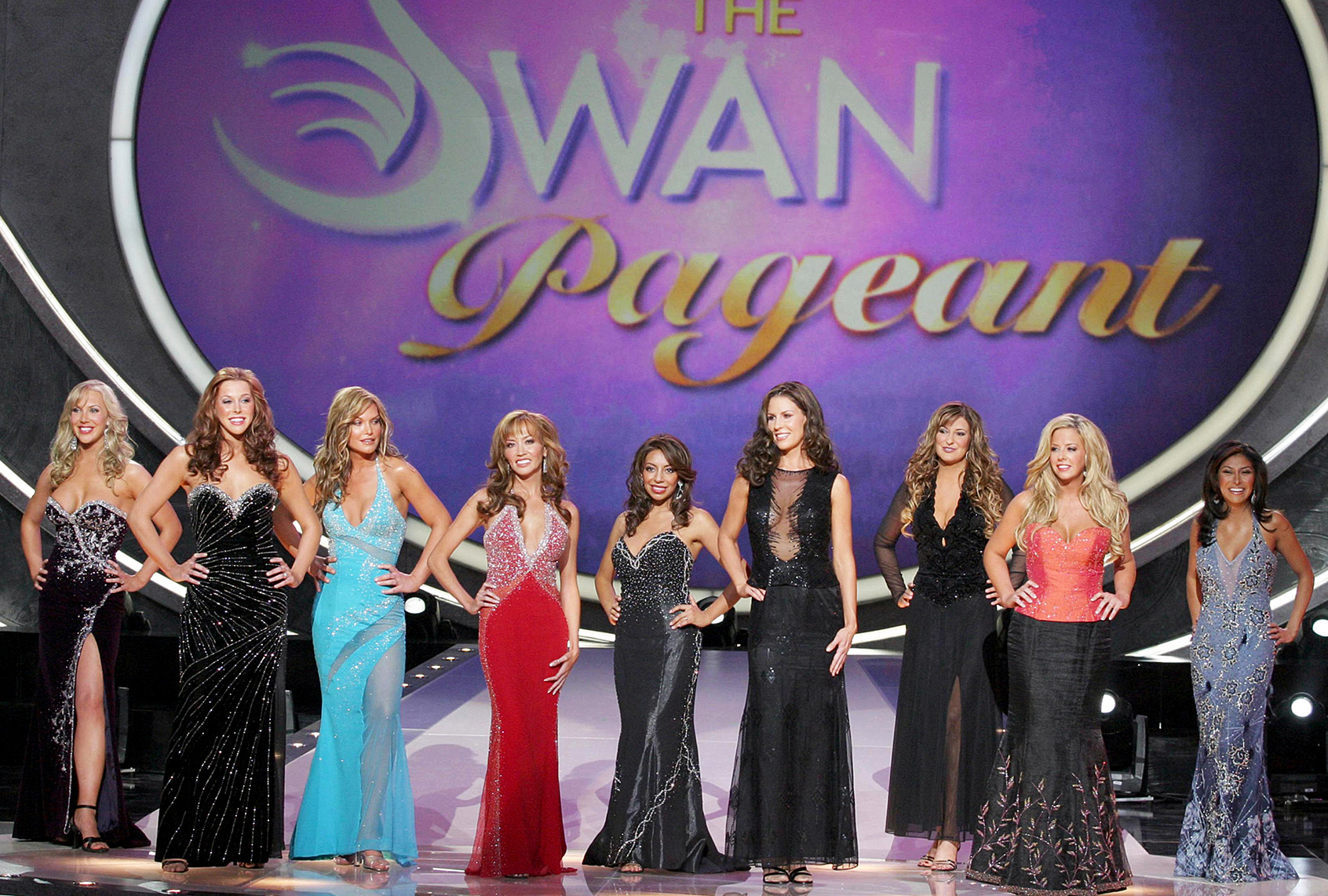
For those who also blanked it out or were too young to clearly remember the details, “The Swan” recruited a bevy of normal-looking women convinced by magazine ads, the tabloid industry and other media that they were, in fact, ugly ducklings. “I wanted some big-a** cans,” one of Carr’s subjects said, explaining that was the age of Pamela Anderson and Maxim cover girls, women she wanted to be.
Yes, this horrendous TV egg could only have hatched in a place like Hollywood, where mother-daughter spa days might also mean going under the knife.
When I say “The Swan” was one of the vilest shows ever made, that is coming from a person who has seen a quarter-century’s worth of terrible television. Lest you think my opinion is an outlier, here’s what my predecessor Heather Havrilesky had to say about it when it first aired:
The funny thing is, it doesn’t just make you depressed about plastic surgery and sad women and sleazy TV executives. It also makes you depressed about the war in Iraq, the frailty of the human ego, the undeniable soul-sucking lameness of our culture, and the impossibility of real beauty at a time when such confused animals roam the earth.
Somehow, despite each episode’s invasive gawking at each participant’s ghastly surgeries, the lasting legacy of “The Swan” and other shows – it didn’t exist in a vacuum – was not simply to normalize cosmetic surgery but to establish it as part of a system of social signifiers.
At the lowest consumer-friendly rung rest affordable fillers and Botox injections. At the top, in the realm of multimillionaires and billionaires, you will find the Hall of Mar-a-Lago faces. A library of radically changed visages, sliced and sculpted to fit the funhouse-mirror beauty standards set by a handful of influential men.

(Courtesy Disney) Former “The Swan” contestants Kari, left, and Gina Bravata appear in “The Swan: Behind the Mirror,” a Hulu documentary that revisits the 2004 Fox reality series.
Dr. Randal Haworth was among the specialists creator Nely Galán recruited in 2003. Galán declined to be interviewed for Carr’s documentary, having been thoroughly raked over the coals once the public’s visceral disgust with “The Swan” got it canceled after its second season.
But Haworth offered his view, which he may now regret. At first he opines that plastic surgery is surgical psychiatry before likening himself to an interior designer and then, in explaining his role in the series, saying, “My goal was, as a plumber, can I perform early hyperesthetic surgery on these people?”
Off-screen, Carr calls out the weirdness of a plastic surgeon describing himself that way. “You’re literally talking about toilets,” she says. “And women.”
“That was unintended,” he replies, only digging himself in deeper when he explains that, like plumbers or electricians, he was there to do a job.
So. The women in “The Swan” weren’t quite latrines, but the man who got intimate with their flesh and bone didn’t exactly see them as people either.
With “The Swan: Behind the Mirror,” Carr does a service to the participants this production tortured for ratings and to the modern TV audience by not only reminding us how exploitative it was but also establishing it as a benchmark for the beauty industry.
Of course, the first idea is likely to gain much more traction than the second, if the public’s shocked reaction to Netflix’s “Reality Check: Inside America’s Next Top Model” is an indicator. “ANTM” and “The Swan” were contemporaries, after all. Before “The Swan” aired, ABC ran “Are You Hot? The Search for America’s Sexiest People,” made memorable by ‘80s star Lorenzo Lamas, one of its judges, using a laser pointer to point out contestants’ flab and cellulite for viewers at home.
“Extreme Makeover” had also been airing since 2002, showing ordinary men and women undergoing plastic surgery, receiving style makeovers and adopting fitness routines. “The Swan” was not a singular occurrence, then, but part of an era hawking cosmetic improvement, whether surgical or noninvasive, as the key to succeeding at life.
The difference between the two shows resembles the divide between workaday vanity and Mar-a-Lago maximalist aesthetic uniformity. “Extreme Makeover” pitched each contestant’s journey as personal, ending with them showing their “new, improved” selves to their friends and family.
Producers on “The Swan” not only pressured participants to undergo a series of grueling procedures and painful recoveries (that Carr’s documentary reveals were insufficiently managed), but they also made them compete against each other in a pageant. Very much like an election, in other words, only one populated with women who were scalpel-sculpted, lifted, tanned and tucked to surgical specifications.
Or, in Haworth’s telling, maybe just one surgeon’s.
Want more from culture than just the latest trend? The Swell highlights art made to last.
Sign up here
To be clear, that difference does not make “Extreme Makeover” less morally reprehensible. The fact that it outlived “The Swan” by several years only enhanced its role in mainstreaming elective cosmetic surgery. More than two decades after these aired, we’ve swerved between an age of unattainable thinness being pushed as a cultural ideal and a time of healthy-at-any-size body positivity from which we’re slowly regressing. The first runs of these shows probably missed Gen Z. Not millennials, sadly. And yet, Sephora and other cosmetic retailers love that their obsession with anti-aging begins in their teens and 20s. These products are marketed to them as “skin-loving,” not as wrinkle creams.
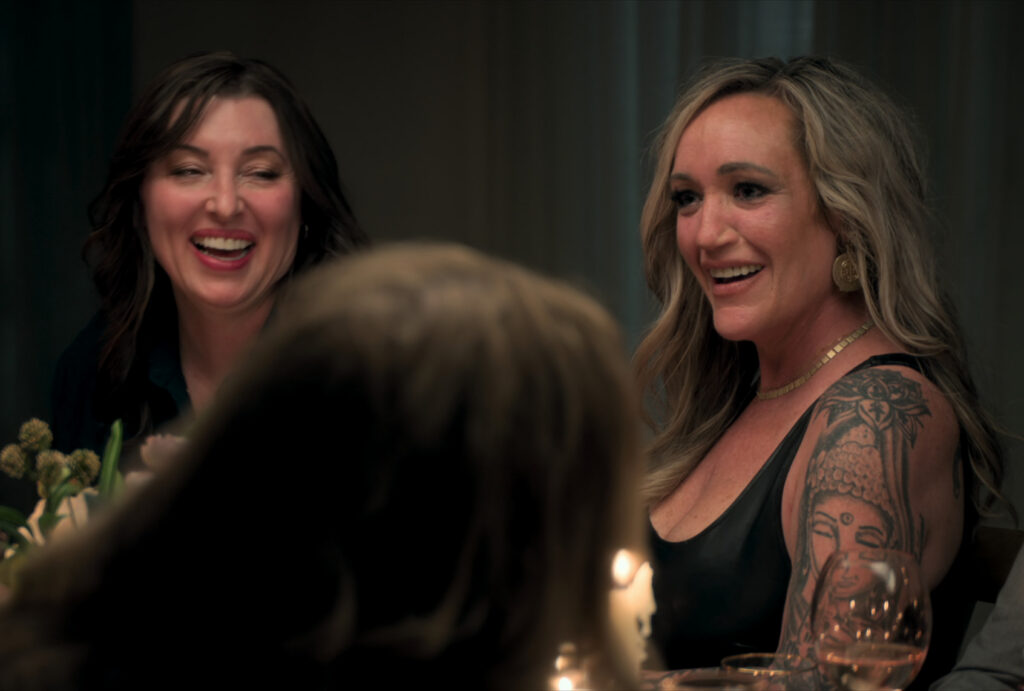
(Courtesy Disney) Former contestants gather for a dinner in “The Swan: Behind the Mirror,” a Hulu documentary that revisits the 2004 Fox reality series.
As the recent, depressing discourse about the difference in Jasmine Guy’s appearance between when she starred in “A Different World” four decades ago and how she looks in the reboot rages on, we’re reminded that Americans still have a deeply ageist view of daring to grow old gracefully.
For the record, Guy is a physically fit woman in her 60s who has not undergone cosmetic surgery, whom many women would kill to look like. And if she had gotten all the lifts and tucks we expect of a TV star, we’d be criticizing her for that too.
But her appearance is her choice and doesn’t serve anyone but herself which, in these days of grotesque facial augmentation being associated with a dehumanizing strain of conservative politics, is downright refreshing.
Carr’s documentary closes by showcasing the sisterhood shared by the women who survived “The Swan” – women seduced by a sales pitch predicated on the assumption that cosmetic surgery would change their lives. Most of them found that wasn’t true.
But at least one participant in “The Swan” still believes in its promise. “It was empowering,” insists Haworth in “Behind the Mirror,” “because it shows you that beauty is power.” Reflected power, sure. But whose?
“The Swan: Behind the Mirror” is streaming on Hulu.
Read more
about this topic