
The entire U.S. economy is basically a giant betting app
As the western United States is gripped by record-shattering wildfires, some unscrupulous people aren’t just contemplating what it will be like for future generations living in our new normal of erratic weather patterns, or wondering whether climate change is making this situation worse. They’re thinking about how much money they can make.
Prediction market apps like Kalshi and Polymarket allow people to bet on pretty much anything, whether it’s some boring sports thing, election results or perhaps even war crimes. You can even bet on the outcome of clinical drug trials and whether cancer drugs will be approved by the Food and Drug Administration, which experts criticize as undermining the integrity of medication research. The father of a seventh-grader living with cancer recently raised the issue of “whether researchers in a trial could be motivated by prediction market profits,” something so heinous it is difficult to contemplate.
While the makers of these apps insist they are “future exchanges,” not digital gambling parlors, regulators in places like Singapore, France, Belgium and elsewhere aren’t convinced and have banned the platforms altogether. There are several mechanisms inherent to prediction market apps that make them a little different than putting it all on red. They involve binary contracts that resolve based on whether certain events happen or not, using some complex math to factor in a probability of an outcome. Critics are increasingly looking into the consequences of making almost everything wagerable.
Mainstream economists may want you to believe all this is driven by Darwinian forces that follow some natural law, simplified as “the cost of doing business,” or even by Adam Smith’s invisible hand. But that’s pretty unscientific.
On Aug. 3, Democratic senators from six states sent a letter to the chair of the Commodity Futures Trading Commission, the independent government arm that regulates Polymarket and Kalshi, warning that the apps are allowing bets to be placed on wildfires, which could incentivize arson. They highlight previous examples of bets placed on the January 2025 Palisades and Eaton fires, which razed large areas of Los Angeles County, killing 31 people and destroying more than 16,000 structures.
“Offering bets on destructive wildfires threatens to minimize communities’ suffering all so the rich and powerful can profit,” the letter’s authors, who include Sens. Adam Schiff, D-Calif., and Amy Klobuchar, D-Minn., wrote. “There’s also the heightened risk — according to state and local fire officials — that individuals could be tempted to commit arson in order to make sure their bets are successful.”
Start your day with essential news from Salon.
Sign up for our free morning newsletter, Crash Course.
For example, someone might bet on how big a fire might get or how many buildings it might destroy. I wanted to know what unexpected stuff I could find on the apps, so I downloaded Polymarket and Kalshi, seemingly the two most popular platforms or at least the ones I’m tired of seeing ads of the most. Both were littered with sports events, which I scrolled past, but also had sections for elections, politics, tech and a lot more. Polymarket seemed to have fewer and more bland options for betting, with the most shocking queries I could find being things like who will get kicked out of Trump admin next or if Israeli Prime Minister Benjamin Netanyahu will be arrested by year’s end.
After giving over way too much private data to Kalshi, I was able to browse entire categories dedicated to natural disasters and climate change, such as if 2026 will be the hottest year ever or if the U.S. will ever meet its climate goals. I also found weird things like how many Atlantic hurricanes this year or if California will be hit by a magnitude 8 earthquake, which goes without saying but would be extremely bad. For context, the recent Colombia and Venezuela earthquakes were both magnitude 7.4 and 7.5 respectively. All of these things are likely to kill countless people if they happen, but climate change is already widely treated like an abstract future problem, rather than our disastrous present, so maybe this shouldn’t be surprising.
Both apps allowed wagers on the number of “explosive diarrhea” cyclosporiasis and measles cases this year, with both outbreaks shattering records. I could not find anything related to fires, presumably such content being recently removed, as there have been plenty of cited examples of bets on fires in the past, such as how many acres or locations the Palisades fires would reach.
So many of the scenarios on these apps present classic examples of a perverse incentive, in which the structure of a system encourages undesirable results. The classic example is of dubious historical accuracy, but originates from the British occupation of India. Weary of venomous snake bites, British authorities put a bounty on dead cobras — but this only incentivized locals to breed more of the snakes, in order to collect even more reward money. If you allow people to earn cash from dead snakes, you risk getting a lot more living snakes in the process.
Are we already seeing this with wildfires? It’s hard to say, but it’s true that arson is, strangely, a common catalyst for wildfires. One man was arrested outside of Spokane a few days ago, admitting to starting the Old Trails Fire, which burned entire neighborhoods to a crisp. Police say that Aaron Farinacci admitted to having set two dozen other blazes since 2025.
The conditions that make these blazes so out-of-control are thanks to climate change, which is causing hotter and drier conditions. According to a 2021 study supported by the National Oceanic and Atmospheric Administration, the increase in fire weather in the western U.S. is primarily due to climate change. (Still, trying to explain that level of nuance to a climate denier is like teaching rocks to play Risk.)
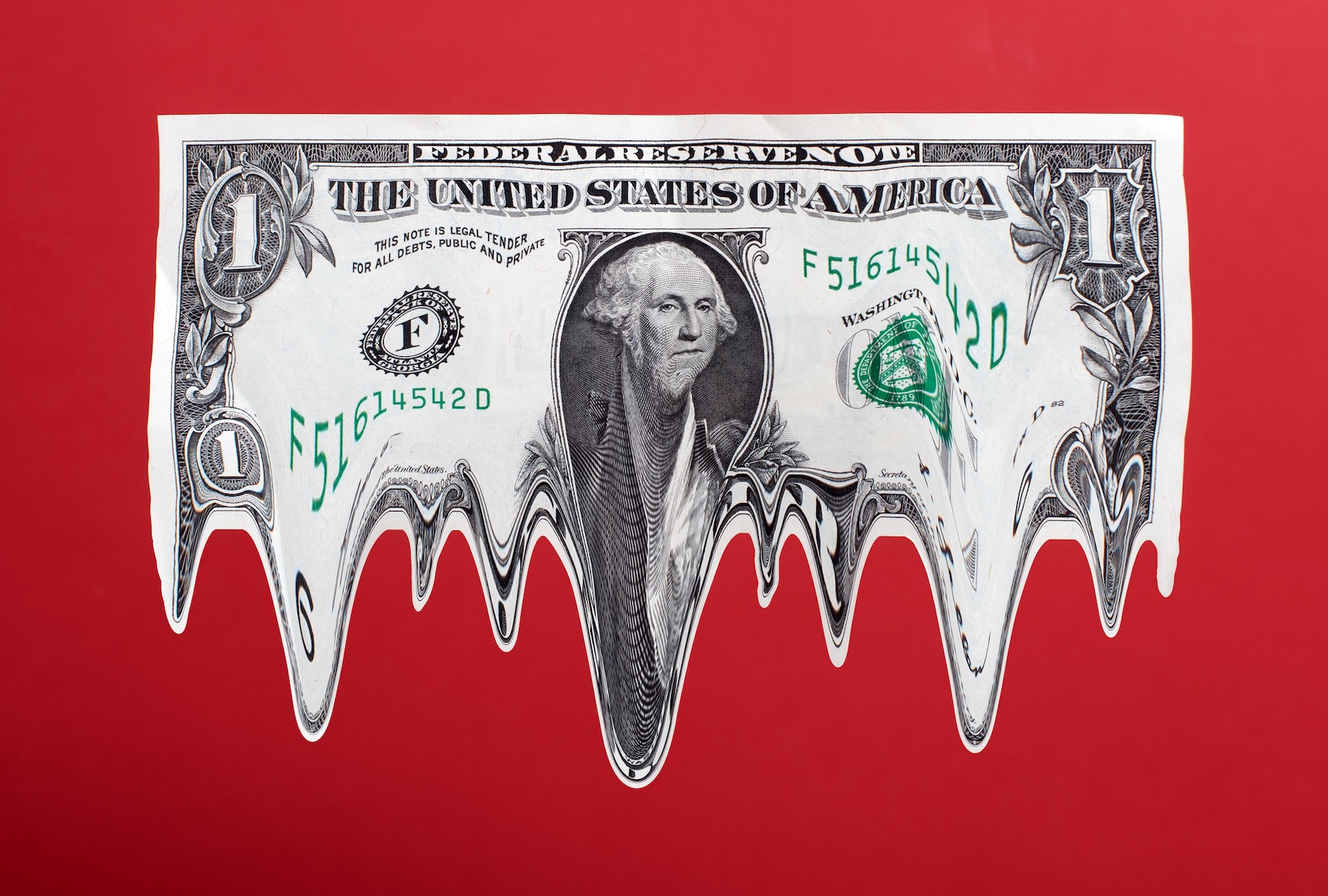
What these apps do best is lay bare the ways in which our entire economy is structured like a betting app strung together by incentive perverts. It’s why the market rewards the most amoral and destructive behavior, from hedge funds that short the market and destroy company value to vulture capitalists who gut businesses like Toys “R” Us or Radio Shack, and then escape on their golden corporate parachutes. Even when such behavior results in a recession, the government is likely to bail big corporations out, while any form of assistance for the working class is branded as “socialism.” In fact, the entire stock market could be best described as a casino that incentivizes absurd growth like the historic tech bubble provoked by the spread of artificial intelligence.
Mainstream economists may want you to believe all this is driven by Darwinian forces that follow some natural law, simplified as “the cost of doing business,” or even by Adam Smith’s invisible hand. But that’s pretty unscientific.
Money itself is just a construct, one with rules dreamt up by humans. We don’t have to live in a world where people profit from tragedy, be it wildfires or a child with cancer, housing foreclosures or weapons manufacturing. I’m willing to bet we can actually achieve such a utopian outcome, even if it takes another century. The alternative is to continue draining everything of value as it goes up in smoke.
Read more
about the economy