
‘Applause can wait’ – Presidency defends Tinubu reforms; says painful choices unavoidable
…Budget dependence undermines INEC’s independence – Amupitan
…Obasanjo never wanted a third term – Ex-President’s envoy
By Luminous Jannamike
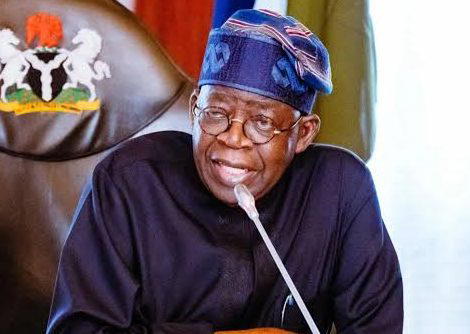
The Presidency on Thursday insisted that Nigerians must endure the pain of sweeping economic reforms if the country is to avoid a deeper financial crisis, defending President Bola Tinubu’s controversial policy choices as necessary to rebuild the economy and secure long-term stability.
It argued that leadership is not about chasing public approval but taking difficult decisions that prevent bigger problems down the road.
“Leadership, at its most serious level, is the courage to choose repair over applause, and to do today what prevents a deeper crisis tomorrow,” Vice President Kashim Shettima said.
The position was conveyed by the Special Adviser to the President on General Duties, Dr Aliyu Modibbo, who represented the Vice President at the public presentation of ‘Shadows: Protest Essays on Africa’s Most Consequential Country (1999–2023), ‘ authored by THISDAY Managing Director, Mr Eniola Bello, at the Shehu Musa Yar’Adua Centre, Abuja.
The defence came as senior government officials, electoral stakeholders, media executives and public intellectuals gathered to unveil the two-volume publication, an event that quickly evolved from a book presentation into a wider conversation on Nigeria’s economy, democracy, governance and the future of its institutions.
Acknowledging the hardship triggered by the removal of petrol subsidy and the unification of the foreign exchange market, Shettima maintained that the reforms were beginning to deliver results.
According to him, “Nigeria’s Gross Domestic Product grew by 3.89 per cent in the first quarter of 2026, after a growth of 3.4 per cent in 2024. Oil production has rebounded to about 1.5 million barrels per day, while debt servicing has declined from 96 per cent to below 65 per cent of revenue.”
He also pointed to the administration’s social intervention programmes, saying more than 100,000 Nigerians had accessed the national consumer credit scheme, while the student loan initiative continued to expand.
Shettima added that the 2026 budget provided N26.08 trillion for capital expenditure to drive infrastructure projects, including the Lagos-Calabar Coastal Highway and the Sokoto-Badagry Superhighway.
On democratic governance, Shettima said President Tinubu remained committed to protecting civic freedoms and accommodating dissent, warning that governments risk losing public confidence when they stop listening to the people.
“His Excellency, President Bola Ahmed Tinubu, has remained firm in his belief that democracy must accommodate disagreement… A government that cannot listen will eventually lose the confidence of the people,” he said.
Beyond the economy, attention shifted to the country’s democratic institutions as Chairman of the Independent National Electoral Commission, Prof. Joash Amupitan, argued that electoral credibility depends as much on financial independence as constitutional guarantees.
After opening his keynote address with a light-hearted joke, Amupitan said constitutional provisions alone could not guarantee INEC’s independence if the commission continued to depend on the normal budgetary approval process for its funding.
“Experience has shown that as long as INEC remains subject to the normal appropriation process and depends on budgetary approvals by other institutions, genuine financial independence remains difficult,” he said.
Revisiting one of Nigeria’s most enduring political controversies, the representative of former President Olusegun Obasanjo, Dr Agbai Eke Agbai, insisted the former president neither sought nor desired a third term in office.
“At no time did this African legend and Nigerian icon, one of the best presidents Nigeria has ever produced, seek or want a third term. For the record. Yes, thank you,” Agbai said.
Reviewing the 928-page publication, Prof. Okey Ikechukwu described Shadows as more than a collection of essays, saying it chronicles Nigeria’s democratic journey over the past 25 years with unusual clarity and historical depth.
“The strength of the book lies in its narrative vividness, moral clarity and the cumulative weight of watching the same problems repeat themselves across five presidents. It is a reference work and a piece of journalism history,” Ikechukwu said.
He said the book’s enduring value lies in documenting how the country’s governance challenges have resurfaced under successive administrations, making it not only a historical record but also a reminder that the hard choices confronting today’s leaders are rooted in problems left unresolved for decades.