
Press freedom must be exercised with professionalism, fairness and accuracy – Shamima Muslim
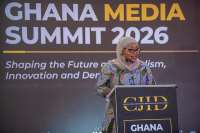
Madam Shamima Muslim, Deputy Presidential Spokesperson, has urged stakeholders in Ghana’s media space to ensure that press freedom and responsibility advance together to enhance democracy.
“Equally, that freedom must be exercised with professionalism, with fairness, with accuracy, while freedom without responsibility risks eroding public confidence, while responsibility without freedom deprives democracy of its most effective accountability mechanism,” she said.
Madam Shamima Muslim was speaking on behalf of Mr Felix Kwakye Ofosu, Minister of State for Government Communications and Presidential Spokesperson, at the Ghana Media Summit on Thursday in Accra.
The summit, organised by the Centre for Journalism Innovation and Development (CJID) through DUBAWA Ghana, was held on the theme: “Defending Democracy in West Africa – The Role of Media.”
The event marked seven years of CJID Ghana’s work in strengthening media integrity, combating mis- and disinformation and supporting the conditions necessary for a free and functional press.
It convened journalists, editors, civil society leaders, academics, media development practitioners and regional policymakers to discuss the future of media and democracy in West Africa.
Madam Muslim said journalism had remained one of the strongest pillars of Ghana’s democratic journey, enabling citizens to participate meaningfully in governance, holding leaders accountable and providing credible information for national decision-making.
However, she cautioned that freedom must be exercised with professionalism, fairness, accuracy and responsibility.
“Freedom without responsibility risks eroding public confidence, while responsibility without freedom deprives democracy of its most effective accountability mechanism,” Madam Muslim said.
She said the challenge was not to choose between freedom and responsibility but to strengthen both.
Madam Muslim said the strength of democracy depended not only on credible institutions but also on the freedom, professionalism and integrity of the media.
She observed that the media had evolved beyond being a “fourth estate”, describing journalism as “democratic infrastructure” because it preserved public accountability in the same way other essential institutions sustained society.
Madam Muslim said journalists had a duty to investigate rigorously, verify independently, provide context, explain complex issues clearly and uphold the highest standards of accuracy and professionalism. 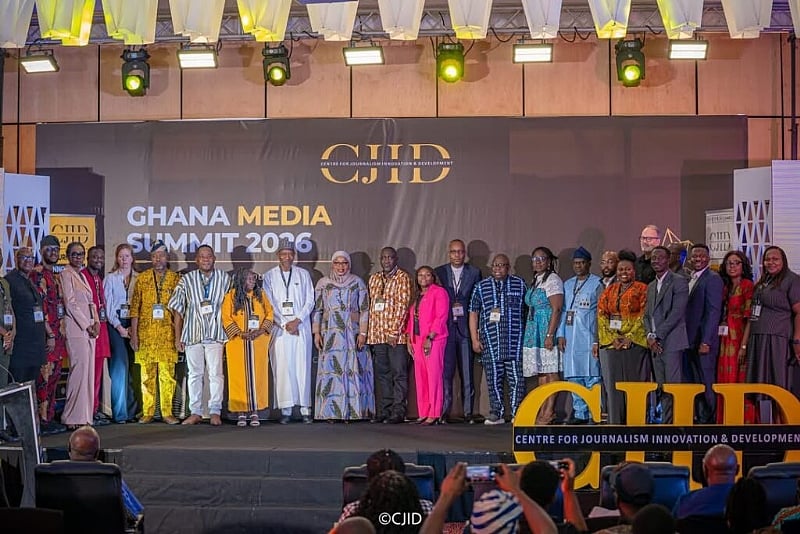
She congratulated CJID on the milestone, saying the organisation’s seven years of work through DUBAWA Ghana had contributed to strengthening information integrity, advancing media innovation, fact-checking and regional collaboration across West Africa.
Mr George Sarpong, Executive Secretary of the National Media Commission, in his keynote address, said democracy in West Africa had come under pressure due to multiple challenges including corruption, economic hardship, weakened institutions and declining confidence in democratic systems.
He said while citizens in many countries continued to prefer democracy over authoritarian alternatives, satisfaction with the performance of democratic systems had declined.
Mr Sarpong said the media remained critical to democratic renewal because it enabled citizens to make informed choices, scrutinise power, expose wrongdoing and create space for peaceful dialogue.
However, he warned that modern media systems were increasingly pressured by an attention economy that rewarded speed, outrage and emotional content over evidence and credibility.
Mr Sarpong said Artificial Intelligence had further complicated the information ecosystem by enabling the rapid creation and spread of false narratives capable of weakening trust in democratic institutions.
The event was interspersed with goodwill messages from diplomatic missions and partner organisations, including the West Africa Network for Peacebuilding (WANEP) and UNESCO, which commended the CJID for its contribution to advancing journalism, media freedom, democracy and information integrity in the sub-region, while pledging continued support.
The speakers reaffirmed the importance of freedom of expression, an independent, well-protected and adequately resourced media, as well as sustained efforts to combat disinformation, in strengthening democratic resilience across West Africa.
They highlighted Ghana’s strong position in promoting press freedom and democratic governance, while urging journalists to continue holding governments accountable and contributing to the sanitisation of the media ecosystem.
GNA