
June 12: LUTH CMD rates Tinubu’s health sector reforms 80%, hails massive investments
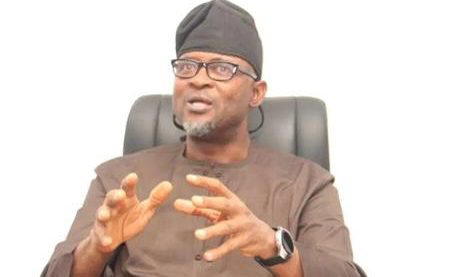
- Says cancer centres, hospital upgrades, salary review driving sector reforms
- Urges Nigerians, private sector to support healthcare funding
By Chioma Obinna
As Nigerians mark the 2026 Democracy Day celebration, the Chief Medical Director of Lagos University Teaching Hospital, LUTH, Professor Wasiu Adeyemo, has rated the Tinubu administration 80 percent in healthcare delivery, citing massive investments in cancer care, hospital infrastructure, health financing and workforce retention across federal tertiary institutions.
Adeyemo said the Federal Government’s renewed focus on healthcare has become one of the clearest dividends of democracy, particularly in the nation’s teaching hospitals.
“Tomorrow is June 12 and we have every reason to celebrate democracy. We also have reasons to celebrate the dividends of democracy, especially in healthcare delivery,” he stated.
In a chat with Vanguard, the LUTH CMD said although Nigeria’s health sector still faces enormous challenges, significant progress has been made in the last three to four years.
“We are not where we are supposed to be, but we have moved far from where we were some years back,” he said.
According to him, one of the landmark achievements of the current administration is the establishment and expansion of state-of-the-art cancer centres in federal hospitals.
“The current government established a state-of-the-art cancer centre at LUTH. The model is working in LUTH and it is now being replicated in other centres across the country,” he said.
Adeyemo disclosed that similar specialised centres are already operational or nearing completion in Katsina, Benin and the University of Nigeria Teaching Hospital, Enugu.
He also revealed that LUTH would soon benefit from a two-megawatt solar power project aimed at improving electricity supply and reducing operational disruptions.
“Before the end of the year, we expect the solar project to be fully operational,” he added.
The CMD further listed several federal institutions currently undergoing infrastructure expansion and modernisation, including the University College Hospital, Ibadan; Ahmadu Bello University Teaching Hospital; National Hospital Abuja; and the University of Nigeria Teaching Hospital.
On the persistent migration of healthcare workers abroad, popularly known as “Japa,” Adeyemo said the Federal Government has begun addressing one of the major causes, poor remuneration.
“One of the major reasons why people leave is because of salary. Government is increasing salaries across the healthcare sector and we hope this will encourage more professionals to stay,” he said.
“We cannot continue putting infrastructure in place while healthcare workers are still leaving the country.”
He also defended the establishment of more medical schools and training institutions, insisting that increasing the number of trained professionals remains one of the most practical ways of mitigating brain drain.
“If you produce 50 doctors and 30 leave, you are left with 20. But if you produce 100 and 40 leave, you still have 60 remaining. It is a win-win situation,” he explained.
Speaking on healthcare financing, Adeyemo said government alone cannot fund the country’s health sector optimally, stressing the importance of public-private partnerships and donor support.
“Federal and state governments may not be able to do everything alone. That is why the government is encouraging public-private partnerships,” he stated.
“Come to LUTH and you will see private investments in laboratories, radiology and other critical areas.”
He disclosed that corporate organisations and philanthropists have continued to support healthcare delivery at LUTH, including donations for cancer treatment facilities.
“We have benefited immensely from corporate organisations and individuals. The biggest cancer ward in Nigeria is here in LUTH and several interventions came through partnerships,” he said.
On health insurance coverage, the CMD said the country has recorded noticeable improvement under the current administration.
“Before this administration, coverage was probably around 10 percent. Now it is between 20 and 30 percent. If we are able to scale it up further, healthcare delivery will improve significantly,” he said.
Adeyemo also spoke on Nigeria’s preparedness for possible disease outbreaks such as Ebola, commending the Federal Government’s approval of an emergency health fund.
“The world is now a global village. Someone can leave another country today and be in Nigeria tomorrow. We need stronger surveillance at our borders and entry points,” he warned.
He referenced the recent approval of a N10 billion emergency preparedness fund by the Federal Government as a proactive step toward strengthening the nation’s response capacity.
The LUTH boss urged Nigerians, corporate organisations and wealthy individuals to support the healthcare sector through investments and donations.
“We have no other country except Nigeria. We need to support what the government is doing,” he said.
“When COVID-19 came, Nigerians saw the importance of our hospitals and healthcare professionals. We must continue to strengthen the system for the benefit of all.”