
Ilera Eko: LASHMA plans policy changes as enrollees hit 1.5m
By Sola Ogundipe
The Lagos State Health Management Agency (LASHMA) is set to introduce new policy changes aimed at safeguarding the long-term sustainability of the Lagos State social health insurance programme, Ilera Eko health insurance scheme, which has so far registered over 1.5 million enrollees.
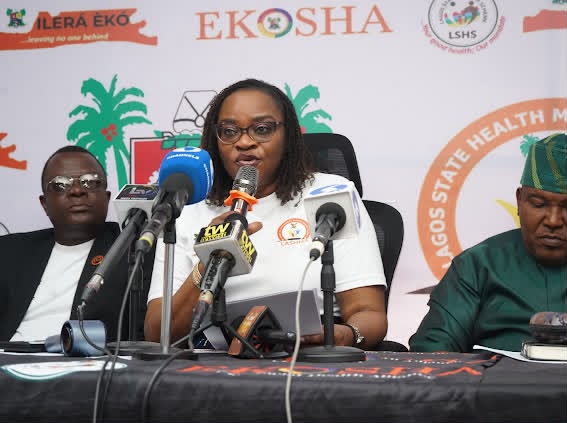
Speaking during the agency’s second-quarter media parley, the Permanent Secretary of LASHMA, Dr. Emmanuella Zamba, said the state’s social health insurance programme continues to expand and deepen its reach in its pursuit of Universal Health Coverage (UHC) and to ensure that no Lagosian is denied access to affordable healthcare services.
“With effect from August 1, 2026, LASHMA will announce new policy changes aimed at ensuring the sustainability of the Social Health Insurance Programme and protecting the vulnerable population that genuinely cannot afford health insurance premiums or the Pay-Small-Small option.
“LASHMA has observed that some residents only enroll in the Scheme a few months before they need to access a particular benefit package, which would otherwise be very expensive if paid for out-of-pocket or through other health insurance plans,” she said.
Further, Zamba said after enjoying Ilera Eko services, the individuals leave the scheme and only return when they require another costly medical intervention.
“This attitude is not healthy for the sustainability of the Lagos State Health Scheme, and these practices will be addressed through the forthcoming policy changes.
“Let us all remember that Ilera Eko is now mandatory for all residents. It provides peace of mind and reduces catastrophic healthcare expenditure whenever medical issues arise,” she noted.
Zamba explained that the forthcoming policy changes which are part of a broader strategy to improve healthcare access across Lagos, are intended to strengthen the insurance pool, discourage opportunistic enrollment practices and ensure that resources remain available for those who depend on the scheme for essential healthcare services.
“The sustainability of the scheme is critical, particularly as we seek to protect vulnerable residents who genuinely cannot afford health insurance premiums. Universal Health Coverage is a continuous journey that requires the collective responsibility of all stakeholders in Lagos State,” she said.
Presenting the agency’s performance scorecard, the Head of Planning, Monitoring and Evaluation, Mrs. Adetoro Tayo-Adetoro said enrolment grew steadily over the past six years, recording an average annual growth rate of 21 percent and reaching a total of 1,502,994 enrollees as of May 2026.
“Women account for the majority of enrollees, representing 54 percent of beneficiaries, while men make up 46 percent. Adults between the ages of 18 and 60 constitute the largest enrollee group, while children under five and senior citizens above 60 account for about 11 percent of total enrolment,” she said.
To support the expanding membership base, Tayo-Adetoro said the scheme’s healthcare network has widened considerably to include public and private hospitals, family health centres, primary healthcare centres, dental and eye clinics, nursing homes and community pharmacies across Lagos State.
“Beneficiaries recorded at least 1.2 million hospital visits by the first quarter of 2026, nearly 40,000 of those visits resulted in hospital admissions, while the majority were outpatient consultations. Fever-related cases closely monitored as indicators of malaria, approached 500,000 during the review period,” she said.
Further, Tayo-Adetoro disclosed that by the end of the first quarter of 2026, almost 500,000 fever treatments, 4,833 surgeries, about 60,000 antenatal visits, more than 19,000 vaginal deliveries and over 18,000 caesarean sections were recorded. .
Presenting an overview of the emergency healthcare intervention programme, LASHMA Assistance in Distress (LASHMA -AID), the Emergency Care Manager, LASHMA-AID, Dr. Favour Oluwaniyi, said the programme within its first four months of operation recorded 18 emergency cases across Lagos State.
“Of the 18 cases recorded, eight are on active treatment, most being victims of severe road traffic accidents requiring prolonged care. Five patients have been discharged successfully, while one case was continued by the patient’s family, one was referred elsewhere and another was found to be outside the programme’s coverage scope.
“Vulnerable residents constituted the largest beneficiary group under the programme. Nine of the 18 patients treated were classified as vulnerable persons, while seven were existing Ilera Eko enrollees,” she said.
Oluwaniyi explained that the programme has demonstrated that healthcare facilities are complying with the Executive Order on emergency treatment and that ambulance services are increasingly reaching residents in hard-to-access communities.
Reporting progress under its EKO Social Health Alliance (EKOSHA) Rural Health Scheme, which uses mobile clinics to deliver healthcare services to riverine and underserved communities, the Team Lead of EKOSHA, Mrs. Tawa Oshinowo said 6,838 residents have been registered under the initiative, 432 formally enrolled and 190 referred for specialised medical care.
Between January and May 2026, the mobile clinics attended to 438 residents and generated 200 referrals, with patients requiring advanced care directed mainly to cardiology, ophthalmology, paediatrics, orthopaedics and surgical units.
Oluwaniyi observed that hypertension accounted for 58 per cent of all referrals, underscoring the growing prevalence of non-communicable diseases in underserved communities.