
JD Vance can’t escape the Iran war
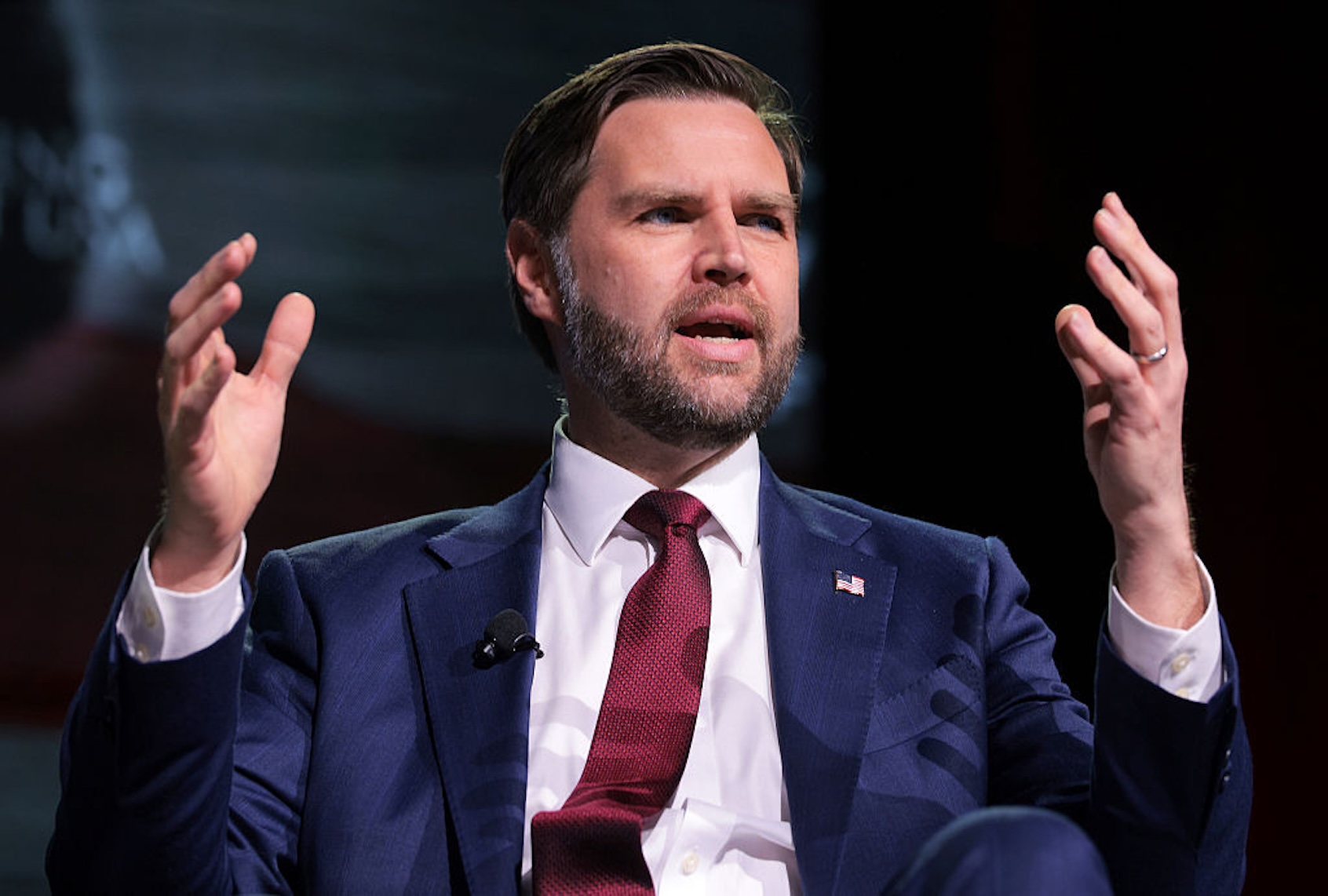
With everything going wrong in Donald Trump‘s presidency these days, he is still the master at one thing: making sure that no one who pledges fealty to him will escape with their dignity intact. As vice president, JD Vance receives regular reminders of this, including an especially brutal one delivered on Tuesday. His plane was standing ready to fly to Islamabad, Pakistan, to lead the administration’s peace negotiations with Iran. But instead of taking off, Vance was made to wait hours while his boss dawdled, before eventually extending a deadline for Iran to offer a proposal to end the war that Trump impetuously started in late February in partnership with Israeli Prime Minister Benjamin Netanyahu.
The vice president didn’t even want to be there, a feeling he has apparently made clear through anonymous leaks from either himself or his associates to journalists, which haver resulted in flattering stories alleging that the vice president tried to talk Trump out of launching a war on Iran. These accounts are likely true enough, but not because Vance has some noble objection to needless killing. At 41, the vice president has enough wits about him to see what was very obvious, something the Trump has refused to see: that this war would be a political debacle for the administration — and for Vance’s future plans to run for president.
The more the Iran war drags on, the more the vice president finds himself getting sucked into the quagmire at the risk of becoming as much the face of the fiasco as Defense Secretary Pete Hegseth or even Trump himself.
Vance’s efforts to discreetly paint himself as opposed to the war, though, are backfiring. The more the Iran war drags on, the more the vice president finds himself getting sucked into the quagmire at the risk of becoming as much the face of the fiasco as Defense Secretary Pete Hegseth or even Trump himself. As Parker Molloy pointed out in his Present Age newsletter, anonymous sources chattering to Beltway reporters about Vance’s rumored opposition to the war can’t drown out what the vice president is saying in public and to the cameras — that he is very pro-war.
If anything, Vance has had to escalate his public fawning over Trump in an effort to counterbalance any aggravation caused with the backstage anti-war whispers. On Thursday, he made a public show of walking to the West Wing in front of waiting cameras for an Oval Office event, where he laid the praise on thick, raving about Trump’s “major historic moment” in securing a temporary — and tenuous — ceasefire between Israel and Lebanon, which is a little like comparing a “World’s Best Dad” mug to winning the Stanley Cup.
But of course the biggest reason Vance is becoming the face of this war is because Trump tapped him to lead the peace negotiations — an already difficult task that looks like it may be impossible, because Vance has to answer to someone who hasn’t got the brains to know when to just take the loss and go home. The vice president hasn’t found himself in this position only because Trump wants someone else to take the blame when talks fail, though the president has already “joked” that is his plan. It’s because Iranian leaders demanded Vance’s presence. The reason? They, too, had read the reporting suggesting the vice president is opposed to the war. If only those anonymous sources had kept their mouths shut, Vance might not be in this position.
He seemed to get a minor reprieve on Friday when Trump announced that Iran talks would resume without him. Reports suggested that Trump was instead sending in the B team: his son-in-law Jared Kushner and business buddy Steve Witkoff, who have been serving as peace envoys throughout the Middle East — while having major conflicts of interest — and have deputed Vance during previous Iran negotiations. In the end, no one went to Islamabad. When it became clear that Iran’s leaders had no interest in sticking around to talk to these two, who are not official members of the administration and reportedly get mocked by real political officials in other countries, Trump canceled the trip altogether.
Vance may not fully understand it yet, but on Iran, he is stuck. There was never any evidence he could manage any kind of peace negotiation, especially one as delicate as this. He called it quits less than a day after his first effort, even though, as many commentators pointed out, international diplomacy is a time-consuming process. Barack Obama’s administration was able to obtain a nuclear deal with Iran, which Trump tore up in a resentful snit in 2018. With far more seasoned and talented negotiators working, it still took the former president two years of talks to get it done.
But even if Vance had more patience and skill, his efforts would still likely be futile. As former Obama official Dan Pfeiffer said on April 24 episode of “Pod Save America,” the president wants the “war to be over and it to be seen an unalloyed victory,” which is “impossible.” Trump and Hegseth went into the war believing that “bigger bombs” are the only leverage necessary, and they were swiftly disabused of this notion when the Islamic Republic closed the Strait of Hormuz, sending gas prices soaring and creating worldwide economic chaos. The best way to get out quickly would be for the administration to cut its losses and declare victory in exchange for Iran reopening the strait.
Want more sharp takes on politics? Sign up for our free newsletter, Standing Room Only, written by Amanda Marcotte, now also a weekly show on YouTube or wherever you get your podcasts.
But Trump can’t take the hit to his ego. It’s a stalemate that even a clever strategist would struggle mightily to resolve, and there is no evidence that Vance is an especially strategic thinker.
Perhaps the dam will break, but right now, it seems like the vice president could be stuck for a long time in the hellhole of trying to negotiate the end of a war he didn’t want with very few cards to play, and a boss who won’t admit that they have been defeated. All of which means that, while Trump hits the links at Mar-a-Lago or rests behind his desk while answering reporters’ questions in the Oval Office, it will be Vance whose face is out front on coverage of the war. It will be Vance striding toward planes in photographs and Vance standing behind podiums to explain why negotiations aren’t working.
One of the surest signs the vice president can’t escape the Iran war is that he lost Tucker Carlson’s son. The vice president and the right-wing podcaster have forged a close friendship in no small part because they share a belief that a non-interventionist Republican Party will do better politically. Buckley Carlson who has been working as Vance’s deputy press secretary, even as Tucker Carlson’s public criticism of the war has grown louder. But the twentysomething quit his job earlier this month, just a couple of days before his father released a podcast episode claiming he now regrets supporting Trump in 2024.
Let’s be clear: Tucker Carlson is not an honest actor, and there’s very little reason to think his showy display of remorse is sincere. Still, this is meaningful. Carlson can sense a sinking ship, and he is jumping into a life raft. No doubt Vance would love to follow him, but until he gets the smarts or courage to turn on Trump publicly — which will never happen — he’s stuck.
Read more
about the Iran war