
How Jesse Jackson made room for white workers
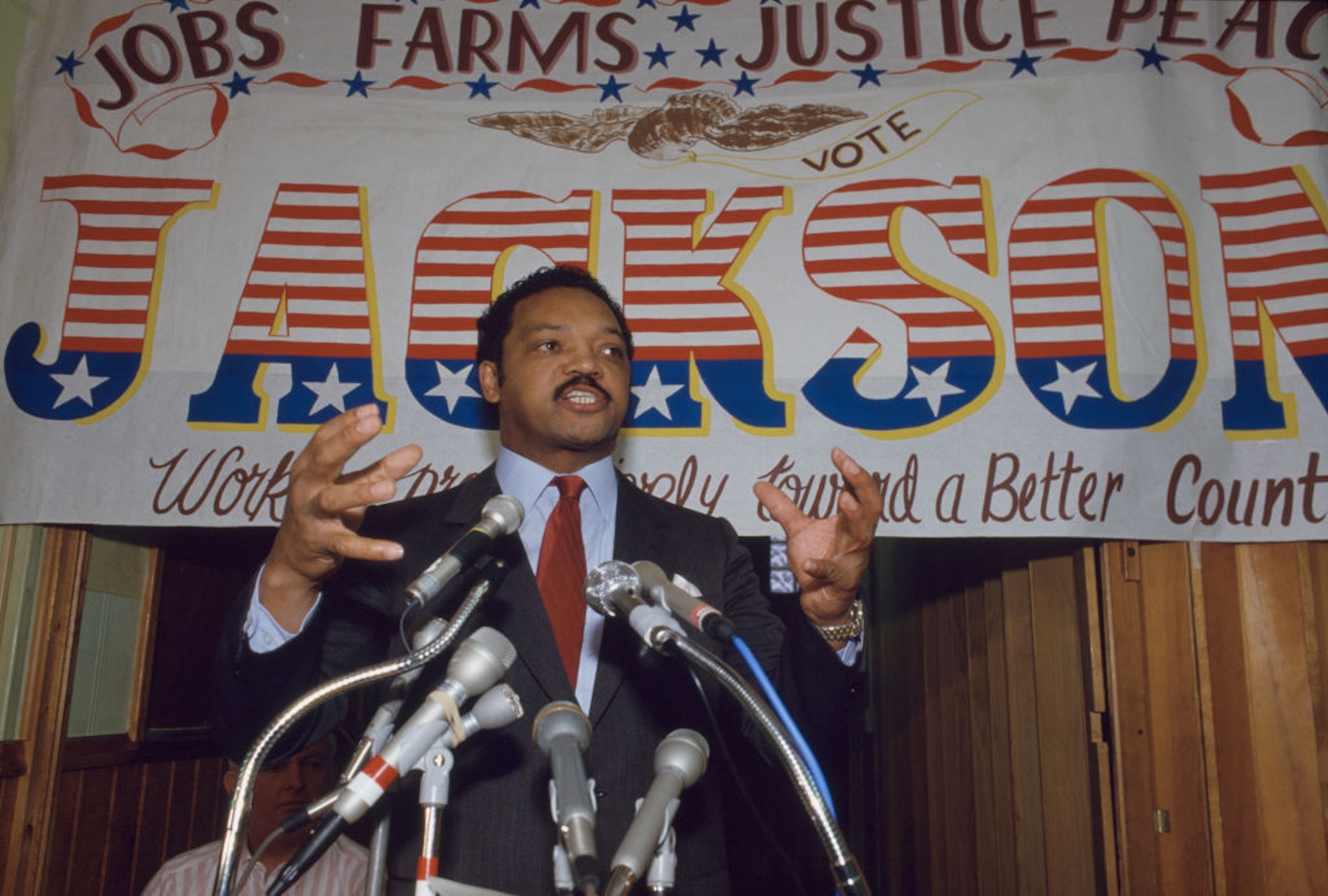
In May 2000, a few months before I left my native southeastern Kentucky to attend college in Washington, D.C., the Rev. Jesse Jackson came to a nearby town. The civil rights leader and two-time Democratic presidential candidate, who died on Tuesday at the age of 84, spoke at the commencement of Union College (now Union Commonwealth University), a small liberal arts college, and being a young politico, I had to go. What I heard and witnessed that day in a gymnasium in the middle of coal country has remained with me all these years later.
Jackson’s visit, and the lead-up to it, sparked debate. Republicans who had been forged in the era of Ronald Reagan, with his dog-whistle depictions of mythical — and Black — “welfare queens” sponging off government assistance, were predictably dismissive, and they were joined in their criticism by some conservative Democrats. Jackson had spent years being pilloried by the right, especially by the likes of Rush Limbaugh and Fox News, which was still in its infancy, and the attacks had taken their toll, leaving many suspicious of him and his motives. Along with his buddy, the Rev. Al Sharpton — the right had conflated the two and made them simpatico, when in fact they ran separate organizations and had different approaches to activism — Jackson liked to “stir things up,” some locals said, code for “Black folk should keep quiet and know their place.”
Others disagreed. My great-uncle, a traditional yellow-dog Democrat who was born during the Depression and named for Franklin Roosevelt, predicted approvingly that Jackson would “light a fire” under the audience. Other liberals I knew, both Black and white, counted themselves as members of the activist’s Rainbow Coalition and supported his intersectional work for the rights of Black Americans, people of color, workers, women, immigrants, the LGBTQ community and Appalachians.
Twelve years before, during his 1988 presidential campaign, Jackson had packed 1,000 people into a Hazard, Kentucky, gymnasium and talked about the “false face of poverty” that had taken hold in American politics and media. It’s “not just black,” he said. It’s “white, female, young and former industrial workers.
They also would have remembered a significant moment in the region’s history. Twelve years before, during his 1988 presidential campaign, Jackson had packed 1,000 people into a Hazard, Kentucky, gymnasium and talked about the “false face of poverty” that had taken hold in American politics and media. It’s “not just black,” he said. It’s “white, female, young and former industrial workers. That is the truest face of poverty.”
His words were important. Not only did they push back against the othering of Black Americans by Republicans, they also reminded the media and Washington’s political establishment that here was a region, a people, in need of help.
Denise Giardina, a bestselling novelist and Mountain Party’s 2000 nominee for governor of West Virginia, was in the audience for Jackson’s speech and remembered the crowd and its energy. “Rev. Jackson was a dynamic speaker, a preacher, so it was call and response,” she said. “And the audience was mostly white. But what he talked about was life and death issues.”
Giardina, who has written extensively about the history of coal in Appalachia and the industry’s exploitation of the region’s workers, recalled that Jackson’s visit came “on the verge of the Pittston strike,” which lasted nearly a year spanning 1989 and 1990, and stemmed from the Pittston Coal Company’s refusal to renew a contract with the United Mine Workers of America guaranteeing health care benefits for around 1,500 people, including active and disabled miners, families and widows. The strike “would be a defining moment in the history of the coalfields,” Giardina said, “and Jackson made it clear where he stood.” A year after his appearance in Hazard, he traveled to southwest Virginia and stood on the picket line in solidarity with the striking miners.
Jackson’s rhetoric and actions underscored his characterization of politics, made during his famous “Keep Hope Alive” speech at the 1988 Democratic National Convention, as “a moral arena where people come together to find common ground.” Few remember the address of the party’s nominee, Massachusetts Gov. Michael Dukakis. But Jackson’s speech continues to hold a hallowed place in American political history, in part for how he bridged the racial divide by invoking class and his own experience growing up poor in rural South Carolina:
Born in a three-room house, bathroom in the backyard, slop jar by the bed, no hot and cold running water. I understand. Wallpaper used for decoration? No. For a windbreaker. I understand. I’m a working-person’s person. That’s why I understand you, whether you’re Black or white. I understand work. I was not born with a silver spoon in my mouth. I had a shovel programmed for my hand.
That depiction resonated with many in the mountains and across rural America who were struggling, or whose families had once struggled. And they weren’t just words. As Bill Bishop wrote in a 2008 column published in the Daily Yonder, Jackson “kept showing up in Appalachia,” whether it was on the anniversary of a mine disaster or in a surreal moment when he teamed up with Rev. Jerry Falwell to march in southeastern Ohio in favor of investing in mountain communities or suggesting in 1998 a two-question litmus test for presidential candidates: “Do you matter to Mud Creek, Kentucky? Do you have anything to say that is relevant to the people of Eastern Kentucky and central West Virginia and Appalachian Ohio?”
That’s what he brought that day at Union College as he spoke about the need for young America “to come alive” to effect change in the country. He made his appeal without respect to party, calling on Democrats and Republicans alike to join in the effort. He called for the work begun in the Civil Rights Movement, of which he had been a vital part, to continue. But what most struck the audience was how he spoke of his ongoing commitment to Appalachia, and the place its people occupied in his Rainbow Coalition.
Want more sharp takes on politics? Sign up for our free newsletter, Standing Room Only, written by Amanda Marcotte, now also a weekly show on YouTube or wherever you get your podcasts.
Jackson invoked the struggle for workers’ rights, the coal mining strikes, what it meant to go without. He talked about the need for health care and diversifying the mountain economy. And he explained the common bonds that exist between Black Americans and Appalachians.
It would be an overstatement to say that all the Jackson doubters in the gym, of which there were likely many, became converts. The right-wing narrative surrounding him had become too entrenched for such a transformation. And it’s important to note that Jackson had also severely wounded himself and his movement in the heat of 1984 Democratic primary when it was alleged he had made disparaging comments about Jews, referring to them and to New York with anti-Semitic slurs. He apologized at a New Hampshire synagogue, and ahead of a second presidential bid four years later, he worked to make amends with the Jewish community. In 1988, Jackson hired a Jewish man to run his campaign. But for many, the damage was permanent.
Still, for that moment, the graduates and their families felt seen and understood by someone of national political prominence. Even though Jackson was the one who spoke, many left that day feeling they had somehow been heard.
I recognized that at the time; I felt it too. But now, from the vantage point of 26 years later, I see that what I witnessed that afternoon was potential, or rather wasted potential — a missed opportunity for a message that could have, if not turned the tide for Democrats in Appalachia and other rural areas across the country, at least mitigated the catastrophic losses that were soon to come for the party.
Jackson delivered his speech at a watershed moment for a region that is now often referred to as “Trump Country” due to its widespread, steadfast support for the president through thick and thin and across three consecutive elections. At the time, Kentucky and West Virginia were considered swing states.
Jackson delivered his speech at a watershed moment for a region that is now often referred to as “Trump Country” due to its widespread, steadfast support for the president through thick and thin and across three consecutive elections. At the time, Kentucky and West Virginia were considered swing states. The former was notably a political bellwether, having voted for the winner of each presidential election since 1964. That included twice for Bill Clinton, and in May 2020, the verdict was still out on how voters would respond that November to the presidential campaign of Vice President Al Gore who, as a senator from Tennessee, had ended up carrying Kentucky over Jackson in the 1988 Democratic primary.
We know how the 2000 election turned out. Bush defeated Gore with the intervention of the Supreme Court; Kentucky and West Virginia turned and have remained ruby red.
With all that has happened in the years since — the continued loss of manufacturing jobs, the death throes of coal, the UMWA’s capitulation to the coal industry, misconceptions about environmental legislation, the failure of the federal government to address job losses and poverty, rampant opioid addiction, latent racism and xenophobia becoming active and operational, due in part to Donald Trump’s emergence on the national political stage in 2015 — it would be naive to suggest that Democrats can turn things around in the near future. That is the work of a generation.
But following Jackson’s lead would be an important start. For Appalachians like Giardina, that means one thing: showing up. “Rev. Jackson connected with people on the issues that were front and center for them at that time, she said. “And most important: He. Was. There. He was there. Dukakis never bothered, just like Hillary Clinton never bothered [during the general election] in 2016. [Clinton did make a two-day bus swing throughout Appalachia during Democratic primary season in what was seen as damage control for clumsy remarks on her support for green energy jobs and the effect they would have on the coal industry.] Jesse Jackson came to Appalachia, just like Bernie Sanders came on several occasions. Just like JFK and RFK did.”
Giardina’s prescription, and that of many other liberals and progressives in the region, is straightforward — and old school. “Be there,” she said. “Show you care. Sit at the local hot dog joint or diner, talk to people about bread-and-butter issues they care about. Talk about inflation, talk about health care, talk about clean drinking water.”
Nearly 40 years after Jackson’s visit to Hazard, his characterization of American poverty remains true: The majority of SNAP and Medicaid recipients are white women and families. Beyond Sanders, who most recently held rallies in West Virginia in 2025, Andy Beshear has been one of few Democrats of national stature to consistently engage on issues facing Appalachia and rural America. As governor of Kentucky, that has partly come with the territory. But Beshear has shown an affinity and a particular skill for connecting with rural voters that has garnered him national attention. He has visited the hot dog joints and showed up time and again during natural disasters, including an historic flood that devastated much of Eastern Kentucky in 2022. And the electoral results don’t lie. While most of the region still voted Republican in the 2023 gubernatorial race, some of the margins were more narrow. A handful of counties turned blue.
Time will tell whether the Democrats who are, like Beshear, already beginning to vie for the party’s nomination in 2028 will follow Jackson’s example. But for the party to begin the process of turning the tide with white working-class voters in rural America, it’s the only way they can keep hope alive.
Read more
about this topic