
It’s scary how watchable these stories are
I’ve never been great at the whole Halloween thing. By the time I remember it’s happening, all the good sweets are gone from grocery store shelves, so any visiting trick-or-treaters get butterscotch suckers, breath mints or candy corn. I don’t do costume parties. I never got the point of carving pumpkins.
But movie and TV marathons? Sign me up – along with a lot of other homebodies. The horror genre is bigger than ever, according to a San Francisco Chronicle report that says this year’s domestic box office reached nearly $1.3 billion as of the start of October.
Horror’s surge has also yielded more films designed to play with our perception as opposed to the “Saw”-style torture porn dominating years past. Think “Obsession” or “Backrooms,” both of which are among the 10 highest-earning movies of 2026 thus far. That’s good news for anyone who isn’t partial to splatter flicks or slashers but still enjoys a creep show that makes you think, especially ones that are more thoughtful than scary. If that’s your speed, the following options may be perfect for your reclusive Samhain.
 (Manuela Hidalgo)
“Black Zombie”
I will bet good money the first bong-ripping undergrad to declare that all horror is metaphor cited George Romero’s “Night of the Living Dead” as a prime example. That’s not wrong; Romero’s 1968 benchmark established the modern cinematic zombie as a stand-in for mindless capitalist consumption. But “Black Zombie” rewinds to the monster’s Haitian roots to examine an even darker origin tied to that country’s shared history with ours.
You may be wondering why I’d recommend a documentary in a horror roundup, let alone one that explains how the modern movie flesh gobbler began as a manifestation of white fear. The answer is that Maya Annik Bedward’s film doubles as an impressive cinematic syllabus.
By braiding America’s media history with its national history, Bedward and her assemblage of academics, creatives, authors and Vodou practitioners invite us to think differently about the prejudices driving movies like, say, Victor Halperin’s 1932 effort “White Zombie,” or 1943’s “I Walked with a Zombie.”
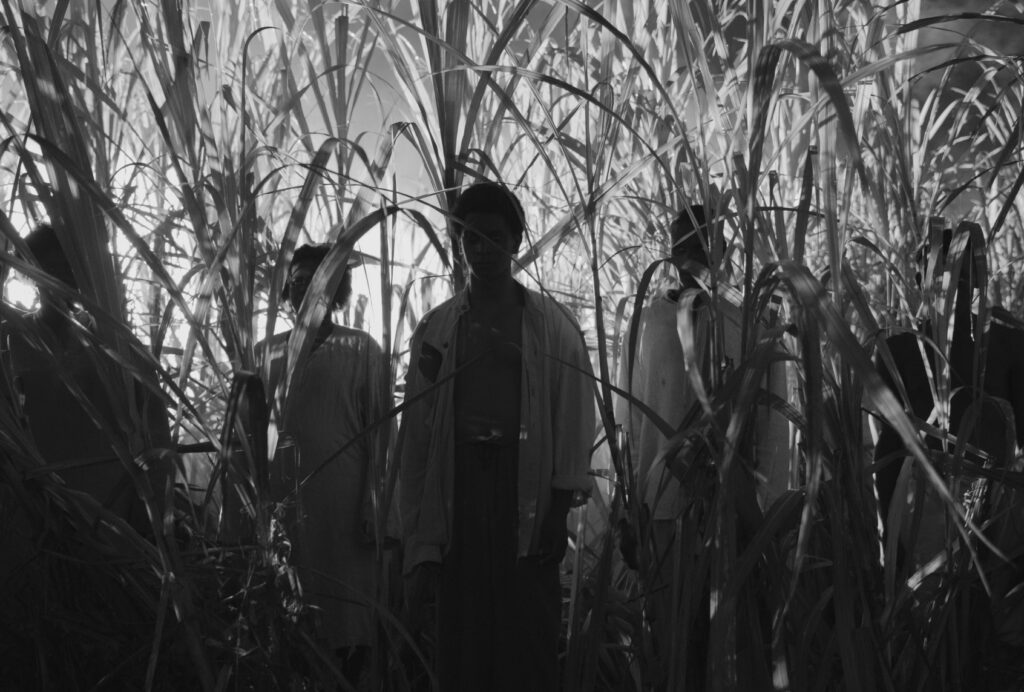
“Black Zombie” opens with a truth that has long escaped those fascinated by the shambling undead. To some, they’re simply mindless hunters. But Haitians understand the horror of zombies to be one of dispossession, a curse enacted by enslavers that binds victims to mindless servitude, denying them liberation in the afterlife. But long after Romero transformed them from blank-eyed puppets to ravenous murder machines, Bedward’s film demonstrates how Hollywood’s version of the zombie impacts America’s perception of Vodou, Haitians and immigration.
“Black Zombie” not only asks us to think differently about an overexposed subgenre, but also thoughtfully examines Vodou’s central role in the revolution that drove out French colonizers, and France’s imposition of debt to punish Haitians for winning their freedom.
All of this informs the zombie’s continued proliferation across popular culture, in films like “World War Z” and shows such as “The Last of Us” and “The Walking Dead.” They’re terrific entertainment, certainly. But each is, in its own way, built upon decades’ worth of misrepresenting Haiti’s syncretic faith to the detriment and demonization of a people. At the same time, “Black Zombie” recognizes this subgenre’s cultural resilience, arguing that recognizing the zombie’s true roots broadens its narrative possibilities.
Proving that point, one of Bedward’s subjects, a Vodou priest, says he grew up loving Wes Craven’s “The Serpent and the Rainbow,” despite its message that visitors to his country risk having their nuts nailed to a chair. “It’s a fantastical world to scare children,” he says, before adding that his main problem is its inaccurate messaging about his faith. “We say, ‘Wow – Haitians are devils.’ That’s what we’re taught.”
I’d nearly forgotten about that movie. Now I might rewatch it for the first time in decades and expect to be horrified for entirely different reasons.
Available to rent on Prime Video, Apple TV, and Fandango.
 (© Amazon Content Services LLC)
“Carrie”
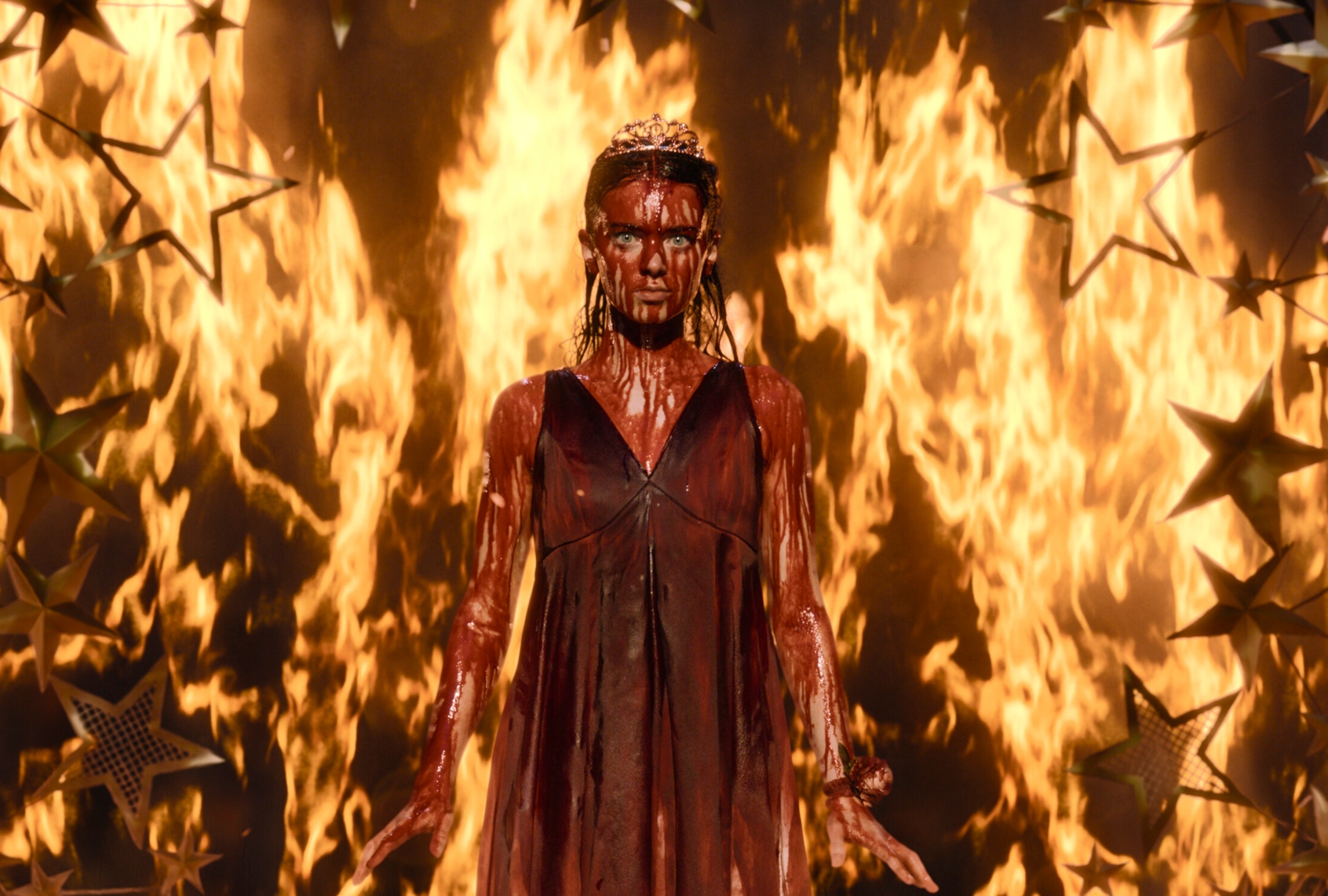
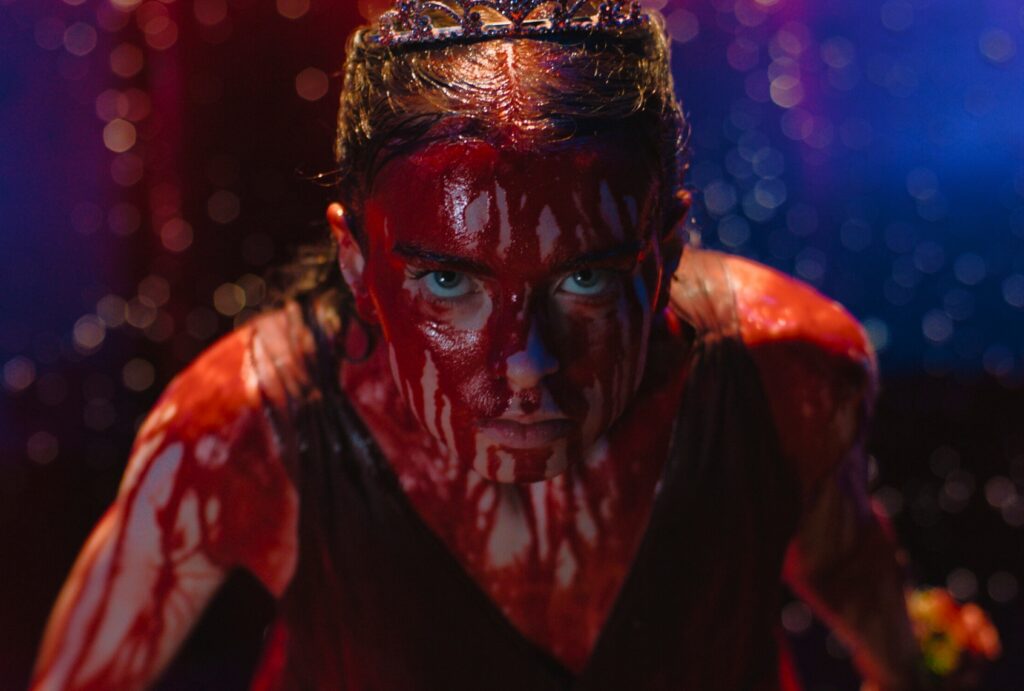
Stephen King’s classic may be more than half a century old and has undergone multiple adaptations, but it endures because its central moral that high school is hell never ages. Still, Mike Flanagan’s interpretation has divided the audience. Some, including King, appreciate Flanagan’s kinder portrait of Carrie White (Summer H. Howell) as an innocent unjustly sequestered from the world by fundamentalist parents who repudiate her extraordinary power. Others disagree with Flanagan’s alteration to the story’s climactic scene, which shifts culpability for the prom massacre from Carrie to a character created expressly for the series.
Pretty much everyone questions the season finale, which hints at taking an “X-Men”-style turn for its recently greenlit second season.
As someone who accepts nothing is sacrosanct now, not to mention a fan of the creator’s other adaptations, including “The Fall of the House of Usher,” I appreciated Flanagan using Carrie’s story to critique ignorance, knowledge suppression, and the dehumanizing effect of social media.
Besides, nearly all the key elements of “Carrie” remain. The bullies are still awful, and the famous “plug it up” shower scene in Brian DePalma’s 1976 standard-setter is worsened by her tormentors posting Carrie’s frightened sobs on social media.
Some changes retain the spirit of past performances. Carrie’s mother Margaret (Samantha Sloyan) is still an abusive religious zealot fond of locking her daughter in a prayer closet, for instance. But after the law forces her homeschooled girl to join the festering sin den that is their local public school, Margaret throws herself into advocating for parents’ rights, entirely disregarding her teen’s desire for a “normal” adolescence.
Part of the additional fun Flanagan has with this marquee property is strewing cultural Easter Eggs throughout. Some nod to what’s happening in America, such as when Carrie discovers the school library and gravitates straight to books that have been banned from classrooms and community libraries across the country. Another winks at “Army of Darkness” fans; look for the logo on Margaret’s work uniform.
By the time we reach Carrie’s bloodbath, we may be left to question whether she’s simply a bullied victim pushed beyond her limit or some version of a Final Girl empowered to vanquish tormentors who earn their reckoning. Even if you don’t ultimately see Howell’s Carrie that way, it’s a fine dance with one of horror’s oldest friends.
“Carrie” is streaming on Prime Video.
 (Crave and Christopher Lawrence)
“Yaga”
For adults, Halloween is an excuse to mingle sensuality with morbid themes. Why cosplay as a grizzled cop when you can be a flirty detective? Why settle for pretending to be a humpbacked wiccan when you can troll for hookups as a sexy witch?
“Yaga” has it all ways, resplendent with softcore interludes dangled between clue-finding excursions and unexpected chicken violence. The latest infatuation bait from Crave, the Canadian streamer that brought us “Heated Rivalry,” also gives us a new view of Hudson Williams and his naked hindquarters.
Only now, they’re humping away in a mystery taking place in a verdant seaside community called Whittock. There, dirtbag P.I. Charlie Rapp (Noah Reid) is drawn into a tense partnership with Carson (Clark Backo), a no-nonsense cop fatigued with her colleagues’ disrespect.
At first, Carson is repulsed by Rapp’s slimy overstepping, but she slowly learns not to loathe him. Implied in this, perhaps, is that a spell has ensnared the two as they probe the disappearance of rich playboy Henry Park (Williams). This pursuit leads them to encounter free-range poultry in odd places, along with strange symbols, a variety of nubile temptresses and a roommate, Logan (also Williams), who resembles Henry to an unsettling degree.
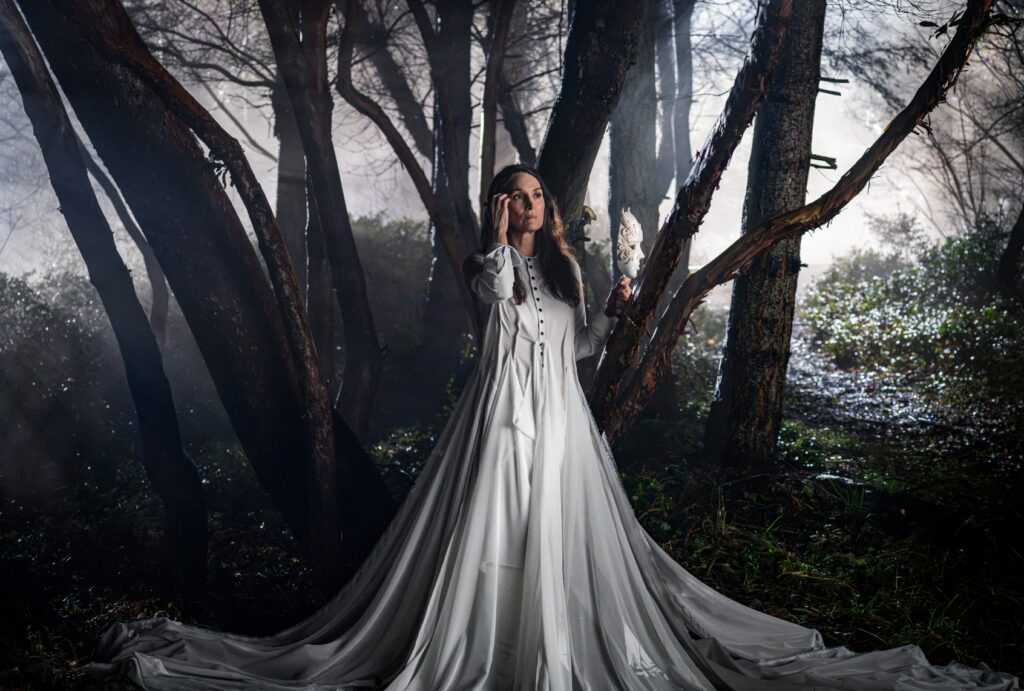
The show’s title has nothing to do with John Wick. It refers to the mythical Slavic crone, Baba Yaga, who either gives heroes a boon or lures wayward children to a forest hut that moves around on bird legs. Playwright Kat Chandler’s interpretation leaves open the question of whether our impressions of its witch are unwarranted or dead right, further muddling our judgment with the introduction of Carrie-Anne Moss’ university professor, Katherine Hargrove.
Want more from culture than just the latest trend? The Swell highlights art made to last.
Sign up here
Katherine announces herself by cozying up to Rapp over the manuscript for her new book titled “Sexy Bones,” thrilling him with her mature lady erotic energy. As she flirts with and antagonizes the private dick, along with other townies, it grows increasingly baffling as whether she’s friend or foe. Much like our titular enchantress.
This adaptation of Chandler’s play looks like a cop drama tangled with witchy murder, but from a longer TV perspective it’s really a haunting by the ghosts of erotic TV shows past. Remember “Red Shoe Diaries” and its moaning sax riffs? Like that anthology once did, “Yaga” banks on the power of smut to compel you. It’s a cheap indulgence, but what Halloween candy isn’t?
“Yaga” is streaming in the U.S. on AMC+.
Read more
from Salon’s Culture newsletter, The Swell