
The global rise of listening bars
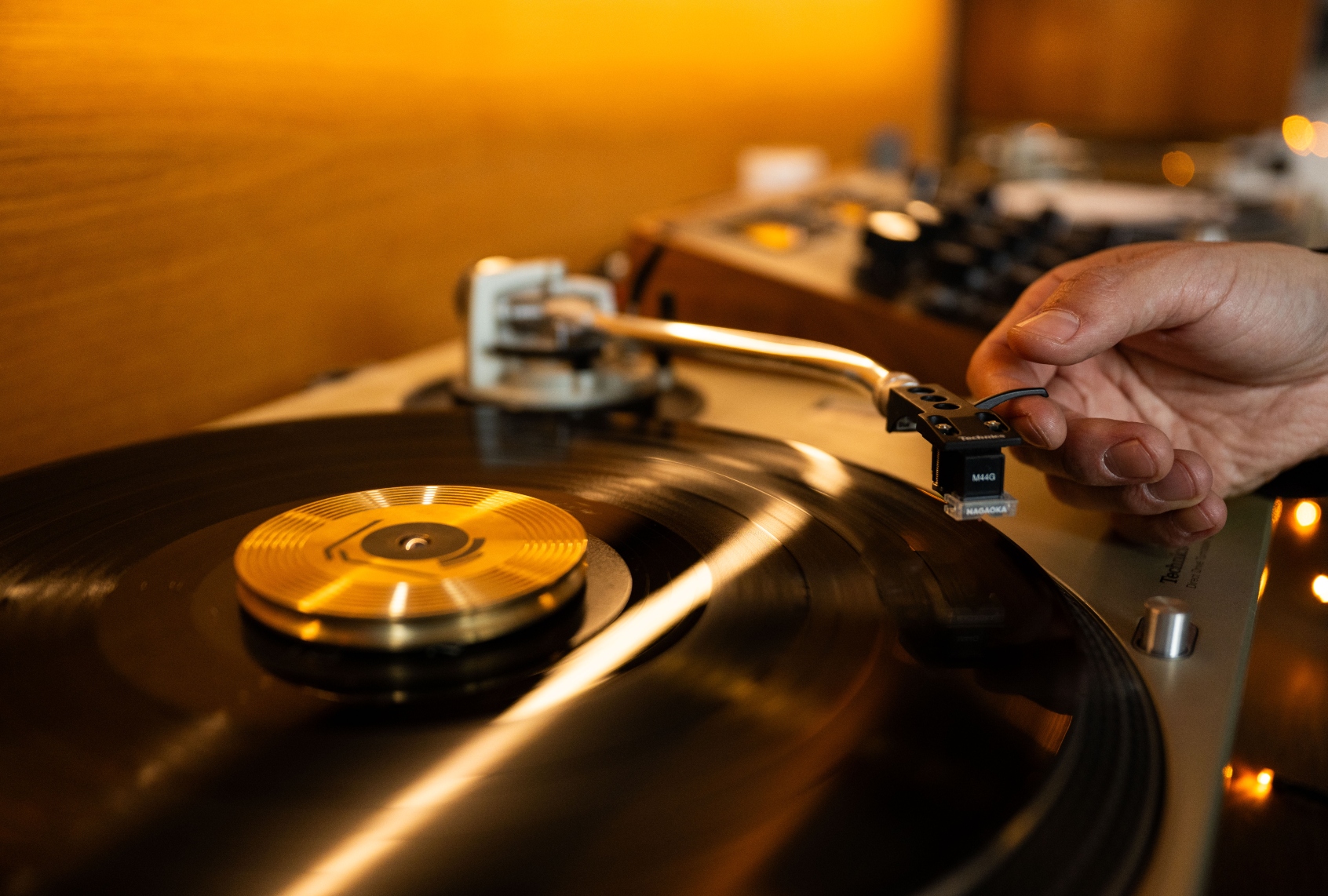
Nothing about Shibuya HiFi is loud. From its unmarked front door to its low-lit lounge, the Seattle vinyl bar is a subtle, pensive ballad of a place. So much so, in fact, that on the Wednesday night that we visited for a sold-out event, the sparsely populated lounge area was nearly silent.
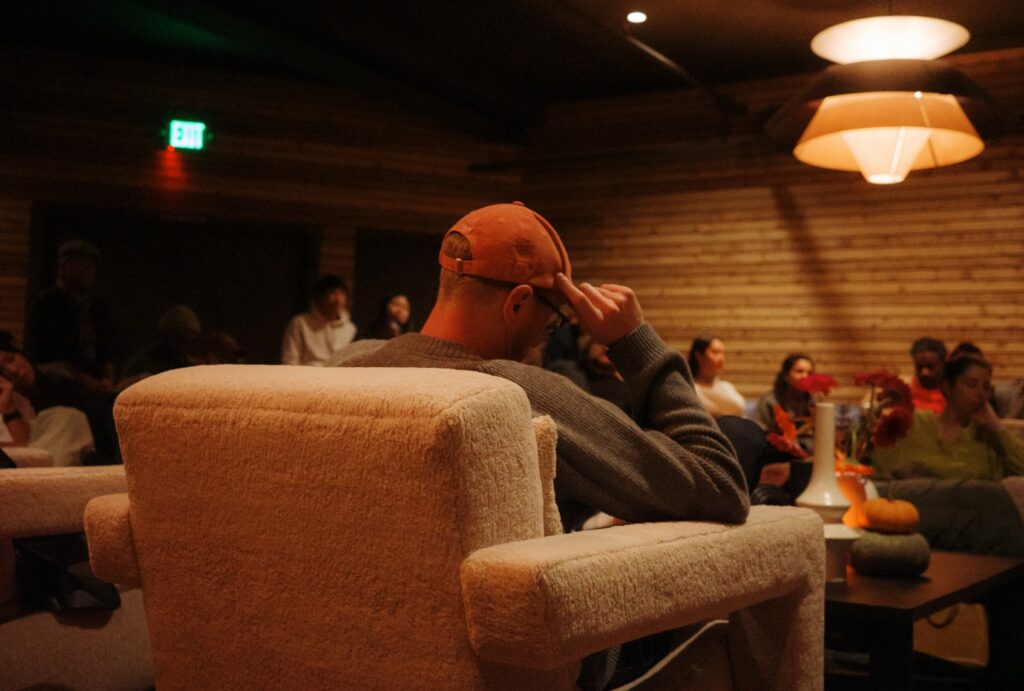
That is intentional, said general manager Jerry Stotler. Wednesday nights are closed to everyone but ticket holders. “These are what we call deep listening sessions,” he explained, “so when you walk in, there isn’t any music playing. We want to ensure a pristine listening environment when we’re in the hi-fi room.”
Seattle has many vinyl bars, but Shibuya, open since 2023, sets the local standard for premium listening experiences. Every inch of its intimate sanctum contains the story of the venue’s principal owners, Quentin Ertel and Brian Rauschenbach. It’s named for the Tokyo district known for its jazz kissa, cafés dating back to post-war Japan where visitors listen to vinyl on premium sound equipment. Rauschenbach’s parents met in such a place nearly six decades ago, Stotler said.
 (Credit: Justin Kim)
Ertel, an interior designer, painstakingly curated the room. Cedar planks line the walls. Louis Poulsen chandeliers hang from the ceiling, along with several plush, crescent-shaped loveseats, acquired from Benaroya Hall when the concert hall underwent a redesign. A pair of deep seats covered in nubby upholstery sit close to this sacred space’s altar — a vinyl-stacked media console holding a vintage receiver and turntable, flanked by two ATC SCM50 loudspeakers. But one set of equipment reigns over everything: a pair of 1976 Klipschorns.
Shibuya’s schedule favors favorites such as D’Angelo’s “Voodoo,” Radiohead’s “Kid A,” or Charles Mingus’ self-titled opus. But on this Wednesday, the venue hosted a special listening session for Michael Kiwanuka’s fifth album, “Fudge,” a week before its Oct. 23 release.
Stotler humbly acknowledged the venue’s good fortune to be included on the very short list of people and organizations invited to preview the record, a relatively recent development. Previous pre-release sessions have debuted work by the Beastie Boys’ Mike D and Thundercat.
But I’m getting ahead of myself. While waiting for the magic to start, we listened to the hi-hat riff of ice cubes click-clacking as Stotler worked a cocktail shaker. Once the listening room doors open, all drinks, distractions and shoes must be left at the door. “So enjoy a cocktail in advance of the session to relax and reset,” he calmly says, sliding one of his potions across the bar to a fellow patron. “Then we’ll go back and drop the needle.”
I’ve been curious about the recent rise of listening bars. Life has gotten faster, noisier and increasingly disconnected. Low-friction digital convenience has sapped life and music of their organic weight.
Places like Shibuya, then, are a natural fit for what Ertel describes as a renaissance of meaning, driven by vinyl’s resurgence. “There’s a search for new ways to be together, but also, I think, just new ways to be,” he said when I caught up with him by phone a few days later. “We live in sort of this two-dimensional world of scrolling. Everything’s flat and fragmented and fractured. When you have something that has kind of a wholeness to it, that is also linked to something that most of us love so much, which is music, it makes sense that people want vinyl records again.”
Younger audiophiles revived the medium from the dead starting in 2008 for many reasons, the simplest being that digital downloads don’t include eye-popping cover art. By 2020, vinyl record sales revenue hit $596.2 million, surpassing CDs ($531.1 million) for the first time since 1986, according to the Recording Industry Association of America. In 2025, vinyl purchases in the U.S. alone reached $1.04 billion, the RIAA reported in March.
Listening bars, meanwhile, have popped up worldwide. Tracks & Tales, a site founded by British writer Rafi Mercer, reports finding bars, hi-fi cafés and sound-first venues across 171 countries and 6,465 cities. That doesn’t count traveling experiences like The Listening Room, created by Seattle DJ Joshua Fields.
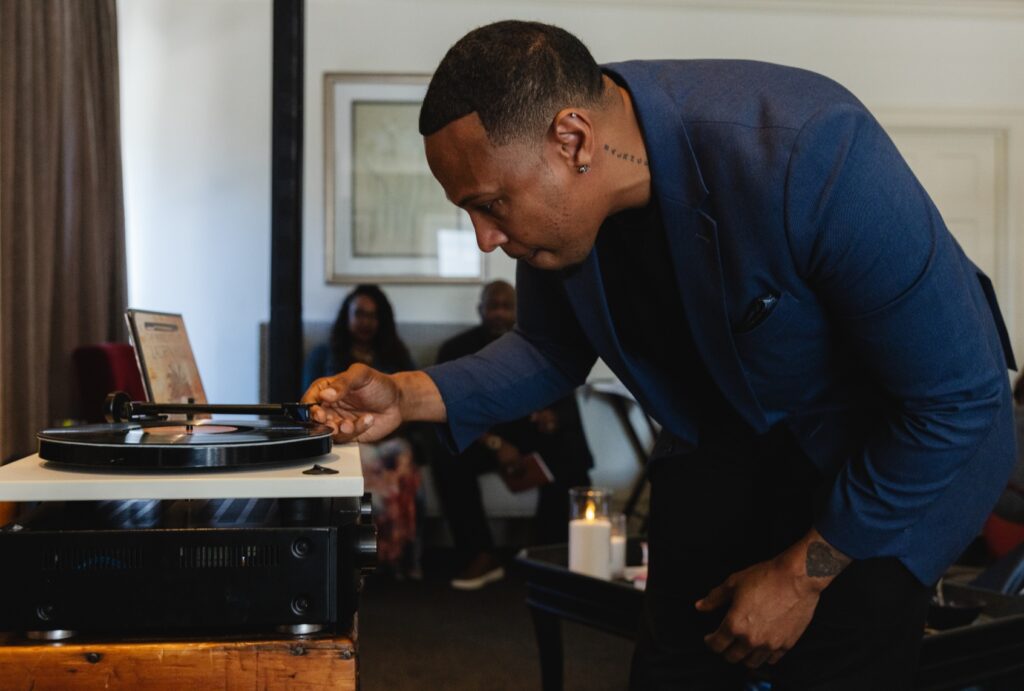
Fields was inspired by listening to “Voodoo” at Shibuya and wishing that he could talk about it with the other attendees. (He credits Rauschenbach as a mentor.) A little later, a back injury forced him to slow down and think about what he’d do differently — a “divine download,” he called it during a recent phone chat, that transformed into a monthly series of phone-free listening sessions that have so far taken place in Portland and Seattle venues.
The rules of engagement are consistent. Soft, comfortable seating is a must. No phones for the duration, or talking, singing or other interruptions once the needle hits vinyl until the very last track finishes. Afterward, he sets aside time for quiet journaling and discussion.
“The music is really the medium that gets us to this opening up,” Fields told me, “because what I’m solving for is the lack of human connection, with all our technology and our robots, all our things.”
As such, his model is a little more relaxed than Shibuya’s. Participants are served food and drinks, with each event inspiring a signature cocktail. For a recent sit with “Purple Rain,” he direct-messaged its co-star, Apollonia Kotero, to let her know he was naming a drink after her. “She responded, which blew my mind,” Fields said. “She told me, ‘Make sure it’s spicy.’”
So he made sure the bartender did.
 (Credit: Meg Stacker)
Listening events remind us that music can be a full-bodied, meditative journey, however you do it. There’s a ritual to setting the turntable stylus, or needle, into a vinyl LP’s groove for the first time, hearing the soft, crackling prelude to an opening melody and listening to a body of work front to back with silent focus. We can create that feeling at home, setting up a dedicated space to be comfortably still and take in your favorite records, or an unfamiliar one, from start to finish.
Still, there’s real value in leaving home and finding a place to listen — not simply hear, but listen —alongside strangers who love the art and spirit of music as much as you do. At events like Fields’, you may even meet someone you otherwise wouldn’t. He teased that a Dec. 4 Listening Room event in Seattle for India Arie’s “Acoustic Soul” will feature a special guest.
Want more from culture than just the latest trend? The Swell highlights art made to last.
Sign up here
I look forward to inhaling “Fudge” many times on my stereo. But I’ll never be able to recreate the rush of hearing its blossoming piano and strings for the first time, sensing the soundwaves from those Klipschorn speakers penetrate my skin. It made me well up, which embarrassed me until I glanced around the room and noticed a few others dabbing their eyes, too.
“In a true kissa or a well-kept basement bar, the first thing you feel is not volume; it’s presence,” Mercer writes. “The room seems to steady itself around a note. The air thickens. You sit differently. Your breath slows without negotiation.
“Good sound doesn’t overwhelm you,” Mercer adds. “It invites you. That’s the quiet truth at the heart of every listening bar: the room listens back.”
To search for a listening bar near you, click here.
Read more
from Salon’s Culture newsletter, The Swell