
Build hospitals that survive their founders — GMDs
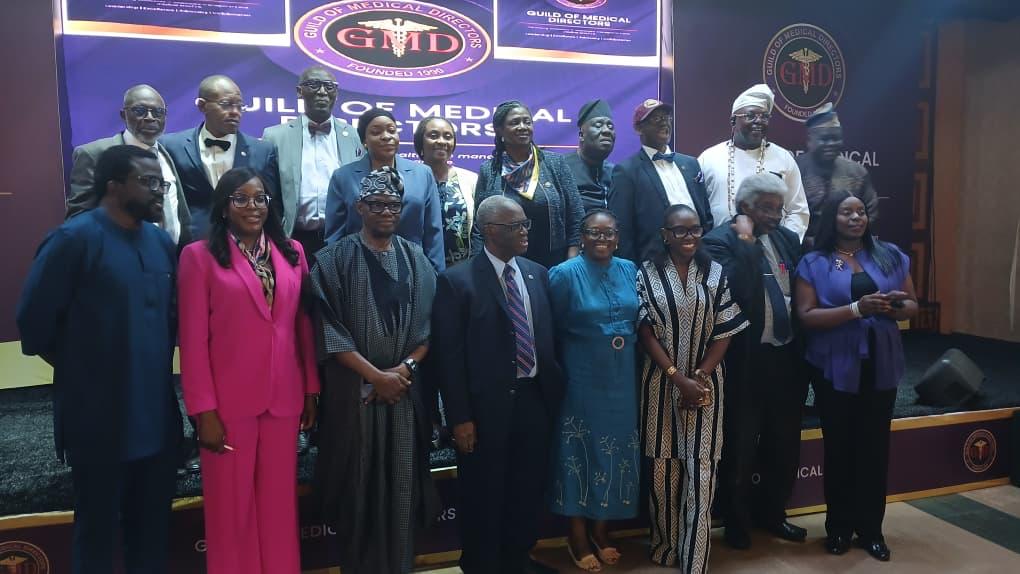
… Demand stronger systems, IPC, succession planning
By Chioma Obinna
Medical directors and owners of healthcare facilities have been challenged to build hospitals that can survive beyond their founders, with experts warning that overdependence on individuals could undermine continuity, quality of care and long-term sustainability.
The experts spoke at the 2026 Scientific Conference of the Guild of Medical Directors, GMDs, Lagos Branch, where they also called for stronger infection prevention and control, emergency preparedness, effective surveillance and deliberate succession planning across private healthcare facilities.
The conference, chaired by Dr Omoniyi Fagbemi, was themed, “Emergency Preparedness for Emerging and Re-emerging Diseases,” with sub-themes on infection prevention and control, the role of private healthcare services, and systems, strategy and leadership for a scalable healthcare enterprise.
Leading the discussion on sustainability, Dr Ayobami Koyoro asked medical directors to consider what would happen to their facilities if they were suddenly absent.
“If we actually leave the hospital tomorrow, what will happen?” he asked, challenging owners to examine whether patient care, quality, decision-making, revenue and relationships would continue without their constant intervention.
According to him, the healthcare environment has changed significantly, with patients becoming more informed and demanding, healthcare professionals becoming more specialised and mobile, investors paying closer attention to sustainability, technology transforming practice and competition increasing.
Koyoro stressed that healthcare providers must move from running a “practice” to building an enterprise capable of functioning through systems rather than individual personalities.
He distinguished growth from scale, saying, “Growth is not scale.”
He explained that while growth could mean more patients, staff, services and revenue, scaling requires organisations to increase value without allowing complexity and dependence to rise at the same rate.
He urged medical directors to build systems that allow people to make decisions, data to guide those decisions and sound economics to sustain growth.
“The strongest leaders do not create dependants; they create capacity,” he said.
Koyoro also warned that increased revenue does not necessarily translate into profitability, urging healthcare owners to understand their costs, staff expenses, overheads, power costs, capacity utilisation, payer mix and cash flow.
He cautioned against adopting technology without first fixing organisational processes.
“The digital version of a broken system is still a broken system,” he said.
He said the ultimate test of institutional leadership was whether an organisation could continue to deliver quality care without its founder, adding that succession planning should be treated as an essential part of building a lasting healthcare institution.
On infection prevention, Dr Olayemi Daudu said healthcare facilities must treat infection prevention and control, IPC, as a core component of quality care rather than an additional departmental responsibility.
“Infection prevention is not a department or a department of activity, but a standard of care that is driven by governance, and we as directors are charged with that responsibility,” Daudu said.
He disclosed that 48.8 per cent of 415 healthcare facilities assessed in Lagos scored inadequate on the World Health Organisation, WHO, infection prevention and control framework.
According to him, 214 private and 201 public primary and secondary facilities were assessed between July and October 2023.
He said although private facilities performed better than public facilities, none of those assessed reached the advanced level of IPC performance.
Daudu also stressed the importance of laboratories in outbreak preparedness, describing the laboratory as “the engine of infection control” because it turns specimens into decisions that guide treatment and public health action.
He urged the GMDs to develop a coordinated IPC network, strengthen surveillance, improve hand hygiene, establish surgical-site infection monitoring and develop facility antibiograms.
“Infection prevention is not a cost centre. It’s a licence to operate,” he said.
Speaking on the conference theme, Fagbemi said emerging and re-emerging diseases were no longer distant threats, citing the experience of Ebola and recent outbreaks of diseases such as diphtheria.
“The lesson is clear: emerging and re-emerging diseases are at our doorstep. As frontline healthcare practitioners, we must be abreast of them,” he said.
Fagbemi recalled the 2014 Ebola outbreak and the death of Dr Ameyo Adadevoh after she helped prevent an infected traveller from leaving a Lagos hospital, stressing the need for healthcare workers to understand how to protect themselves, their staff and their facilities.
“We must know not only how to diagnose and treat our patients properly, but also how to protect ourselves, our staff and our facilities,” he added.
He disclosed that the GMDs had resolved that all members should participate in a quality improvement programme, with Care Level Three expected as the minimum standard after the stipulated grace period.
“Growth is not enough; it must scale,” Fagbemi said, stressing that healthcare facilities must combine clinical excellence with sound business systems capable of surviving and expanding.
Responding to questions on IPC, Dr Adefolarin Opawoye explained that the WHO IPC Assessment Framework, IPCAF, is a self-assessment tool that enables healthcare facilities to examine their infection-control systems and identify areas requiring improvement.
He said the framework covers key areas including IPC programmes, evidence-based guidelines and standard operating procedures, education and training, healthcare-associated infection surveillance, multimodal strategies, monitoring and feedback, workload and staffing, and the built environment, including access to running water.
Opawoye also stressed the importance of protecting healthcare workers through appropriate adult vaccination and other preventive measures, particularly because they remain on the frontline during outbreaks.
On disease surveillance, Dr Olayemi urged healthcare facilities to maintain a high index of suspicion and strengthen their relationships with Disease Surveillance and Notification Officers, DSNOs.
He said early identification, prompt reporting and active surveillance were essential to preventing isolated cases from developing into wider outbreaks.
According to him, facilities should monitor unusual patterns of disease and maintain communication with DSNOs, who can provide information on emerging public-health threats and coordinate appropriate responses.
Kuyoro, meanwhile, reinforced the need for deliberate succession planning, urging medical directors to develop the next generation of leaders and ensure that healthcare businesses do not depend entirely on one individual.
He said building sustainable institutions requires systems, capable people and leadership structures that can continue to function when founders or current owners eventually step aside.
The conference therefore brought together three interconnected priorities for private healthcare: preparedness for emerging diseases, stronger infection prevention and control, and the development of healthcare enterprises capable of delivering quality care beyond the tenure or presence of their founders.