
A homecoming for “A Different World”
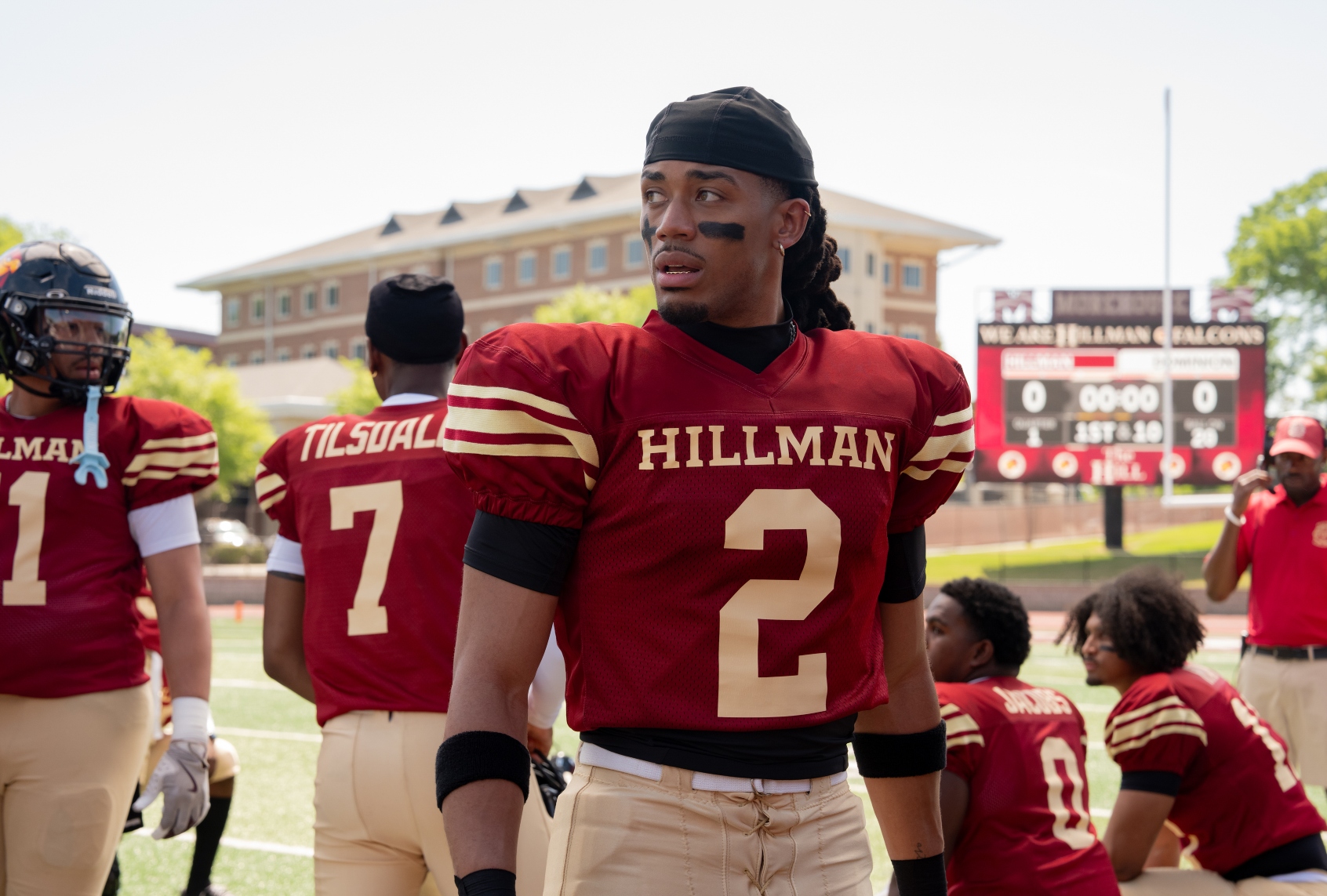
Five episodes into Netflix’s “A Different World” sequel, Hillman gets a bomb threat. This is a very real part of life for students at historically black colleges and universities, but that doesn’t make it any less frightening. Everyone gathers at The Pit, including Dwayne Wayne (Kadeem Hardison) and Freddie Brooks (Cree Summer) — who are Hillman faculty now — to talk it out. One student expresses shock at being targeted at a place they chose because they thought they’d feel safe. Another wonders if it’s an inside job.
The person who best sums up the moment is Dwayne’s daughter, Deborah (Maleah Joi Moon), when she says, “It’s all so exhausting. We go to their institutions, they punish us. We try to build our own; they destroy it. We mess up, they use it against us. What is even the point of trying?”
Right now, that statement could and will be read any number of ways.
There’s the threat itself, which echoes similar ones against HBCUs in the wake of Charlie Kirk’s shooting last September. It also recalls 2022, when more than 30 HBCUs were hit with comparable incidents between January and mid-March.
Deborah could just as easily be critiquing the Trump administration’s vacillation between defunding educational opportunities for minority students, citing the DEI boogeyman, and infusing HBCUs and tribal colleges with millions in cash. Great for those higher-learning institutions, but targeting minority grant funding elsewhere ensures, particularly at the Ivies and Big 10 schools, less diverse undergraduate populations at places that weren’t racially or economically diverse in the first place.
To know “A Different World” as it was is to anticipate that this 2026 visit to Hillman, a fictional HBCU, must contend with these real-world concerns. But, returning to the episode in question, what’s just as vital is how its students deal with this crisis. When the waiting becomes almost too much, Deborah starts humming a few bars of a familiar song. More join in, and soon everybody is singing along, dropping the tension enough to relax a little.
A few breaths later, the lockdown ends. Everyone resumes their business, carrying with them the lesson of never sacrificing their spirit even while living in a state of constant vigilance.
Expecting the modern, single-camera version of “A Different World” to recapture the multi-camera original’s magic is unreasonable. Read the title, read the room. The 2026 version of “A Different World” comes to us not on a traditional broadcast network, but on a streaming service, where Norman Lear’s return to “One Day at a Time” became a loving chronicle of a Cuban American family’s life. It also adapted Justin Simien’s indie flick “Dear White People” into an in-your-face comedy revolving around the Black experience at an Ivy League college.
But that show relied on the specter of white ignorance to serve as a cultural contrast, whereas “A Different World” is, as the title promises, almost entirely centered on Blackness – and with it, Black joy.
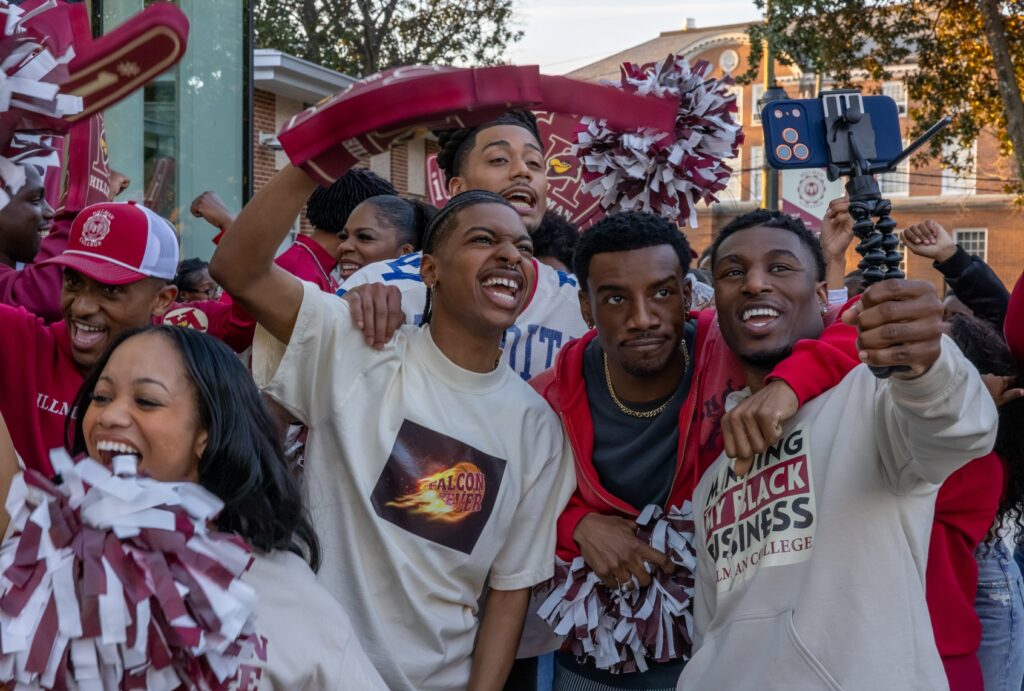 (Eli Joshua Ade/Netflix © 2026)
To those wondering what this show has to contribute 39 years after its 1987 premiere, and following the returns of “Roseanne” and “Will & Grace,” “Full House,” and “That ‘70s Show” (reborn as “That ’90s Show“), that should be enough.
Those other revivals were justified by our nostalgia for their characters, and the love people have for crunchy Freddie, showboating Ronald “Ron” Johnson (Darryl M. Bell), brainy Dwayne and his wife, the eternally bougie Whitley Gilbert-Wayne (Jasmine Guy), is just as strong.
Presumably, explaining Black college life to an audience that almost elected Howard graduate Kamala Harris to our nation’s highest office — and that views her fellow alumnus Ta-Nehisi Coates as one of Black America’s representative voices — is less of a requirement these days.
Even so, “A Different World,” being a spinoff of “The Cosby Show,” faced different backroom hurdles before its executive producer Debbie Allen got her long-sought greenlight. The holdup is precisely what you think it is. Although Allen and the original series’ head writer, Susan Fales-Hill, shaped the show into the version considered a sitcom classic, Bill Cosby’s creator credit tainted its reputation. The comedian is accused of sexually assaulting dozens of women and was convicted in 2018. That conviction was overturned in 2021 because of a non-prosecution agreement struck with a previous prosecutor. (Cosby continues to maintain his innocence.)
Now that it’s back and under the guidance of “Grey’s Anatomy” alumna Felicia Pride, I can almost guarantee there will be right-wing media commentators crowing, “Who’s they?” while trying to paint this sequel as an extra-woke version of the original.
Doing that would betray their ignorance of the show’s legacy, especially the five seasons that Allen captained. At a time when other sitcoms occasionally tackled social issues in “very special” episodes and “The Cosby Show” hewed to its namesake star’s dedication to respectability politics, “A Different World” regularly confronted harder topics.
Author and professor Brittney Cooper explains what that means in a 2013 Salon story, where she remembers Dr. Huxtable’s eldest daughter Sondra naming her adorable twins Winnie and Nelson after anti-apartheid revolutionaries Winnie and Nelson Mandela in 1988, when they were mainstream political celebrities. Two years later, Hillman student Kimberly Reese (Charnele Brown) agonized over whether to reject a scholarship funded by a company linked to South Africa’s apartheid regime, which was a political act.
None of it felt forced to anyone who sees the college experience as one of political and social awakening. But even “A Different World” hit its limits when it plunged the audience inside the Black folks’ shock and despair after the 1992 Los Angeles uprising. That decision likely led NBC to yank the plug despite its high ratings, Fales-Hill admitted to Vanity Fair. It’s easy to say that was a different time, except we know that isn’t true.
On the contrary, this return to “A Different World” simultaneously reminds us of how far TV has regressed since the late ‘80s and early ‘90s. The original’s success paved the way for a surge in shows centering Black life in America, including “Living Single,” “Moesha” and “Martin.” It also brought HBCU culture and traditions like step competitions into Middle America’s living rooms.
Want more from culture than just the latest trend? The Swell highlights art made to last.
Sign up here
Still, this generation of “A Different World” viewers needs to be spoken to in ways beyond the cultural lingua franca of online posting and situationships, which the first season does well. Deborah Wayne and Ron’s son Shaquille (Cornell Young IV) are in one of those, following in the footsteps of Dwayne and Whitley. But under the constant watch of phone cameras and gossip that travels at the speed of social media feeds, they face greater pressures.
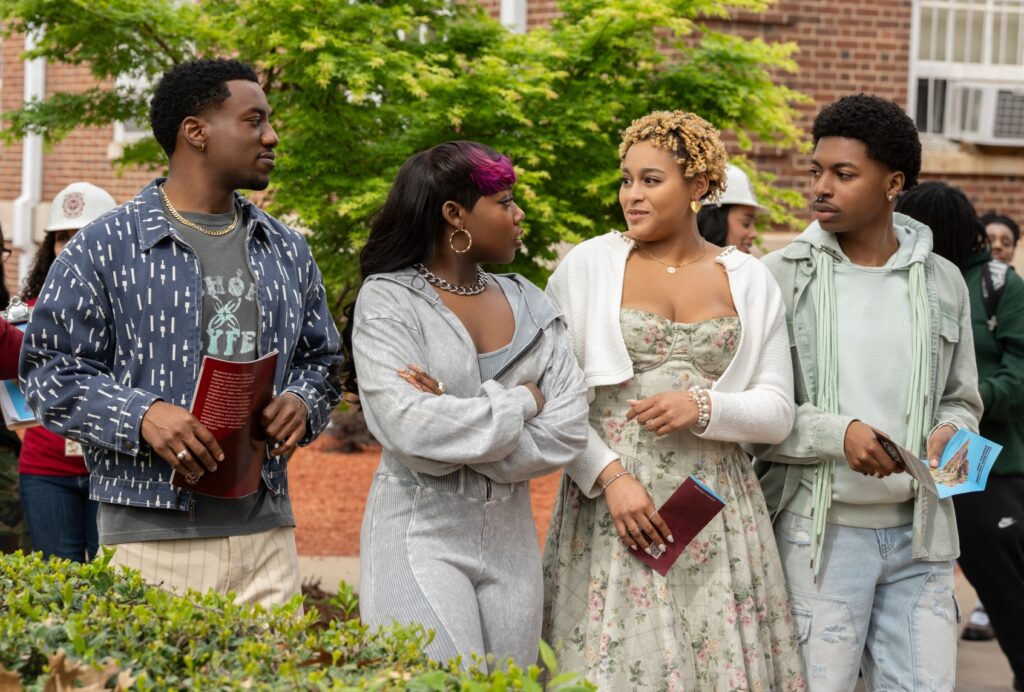 (Daniel Delgado Jr/Netflix © 2026)
Within that on-again-off-again tension crackles an exuberance reflected in the whole ensemble, an array of determined smiles and easy joking that momentarily pushes aside those ever-present societal shadows — including the very real possibility that Hillman might close.
But as Freddie points out to her students, that cliff has always been there. “Black learning spaces have always been seen as dangerous,” she tells her students, “not just because of what students do, but because of who you might become.” Maintaining their joy, then, is seen as both an educational priority and an act of resistance. That’s worth reviving, too.
“A Different World” is streaming on Netflix.
Read more
about TV revivals