
We have to talk about the Jon Ossoff thirst edits
This story was originally reported by Grace Panetta of The 19th. Meet Grace and read more of their reporting on gender, politics and policy.
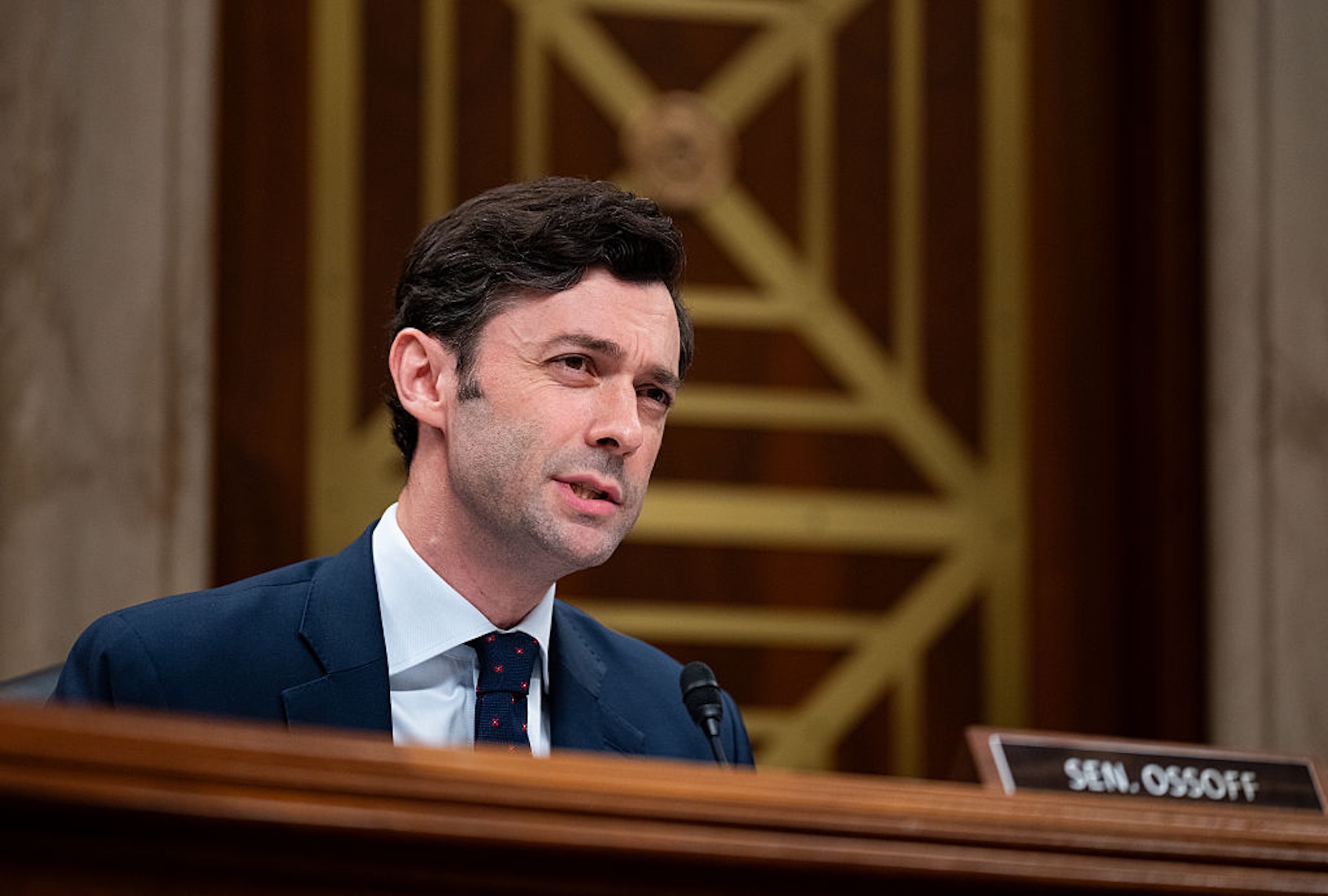
Sen. Jon Ossoff of Georgia is running one of the most competitive 2026 campaigns as he seeks a second term. He’s emerged as a breakout star communicator and has been floated as a 2028 presidential contender. And a lot of people on the internet think he’s really hot.
As the midterms approach, the 39-year-old Democrat may be the most thirsted-after Senate candidate on the internet. Take a scroll through Instagram and TikTok, and you’ll see fan edit-style videos of Ossoff at campaign rallies and in Senate hearings. “I’m sick of acting like Jon Ossoff isn’t hot,” says one TikToker. Another refers to him wearing glasses as his “slutty Atticus Finch cosplay,” a reference to actor Gregory Peck in the 1962 film adaptation of “To Kill A Mockingbird.”
Amaris Hayes, a 31-year-old Florida-based creator, posted a video comparing Ossoff to Fitzgerald Grant, the fictional president played by Tony Goldwyn in the Shonda Rhimes-created political drama “Scandal.”
“I’m so glad that I’m going to be able to experience a hot president in my lifetime,” she said in the video.
“Democrats on the internet can be too serious,” said Monica Venzke, a Democratic communications professional whose “passion project” is running Boyfriends We Deserve, which leans into thirst to boost Democratic candidates on social media. “It is objectively fun to have a little internet crush, and let that person be the senior senator from Georgia.”
And while those who work in campaigns often say the internet isn’t real life, thirst edits have broken containment as Ossoff’s national profile has grown. In July, one of TMZ’s Washington, D.C.-based correspondents asked Ossoff how he felt about people online saying he has “BDE.”
“Oh, my brother. Only an Aussie would ask me that,” a bemused Ossoff responded with a smile to TMZ reporter Charlie Cotton, who is Australian.
Start your day with essential news from Salon.
Sign up for our free morning newsletter, Crash Course.
Looks and physical attractiveness have influenced American politics since the widespread adoption of television, and Ossoff isn’t the first or the only political candidate the internet has thirsted over. But Democrats, out of power and frustrated with their party leadership, have especially gravitated toward him as they seek sharp communicators and a younger generation of leaders.
Ossoff has so far avoided being labeled either a moderate or a progressive and hasn’t been a political firebrand. But this year, he’s gained attention and virality for his sharply worded criticisms of Republicans, a sustained focus on corruption in his political messaging and his intense questioning of Trump administration officials in Senate hearings.
“I think yes, he is an attractive younger man, but I think it’s also the fact that there is an attempt to listen to his constituents that I feel like we haven’t had in my lifetime,” Hayes said.
Content creators and Democratic strategists also told The 19th that thirst content, when done right, can be a gateway into real political engagement. It’s a way for Democrats to make up ground on the social media platforms where a larger-than-ever share of Americans are getting their news — turf that Republicans dominated in the 2024 election, many Democrats argue.
“I do think it’s a way to get the internet back, and also a way to make being a Democrat cool again, make it manly to be a Democrat,” Venzke said.
“Republicans are having fun on the internet, and it’s working for them,” she argued. “Let us have fun. If the girls and the gays want to look at Jon Ossoff and be like, ‘Wow, he looks so good in those pants,’ let us. It benefits him, and we’re all having fun.”
In many ways, the Ossoff thirst content is a natural evolution of the fandom communities around TV shows and musical artists that flourished on websites like Tumblr in the aughts and 2010s — now adapted for the vertical-video-dominated, infinite-scroll era of the internet, where political campaigns are competing for the increasingly scarce resource of voters’ attention.
“I think that the renewed attention on Senator Ossoff has served as a reminder to the Democratic Party, hopefully, that voters can’t be treated like a captive audience,” said Sophia Gomelsky, a Democratic campaign strategist and activist who last year posted an edit of Ossoff clips to Sabrina Carpenter’s “Tears,” a decidedly thirsty song.
“Very similarly to how the music industry runs on the enthusiasm of fans and their attention, politicians actually have to compete and energize voters around their visions and their policies,” she added.
While more candidates and advocacy groups are formally partnering with influencers and content creators, organic thirst and fan content function as a more natural on-ramp to engagement than a traditional television ad making an explicit appeal to vote for or against a candidate.
“It’s not really my role to show you that you should vote for Jon Ossoff, that’s Jon Ossoff’s role,” Venzke said. “I’m gonna show you Jon Ossoff. And then once he has your attention, it’s his job to close the deal.”
One of the first people to tap into the power of thirst as a gateway to political engagement is Qondi Ntini, a Washington, D.C.-based organizer and founder of Thirst for Democracy who dubbed Ossoff “Senator My Boo” and his fellow Georgian Sen. Raphael Warnock “Senator Bae” when they were both running for the Senate in 2020.
Ntini, who has spent years organizing and fundraising for Democratic candidates, has this year expanded into making physical merch. She found Georgia-based print shops to make pink “Senator My Boo” buttons and has been working with local Democratic activists and volunteers to distribute them at Ossoff’s rallies, including one he held Sunday in Athens. Her hope is that they help Democrats in a purple state find each other and feel not alone.
“If they can kind of identify each other, wear the buttons or hand them out to the community, it’s kind of a signal,” she said. “Like we are not standing by ourselves, we are a legion, basically.”
She doesn’t, however, want those engaged by thirst content to stop there.
“What I would want to caution people against is thinking that the thirst or the engagement is the end — that’s been my reservation with it,” she said. “I mean, I’ve been doing this thirst thing for six years, but it is tied to action, otherwise, what’s the point? Engagement is cute, but it doesn’t move people.”
Ossoff (like most politicians) hasn’t directly engaged with or reposted the thirst videos, and his campaign didn’t respond to a request for a comment for this article. But his campaign has deployed a strategy of putting out high-quality livestreams and videos from his rallies from multiple camera angles, including a profile shot some refer to as “the Obama angle,” that is prime material for clips and edits.
“The way that folks like myself have content to make thirst trap edits is because it’s out there,” Venzke said, adding that thirst content is “free earned media” for candidates.
At a rally in August, Ossoff took a shot at how Trump “wants to build the ballroom and travel with Natalie,” which struck a nerve with the White House and sparked a multi-day news cycle about Trump’s ever-present personal aide, Natalie Harp.
Marie Soledad, a California-based content creator, got interested in Ossoff in part through seeing thirst edits of him on social media. She’s a member of the Chorus network, a nonprofit incubator program of liberal creators who were discussing and planning Ossoff-related content in the wake of the “Natalie” comments.
“The vibe is Jon Ossoff is sexy, sex sells, we need votes. Why not talk about this?,” she said. “It’s fun. It’s a fun way to get people civically engaged.”
There can, however, be a fine line between thirst and objectification, and some videos about Ossoff on social media verge into decidedly not-safe-for-work territory: “Someone said he walks like it’s heavy,” read the text of one TikTok video. “Some people are upset that I said Jon Ossoff could talk you through it,” said another creator. (We’ll leave those up to reader interpretation).
Soledad wanted to capitalize on the attention on Ossoff without crossing that line. So she wrote and published a piece of Y/N or “Your Name” fanfiction (which was not formally part of her work with Chorus) about a “completely fictional” millennial Democratic senator from Georgia running for reelection in 2026 named “John Getsuoff.”
For creators like Soledad, thirst content is also a way to engage with sex and sexuality in a positive way at a time when states including Georgia have passed bans on abortion, Trump was elected to a second term after being found liable of sexual abuse and the release of files connected to the late convicted sex offender Jeffrey Epstein has kept sex abuse at the forefront of the national conversation.
“I think it’s awesome that we have sexy Democrats who are allowing people to feel sex-positive in a respectful — sometimes people aren’t, but I try to be — respectful way, right?,” she said. “I think the Democratic Party shouldn’t shy away from it.”
If anything, Democrats are leaning in: the official TikTok account of the Democratic National Committee has posted thirst-esque edits of Ossoff and other millennial candidates including Michigan Senate Democratic nominee Abdul El-Sayed — along with lots of nostalgia content of former President Barack Obama. Headquarters, formerly known as Kamala HQ on X, posted a side-by-side composite of Ossoff and El-Sayed last month with the caption: “There are 69 days until midterm election day.”
Ossoff’s looks have also drawn GOP attacks. Both his Republican opponent, Rep. Mike Collins, and a top national Republican super PAC have aired attack ads against Ossoff, hitting him over his spending on professional hair and makeup services. Ossoff has called the ads “deceptive” for using AI-generated imagery depicting him getting various beauty treatments in a salon.
Some Democrats have floated Ossoff as a 2028 presidential candidate, though he’s said he isn’t running. Venzke said that while there are “bigger fish to fry” in the next presidential election, she’s already seeing multiple prospective contenders leaning into looks.
Politicians, she said, shouldn’t be afraid to invest in their appearances — and embrace the thirst content.
“My actual advice is let influencers do their thing,” Venske said. “Trust them. Don’t, for lack of a better word, be a prude about it.”
Read more
about this topic