
Nigeria’s health system at crossroads as Academy seeks urgent reforms
By Sola Ogundipe
Nigeria must move swiftly to stem mass exodus of healthcare professionals, strengthen epidemic preparedness and step up efforts to reduce maternal deaths if it hopes to build a resilient health system, leading health experts have warned.
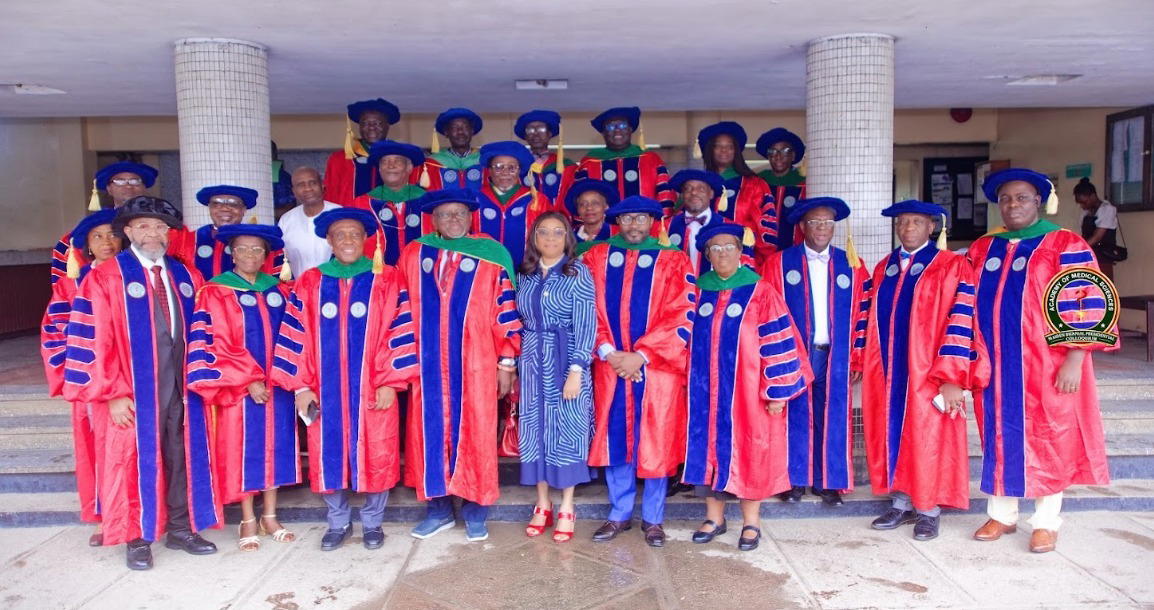
The call came at the maiden Presidential Colloquium of the Academy of Medical Sciences of Nigeria, themed “Nigeria’s Health at the Crossroads: Confronting Workforce Shortages, Epidemic Risks, and Maternal Mortality,” where top health experts lamented a health sector grappling with persistent health threats.
Participants agreed that unless Nigeria tackles its health workforce crisis, strengthens primary healthcare, increases investment in the sector and makes preparedness a national priority, the country will remain vulnerable to avoidable health emergencies and poor health outcomes despite its enormous human resource potential.
The colloquium brought together senior medical professionals, researchers, policymakers and public health experts to explore practical strategies for addressing workforce shortages, epidemic threats and maternal mortality in Nigeria.
Opening the colloquium, the President of the Academy, Professor of Obstetrics & Gynecology, Emeritus Professor Osato Giwa-Osagie decried the continued migration of skilled health workers warning that the resulting shortage of experienced personnel is eroding access to quality healthcare, especially in rural communities.
“Nigeria’s inability to retain the professionals it trains, despite their international reputation for excellence, raises serious questions about the level of investment in the country’s health sector,” he stated.
In his presentation titled “Confronting the Health Workforce Challenges in Nigeria”, a Professor of Community Health and Primary Care at the College of Medicine/LUTH, Prof. Akin Osibogun, said addressing the country’s shortage of health professionals will require sustained investment in training, recruitment, retention and equitable distribution of health workers.
“Nigeria cannot overcome its workforce deficit through piecemeal measures. What is needed is a coordinated national strategy backed by adequate funding and stronger collaboration between the health and education sectors,” he said.
Osibogun said expanding the workforce does not necessarily require building new medical schools. Instead, he urged government to maximise the capacity of existing institutions.
On his part, the Chief Medical Director, Lagos State University Teaching Hopsital (LASUTH), Prof Adetokunbo Fabamwo, called for greater investment in girls’ education, stronger support for women’s empowerment and policies that give women ability to make informed decisions on their health.
On his part, the Lagos State Governor, Mr. Babajide Sanwo-Olu, called for deliberate investments in retaining healthcare workers, strengthening primary healthcare, improving epidemic preparedness and reducing maternal deaths through sustained, evidence-based reforms.
The Governor, who was represented by the Permanent Secretary in the Lagos State Ministry of Health, Dr. Dayo Lajide, said Nigeria can no longer confront today’s health challenges with yesterday’s solutions if it hopes to build a resilient healthcare system.
“We are indeed at a crossroads. The choice before us is not simply between doing more and doing less. It is between continuing to respond to familiar problems with familiar approaches and having the courage to rethink how we train and retain our health professionals, prepare for emerging threats, and protect mothers and children from preventable deaths.
“This is not simply about preventing migration it is about building a health system that our brightest minds will choose to remain in and help strengthen,” he said.
Sanwo-Olu also called for a fundamental rethink of Nigeria’s approach to epidemic preparedness, warning that public health emergencies cannot be managed through reactive measures alone.
The governor challenged the Academy to move beyond identifying problems and focus on developing practical, evidence-based recommendations that governments can translate into policy and action.
“We need more than conversations about our challenges, we need clear priorities, measurable interventions, accountable institutions, and sustained follow-through.”