
“Ice Princess” quietly defined Hayden Panettiere’s whole career
The fame machine is a distinctly American invention. In what other country is it wired into people’s heads from the moment they can coherently string together five words that they, too, can be a star if they work hard enough and dream big enough? Here, “fame” doesn’t merely suggest flashy movie-star celebrity; it’s a status you can attain in any industry, so long as you climb to its upper ranks. Fame is a bedfellow of the newer, more modern American dream, which promises not only contentment, but success, as a reward for ambition, ravaging the lifestyles of millions of people in the process. It’s getting harder to be happy with what one has, and even more difficult to stop destroying ourselves — either with contempt for others or regret for what we perceive as imperfection — in striving for more. America might not have a monarchy, but that doesn’t mean most of us won’t try to bow at fame’s feet at some point. Each trade has its kings and queens, its princes and princesses.
When news broke of actress Hayden Panettiere’s death at the age of 36 late last week, the immediate aftermath felt like watching the fame machine go on the fritz, rumbling and sputtering before outpouring a swath of both genuine grief and rubbernecking greed. Those who grew up watching Panettiere light up screens both big and small were devastated. Others — maybe even a subset of the same people — jumped to alarmism and misinformation. After an extended hiatus from acting, Panettiere was returning to work and primed for an even bigger comeback. Earlier this summer, she detailed her struggles with postpartum depression, abuse, child stardom, addiction and recovery in her memoir, “This Is Me: A Reckoning.” Many assumed her death was a result of any one of these. (First responders found Panettiere in cardiac arrest, but no exact cause of death is known at the time of writing.)
Considered alongside its stars’ tragically brief lives, “Ice Princess” conveys the critical need to give teenagers both stalwart encouragement and the tools to speak up when they need help. And while the movie’s legacy looks a little more macabre now, Panettiere and Trachtenberg’s glimmering performances are enough to push through the darkness.
Within hours, conspiracies about Panettiere being killed for speaking out about Hollywood appeared online. A TikTok search for her name brings up ghoulish videos with thousands of views: “Last video of Hayden Panettiere alive”; “Nobody realized Hayden made three unusual moves before her death.” CBS News posted audio of the 911 response call to their TikTok page just this morning. It’s as if, in the untimely death of a famous person — especially a former child star — particles of their fame dissipate into the air, leaving the desperate and discontent to try to snatch a piece of their own before it dissolves completely.
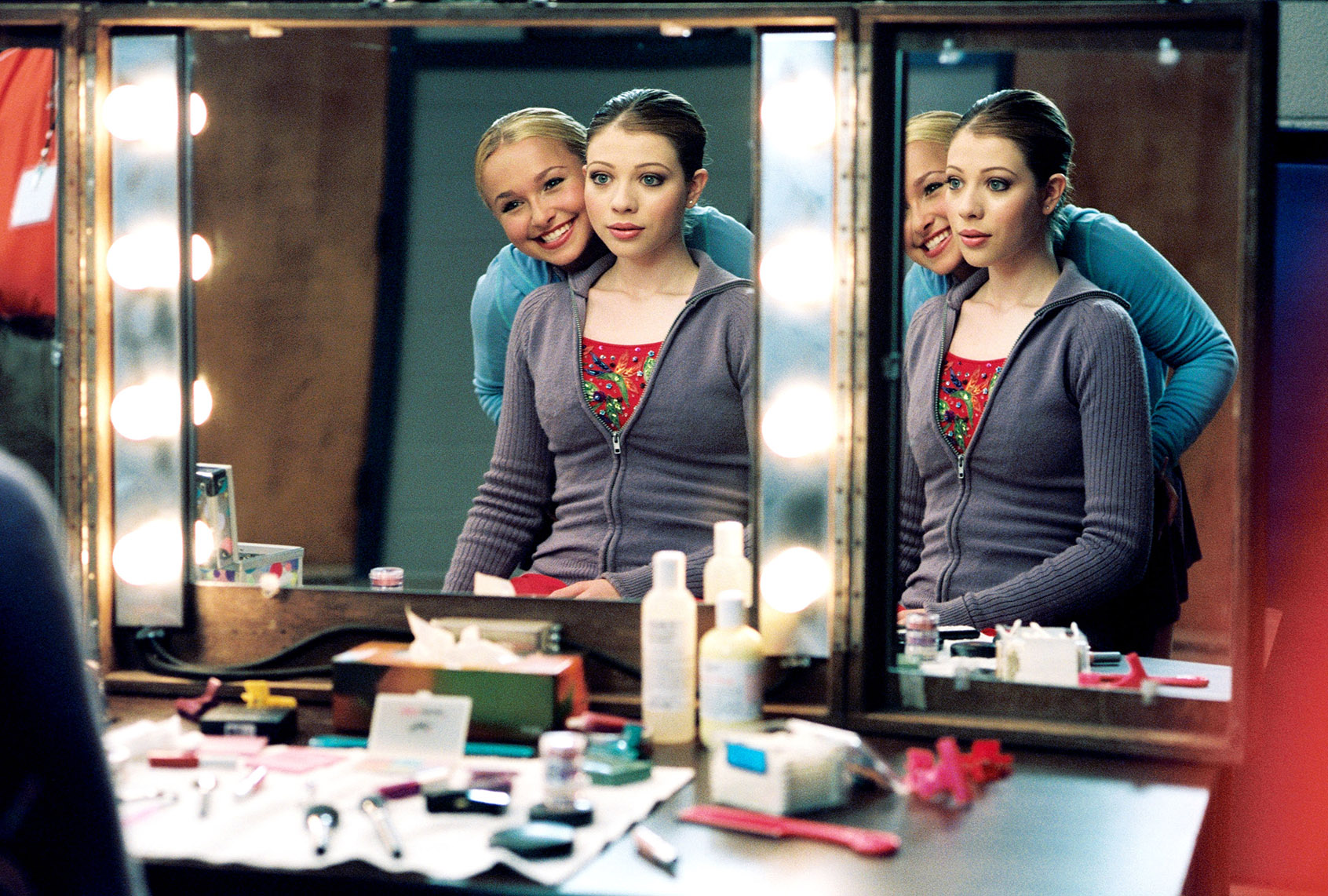
Some of Panettiere’s most notable roles point back to this phenomenon, with her TV arcs in series like “Heroes” and “Nashville,” at their cores, tracking the effects of the whole world watching and depending on you. But it’s her 2005 Disney film, “Ice Princess” — one of my first experiences with Panettiere’s work — that’s most illustrative of both fame’s pitfalls and the culture that cosigns them in the name of success. In the movie, Panettiere plays Gen Harwood, an archetypal most-popular-girl-in-school and less-than-standard teenage ice-skating prodigy. Though her form and marks in the sport are good, real success is just out of Gen’s reach. That is, until physics geek Casey Carlyle (Michelle Trachtenberg, another child star gone far too soon) begins studying the science of Gen’s skating in hopes of scoring a college scholarship.
Want more from culture than just the latest trend? The Swell highlights art made to last.
Sign up here
Casey and Gen’s journey from competitors to confidantes is the film’s familiar emotional center, but tucked into an unfamiliar narrative. Beneath its Disney dialogue and some smoothed-over depictions of the harsher realities of competitive sports, “Ice Princess” boasts winning messages about the pressures put on young people to achieve greatness at an age when they’re too young to define personal success. That the film is led by two young women who accomplished such greatness in their childhood and teenage years at the risk of their privacy and potentially their well-being is a tragically meta asterisk that will now hang over the movie forever.
But that doesn’t mean “Ice Princess” doesn’t still come loaded with hope and pertinent themes of personal choice, active listening, and cheering young people on in whatever they choose to do (within reason). Considered alongside its stars’ tragically brief lives, “Ice Princess” conveys the critical need to give teenagers both stalwart encouragement and the tools to speak up when they need help. And while the movie’s legacy looks a little more macabre now, Panettiere and Trachtenberg’s glimmering performances are enough to push through the darkness.
Casey and Gen are, for a Disney movie, as different as they come. Casey lives with her mother, Joan (Joan Cusack), in a cozy, rural house outside of town, where Casey skates for fun on the frozen pond in their backyard. Gen is your typical blonde suburbanite who wishes she could spend her Saturday nights at parties or with her friends, instead of in intensive training on the ice, coached by her mother, Tina (Kim Cattrall). Gen and Casey aren’t enemies, but they’re not exactly friends, either. But when Casey’s science teacher encourages her to apply for a college scholarship that could change her entire life — and make the project she submits as part of her application personal — Casey’s affection for ice skating becomes a thorn in Gen and Tina’s side.
The two girls are thrown together by their mutual commitment to their passions, science and skating. What Gen and Casey want is to enjoy these things for the personal thrills they offer. Fame or excellence in either field seems to be the desire of their parents and other adult figures in their lives. “People wait their whole life to find their calling,” Casey’s teacher tells her about the scholarship, asserting that a natural fluency in science means it must be her destiny. These sentiments are reflected by Joan, who desperately wants more for her daughter than she’s been able to provide on her own teacher’s salary.
Tina, on the other hand, gets to the point with candor. “You’re not like other girls,” Tina tells Gen when her daughter asks why she can’t take a half-hour break from training to be with her boyfriend. “Winners make sacrifices.” For Gen, those sacrifices come at the expense of joy. Gen knows the exact measurements of her salad order and is strictly forbidden from eating any bread. Her practice doesn’t stop when the sun goes down. And attending a high school party is entirely out of the question. There is something genuinely quite heartbreaking about watching Panettiere, a young woman just coming to understand Hollywood industry standards, repeat the sickly refrains of a similarly demanding profession. When Gen orders cheese (in a strict one-quarter cup measurement) for her salad one afternoon, her friends poke fun at her. “It’s Saturday,” she replies, “I can pig out if I want to.”
With its focused screenplay, “Ice Princess” quickly cultivates an atmosphere that’s sympathetic to Gen and Casey. The film frames their lapses in rigor as the joys of being a teenager, rather than imperfections — or worse, weakness in the pursuit of glory. No 16-year-old should be so strictly confined to a routine that prevents them from actually living their life.

(Alli Harvey / Getty Images for Stuart Weitzman) (L-R) Hayden Panettiere and Michelle Trachtenberg attend the unveiling of Stuart Weitzman’s Young Hollywood Cares Collection in aid of ovarian cancer research during Fashion’s Night Out at Stuart Weitzman Boutique on September 8, 2011.
It’s ironic that, in the aftermath of Panettiere’s death, so much of the response has been about the lack of protections offered to child stars in the film and television industries, and not the content creation field. Social media is the new breeding ground for the kind of toxicity that the people mining Panettiere’s death for views purport to abhor.
But that’s not the message that America is selling. The same tracks to success still exist for young people gifted in sports or science. But fame as a general concept also seems much more attainable than it did 21 years ago. Teenagers want to grow up to be influencers or TikTokers, spending a significant portion of their youth creating content about life instead of actually living it.
It’s a lifestyle not entirely dissimilar to the rigorous training of an ice-skating prodigy, putting in the work at all hours to hone their skill. But it does strike me as odd that, in the aftermath of Panettiere’s death, so much of the response was about the lack of protections offered to child stars in the film and television industries, and not the rapidly booming content creation field. How ironic that social media is the new breeding ground for the kind of toxicity that the people mining Panettiere’s death for views purport to abhor.
That dissonance is a big part of why “Ice Princess” holds up today. One could even argue that it’s now an even more critical part of Panettiere and Trachtenberg’s legacies. The film is no longer just a tender-hearted story of fame and all its drawbacks, but also a look at two women who bravely wrestled with those flaws, making a major impact in the short time they were here. When they’re on screen, Panettiere and Trachtenberg shine through all the Disney conventions, their characters pointing back to their real selves.
Each one has her singular presence — Trachtenberg plucky and inspiring; Panettiere charming and bold — but together, they’re beautiful complements. Panettiere’s grounded presence helps untether the film from its somewhat corny conceit, giving it authentic complexity. She deviates from the one-note mean girl role, supplying Gen with dimensionality and kindness that characters like these were rarely afforded. That Gen’s growing discontent with skating is so closely linked to Panettiere’s real-life trajectory — trying to figure out where she fits in a ruthless industry — is a sour cherry on top: unexpected, but worth embracing. Though the importance of “Ice Princess” is obscured by histrionic high school drama and feel-good fluff, it remains a vital work for teaching parents and kids of all ages that success is what you make of it. And none of that would be possible without its two forever-shining stars.
Read more
about stars we lost too soon