
NAMDA warns of indefinite strike over unpaid medical lecturers’ allowances
By Chioma Obinna
Medical and dental lecturers under the Nigerian Association of Medical and Dental Academics (NAMDA) on Thursday issued a fresh warning to the Federal Government to resolve their outstanding salary and allowance demands by August 31 or face a strike that could cripple medical training nationwide.
The association’s Emergency National Executive Council (E-NEC), at its August 5 meeting, extended its ultimatum by three weeks, saying the extension was to give the government another opportunity to resolve the dispute.
NAMDA said failure to reach an agreement by the deadline would trigger a three-day warning strike, potentially disrupting medical education and the training of doctors and dentists.
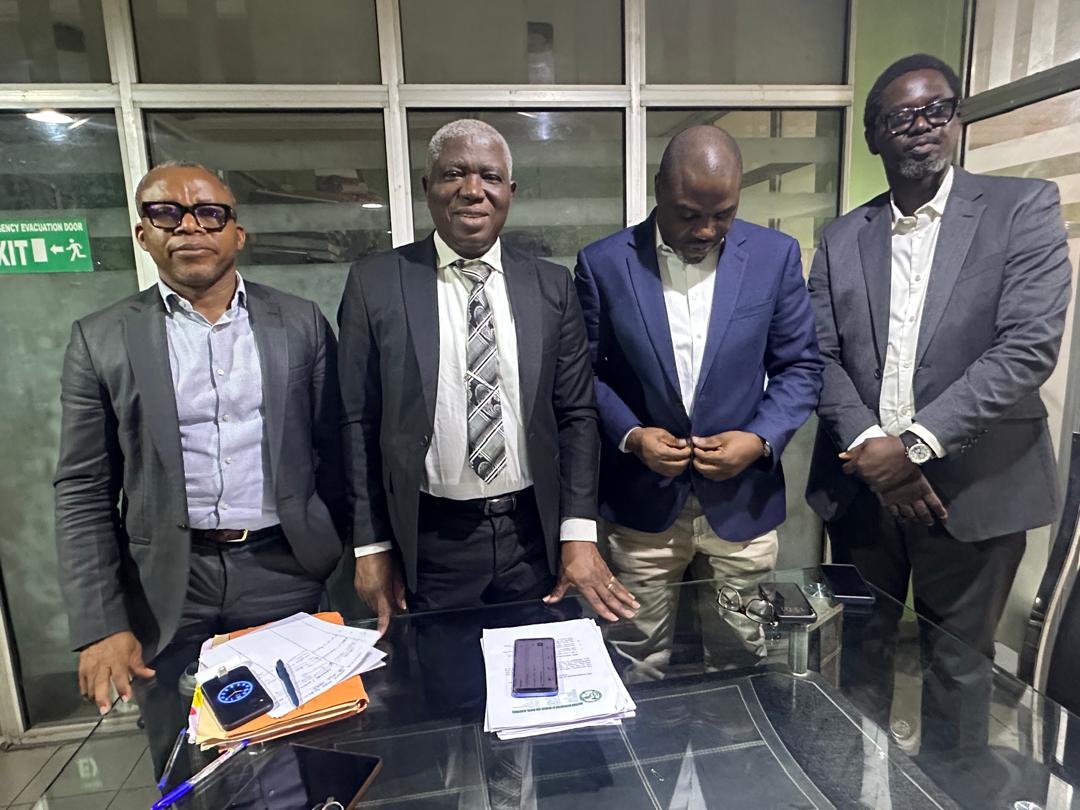
Briefing journalists in Lagos, at the College of Medicine University of Lagos (CMUL) Idi-Araba, Lagos”, the Chairman of NAMDA at the College of Medicine, University of Lagos, Prof. Andrew Ugburo, said the association had exhausted years of negotiations and was increasingly frustrated by government delays.
“We have never gone on a national strike. We believe in negotiations and coming to an agreement with government.
“But we are now beginning to feel that maybe government is taking us for granted,” Ugburo said.
NAMDA, which represents medical and dental academics in Nigerian universities and tertiary health and research institutions, was formed partly to address the growing disparity between the remuneration of medical lecturers and similarly qualified doctors in federal medical centres and teaching hospitals.
Ugburo said the disparity was driving an “internal brain drain”, as specialists increasingly rejected university appointments for better-paying clinical positions, while others leave the country under the JAPA syndrome.
“After extensive training as a specialist, you have the option of either working in the hospital or working as a lecturer in the university. You will now find that the salary of a similarly qualified person in the teaching hospital is more than that of a medical and dental academic.
“What will happen is that it will lead to an internal brain drain,” he said.
He also stressed that medical academics have responsibilities that extend beyond conventional university teaching.
“A medical lecturer takes his students on call duty, teaches them on call duty. It’s not like other academics that close at 4 p.m. You have to take the students and teach them the skills to save lives,” Ugburo said.
According to him, lecturers supervise students in clinical settings, assess their practical skills and help produce doctors capable of handling patients and emergencies.
The association has been demanding the formal government circularisation of allowances for medical and dental academics. NAMDA said although some provisions were contained in agreements between the Federal Government and the Academic Staff Union of Universities (ASUU), the absence of government circulars had prevented full implementation.
Ugburo said the situation became more frustrating after ASUU reached an agreement with the Federal Government in December 2025, with some allowances subsequently implemented, while NAMDA’s demands remained unresolved.
He said the February 18, 2026 agreement between NAMDA and the Federal Government had yet to translate into full implementation.
“We have been waiting for so many years, and we now have a government that finally we are able to get to sit down with us,” he said.
“But up to today, we go for meetings and we are told the chairman of the National Salaries, Incomes and Wages Commission is out of the country.”
NAMDA said it had also sought intervention from the Department of State Services (DSS) and other stakeholders, warning that industrial action by medical academics could have serious consequences for healthcare and medical education.
Also speaking, the General Secretary of NAMDA-CMUL, Prof. Kehinde Okunade said the association would hold another congress before August 25 and review the level of government engagement before deciding its next step.
“We are responsible. We want to see that we have exhausted every legal negotiating route before we take any action,” Okunade said.
Among the outstanding demands is the Consolidated Academic Tools Allowance (CARTA), which NAMDA said is essential for lecturers to attend professional conferences and update their knowledge.
Ugburo said the cost of professional conferences had become prohibitive for academics.
“For a plastic surgery conference, registration is 800 to 1,000 euros. After I attend such a conference, I pay for a hotel as well. Which work am I coming to do? What salary are you going to pay me?” he asked.
He warned that denying academics access to professional development could affect the quality of medical education.
“If as an academic I have not gone for a conference, I am only teaching you old knowledge that I gained 10 years ago. And that is dangerous for the university system,” he said.
NAMDA said it would continue negotiations with the government but warned that failure to resolve the dispute by August 31 could lead to the three-day warning strike and, subsequently, full-blown indefinite industrial action.