
Nigerian pharmacists Melody Okereke, Abdulbasit Ajumobi call for investment in HIV drug discovery research
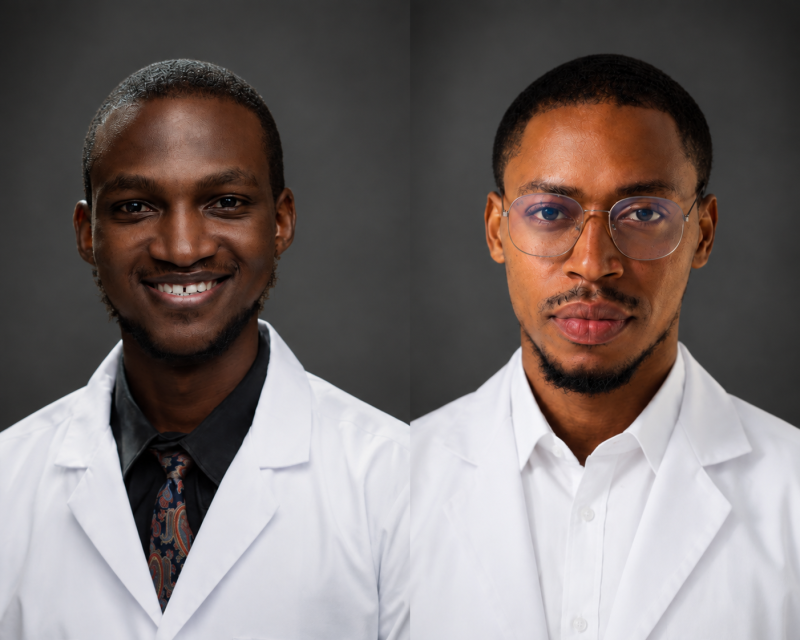
Pharmacist Abdulbasit Ajumobi, Drug Discovery Researcher (left) and Pharmacist. Melody Okereke, HIV/AIDS Implementation Science Researcher.
Every day, across Nigeria, thousands of people living with HIV begin their morning with a simple routine. A small tablet, a glass of water, and the confidence that comes from knowing that science has transformed HIV from a condition that once carried significant mortality into one that can be effectively managed.
That small tablet represents decades of research, collaboration, and investment in drug discovery.
However, Nigerian pharmacists and health researchers Melody Okereke and Abdulbasit Ajumobi believe that Nigeria must begin looking beyond the medicines available today and invest in the science that will shape the future of HIV treatment.
The pharmacists are calling for increased investment in HIV drug discovery research, stronger pharmaceutical research capacity, and greater support for Nigerian scientists working to contribute to the next generation of HIV therapies.
According to them, Nigeria should not remain only a country that receives medical innovations developed elsewhere. It should also build the scientific capacity to participate in discovering and developing solutions that address its own health priorities.
“Every medicine available today started as an idea in a laboratory. If Nigeria wants to influence the future of HIV care, we must invest in the research ecosystem that makes those breakthroughs possible,” they noted.
Nigeria has made significant progress in expanding access to antiretroviral therapy, with treatment programmes helping millions of people living with HIV achieve viral suppression and live healthier lives. However, the pharmacists argue that the future of HIV care will require more than maintaining current progress.
For Nigeria, a country with one of the world’s largest populations of people living with HIV, Okereke and Ajumobi believe that participation in this scientific progress is essential.
“Patients in Nigeria deserve access not only to the medicines that changed HIV treatment decades ago, but also to the innovations that will define the next era of HIV care,” they said.
Okereke, a HIV/AIDS implementation research scientist, emphasized that scientific discoveries must always be connected to the realities of patients.
According to him, the success of HIV treatment is not measured only by the existence of effective medicines but also by whether health systems can ensure that those medicines reach the people who need them.
“In Nigeria, the journey of a medicine does not end when it is discovered. It must be affordable, accessible, acceptable to patients, and supported by systems that allow people to benefit from it,” he said.
This reality is particularly important in communities where people may face challenges such as long distances to treatment centres, stigma, limited health information, and barriers that affect consistent engagement with HIV services.
Ajumobi, an emerging pharmaceutical research and drug discovery expert, believes Nigeria has the human resources required to contribute meaningfully to HIV science.
He noted that Nigerian pharmacists, biomedical scientists, clinicians, and researchers possess valuable expertise but require stronger support systems to translate scientific ideas into health solutions.
“Drug discovery requires patience, investment, infrastructure, and collaboration. We need an environment where young Nigerian researchers can develop ideas, conduct high quality studies, and contribute to global pharmaceutical innovation,” he said.
The pharmacists explained that investing in HIV drug discovery is more about building national scientific capacity than it is of creating new medicines.
A stronger research ecosystem could improve Nigeria’s ability to study HIV strains circulating within its population, understand treatment challenges, support clinical research, and contribute evidence that informs future therapies.
Nigeria has already demonstrated its ability to contribute to HIV research through clinical studies, treatment programmes, and public health interventions. Studies from Nigeria have also highlighted important challenges such as antiretroviral drug resistance, which reinforces the need for continued research and innovation.
The pharmacists believe that the country must now strengthen the connection between research institutions, pharmaceutical industries, healthcare providers, and policymakers.
For them, the goal is not simply to develop medicines within Nigeria, but to ensure that Nigerian scientists are active contributors to the global effort to improve HIV prevention and treatment.
Imagine a future where a young Nigerian researcher working in a local laboratory contributes to the discovery of a new HIV therapy. Imagine Nigerian scientists leading clinical studies that answer questions relevant to African populations. Imagine patients benefiting from innovations developed with their realities in mind.
That future, Okereke and Ajumobi argue, begins with investment today.
As Nigeria continues its fight against HIV/AIDS, the pharmacists believe the country must not only celebrate the medicines that have saved lives but also invest in the discoveries that will protect future generations.
For them, the question is no longer whether Nigeria needs better HIV medicines. The question is whether Nigeria will be part of the scientific journey that creates them.