
Experts seek shift from autism awareness to acceptance as GTCO unveils 16th conference
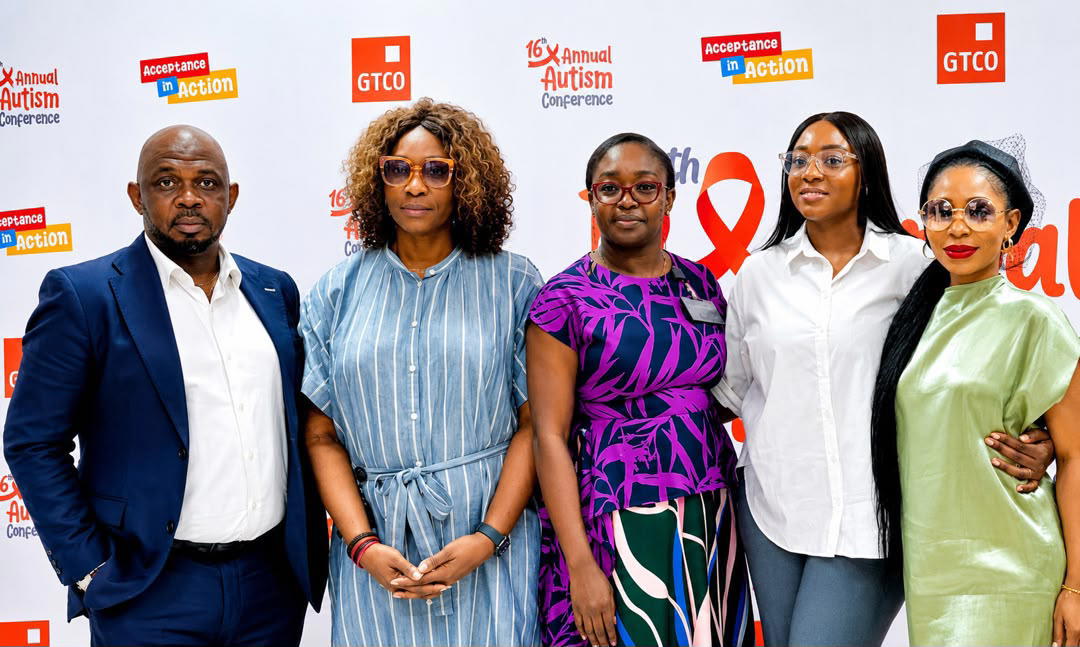
L-R: Cornelius Onuoha, Managing Director, RedGecko PR Ltd; Dr. Eziafakaku Nwokolo, Board Certified Behaviour Analyst; Solape Azazi, International Behaviour Analyst; Oluwatosin Onobanjo, Corporate Communications Officer, GTCO Plc; and Osezusi Bolodeoku, International Behaviour Analyst, during the media briefing for the 16th Annual GTCO Autism Conference held in Lagos on Wednesday.
… Offers free consultations for families, calls for inclusion in schools, workplaces, public spaces
By Chioma Obinna
Despite growing awareness of autism in Nigeria over the past decade, experts have warned that thousands of children and adults on the autism spectrum continue to face discrimination in homes, schools, workplaces and public spaces, calling for a national shift from awareness to genuine acceptance as Guaranty Trust Holding Company Plc, GTCO, unveiled plans for its 16th Annual Autism Conference and free consultation programme.
The conference, themed: “Acceptance in Action: From Family to Classroom to Workplace to Public Spaces,” will hold on July 27 and 28 at the Muson Centre, Lagos, and will be followed by four days of free one-on-one consultations with medical and developmental specialists from July 29 to August 1 at the Adeyemi Bero Auditorium, Alausa, Ikeja.
The annual initiative is expected to bring together autism specialists, educators, healthcare professionals, policymakers, parents and caregivers to discuss practical strategies for improving the lives of people living with Autism Spectrum Disorder, ASD, while providing families with access to expert evaluation and guidance at no cost.
Speaking at a media briefing in Lagos, Group Chief Executive Officer of GTCO, Mr. Segun Agbaje, said the initiative has evolved from creating awareness to driving lasting inclusion across society.
“16 years ago, we set out to help families navigate a journey that too often felt isolating. Today, this programme stands as proof of what sustained commitment can achieve,” Agbaje said.
He noted that this year’s conference seeks to inspire practical action rather than mere conversations.
“‘Acceptance in Action’ challenges all of us to move beyond good intentions and make inclusion visible in the way we raise our families, teach in our classrooms, build our workplaces and welcome one another in public spaces.”
According to him, creating an inclusive society requires collective responsibility.
“No single institution can build an inclusive society alone. It takes families willing to advocate, educators willing to adapt, employers willing to open doors and policymakers willing to act.”
But behavioural specialists at the briefing argued that while awareness of autism has improved considerably in Nigeria, acceptance remains the country’s greatest challenge.
Board Certified Behaviour Analyst and psychologist, Dr. Eziafakaku Nwokolo, said the conversation must move beyond recognising autism to creating environments where people on the spectrum are accepted and supported.
“We’ve done a lot of awareness. People now have an idea of what autism is. But acceptance happens in the community. Inclusion is action, not words,” she said.
Describing autism as an “unseen disability,” Nwokolo explained that many people living with the condition experience discrimination because society often misunderstands their behaviour.
“You don’t see autism physically, but you see its impact on behaviour. Because people cannot see it, they often assume the child is stubborn or badly behaved, or that the adult is rude or difficult.”
She said many autistic children continue to encounter exclusion in schools, while adults face similar barriers in the workplace.
“An autistic employee may communicate differently or struggle with social interactions. Instead of asking what support the person needs, employers often label them difficult. That is why acceptance is so important.”
Nwokolo also called on governments to broaden disability policies to include invisible disabilities such as autism and involve parents and professionals in developing programmes that affect people living with the condition.
Founder of Cradle Lounge Special Needs Initiative and International Behaviour Analyst, Mrs. Solape Azazi, said acceptance begins within the family. “The first thing parents must do is meet the child where the child is. Don’t see the diagnosis first; see your child first,” she said.
According to her, many parents continue to blame themselves or seek spiritual explanations after receiving an autism diagnosis, delaying intervention and support.
She urged families to embrace their children unconditionally; stressing that parental acceptance often shapes how society responds. “When families accept their children, communities begin to learn acceptance too.”
Highlighting the transformative power of public education, Nwokolo recalled the experience of a mother who attended one of GTCO’s community sensitisation programmes.
“She came out crying and said, ‘I will go home now and look at my child differently.’ She realised, after more than 30 years, that her son was autistic. That is what acceptance can do, it changes lives.”
She also recounted how the organisation’s advocacy led to autism awareness training for airport personnel after an incident in which a child on the spectrum was shouted at by security officials who misunderstood the child’s behaviour.
“We realised that awareness must extend beyond families. People working in airports, hospitals, schools and other public places need to understand autism because these are everyday environments where families face discrimination.”
On her part, the Chief Communication Officer of GTCO, Mrs. Oyinade Ogunade, said acceptance often begins with simple acts of empathy. “Sometimes survival makes us lose our humanity. We may not be able to solve everyone’s problems, but we can choose compassion instead of judgement.”
She urged Nigerians to respond with understanding rather than criticism when children with autism exhibit behaviours associated with sensory overload in public spaces.
The experts at the briefing agreed that while Nigeria has made progress in increasing autism awareness, the next challenge is ensuring that children and adults on the spectrum are not excluded because of differences they did not choose.
They said the GTCO conference would provide an opportunity for families, professionals, employers and policymakers to develop practical solutions for building more inclusive schools, workplaces and communities, while the free consultations would help families access early diagnosis, intervention and expert support.
For many families, they added, acceptance, not awareness remains the first step towards unlocking the potential of every child living with autism.