
Ebola crisis may push 985,000 deeper into poverty, trigger 2,520 infant deaths — UNDP
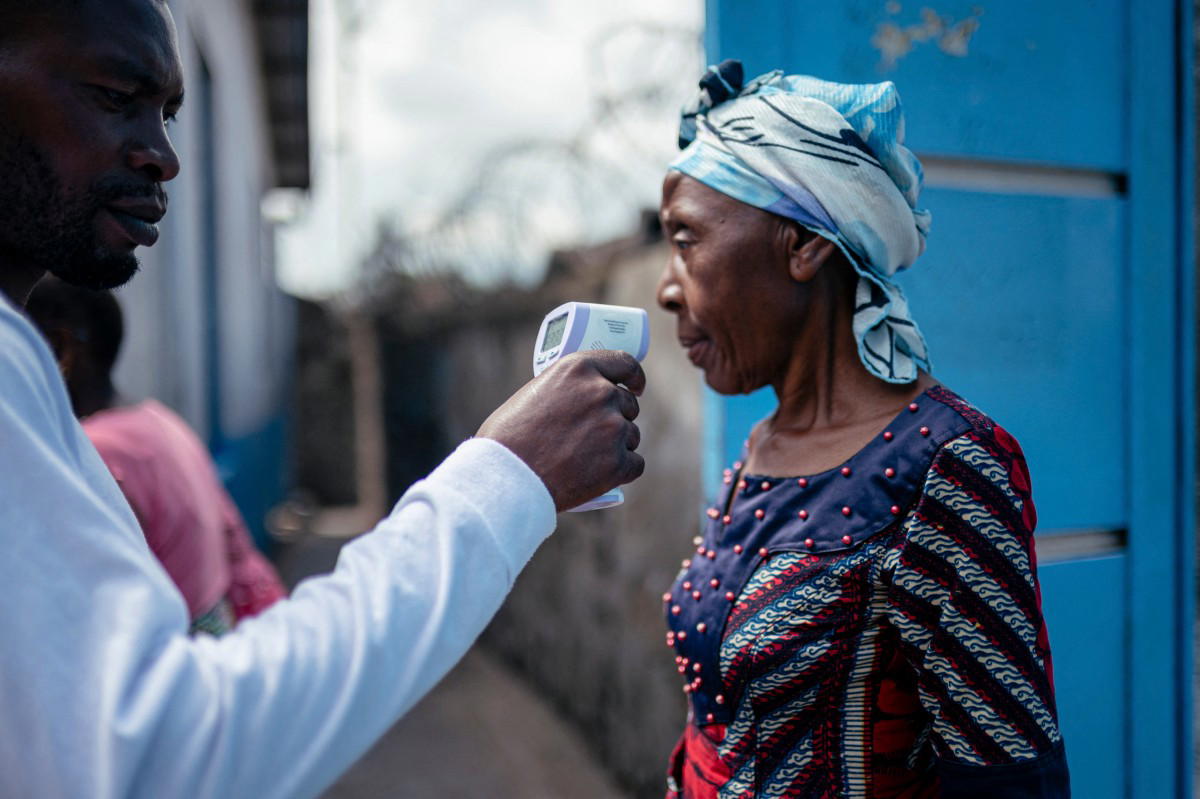
A staff member of the CBCA Virunga Hospital checks a visitors temperature using a a contactless infrared thermometer, before allowing her access to the hospital in Goma on May 17, 2026. A first case of Ebola virus infection has been reported in Goma, a major city in eastern Democratic Republic of Congo controlled by the M23 armed group, with the WHO declaring an international health alert on Sunday.
According to figures released Saturday by the African Unions health agency (Africa CDC), 88 deaths likely caused by the virus have been recorded, out of 336 suspected cases. One death has been reported in neighboring Uganda. As the epicenter of the outbreak is located in a hard-to-reach area, few samples have been tested in laboratories and the figures are based largely on suspected cases. (Photo by Jospin Mwisha / AFP)
…May cost African economies up to $3.6 billion
By Chioma Obinna
A new United Nations assessment has raised alarm that the ongoing Ebola outbreak in the Democratic Republic of the Congo could unleash a devastating socioeconomic crisis far beyond infections, pushing an estimated 985,000 more people into poverty and triggering up to 2,520 excess infant deaths from disrupted healthcare services.
The report also projected that even under a best-case containment scenario, the DRC could lose over $1 billion in real GDP and at least 55,000 jobs, while wider regional and continental shocks could cost African economies up to $3.6 billion.
The report by the United Nations Development Programme described the outbreak as a “highly regressive poverty shock,” warning that its impact could erase fragile development gains across Central and East Africa, particularly for women and low-income households.
While the immediate concern remains containing the Bundibugyo strain of the Ebola Virus Disease (EVD), the UNDP said the deeper threat lies in the economic collapse unfolding beneath the health crisis.
More troubling, the assessment warned that disruptions to maternal, reproductive and child health services could create a deadly secondary health crisis, with an estimated 2,520 infants at risk of dying from non-Ebola causes.
According to UN Assistant Secretary-General and Regional Director for Africa, Ahunna Eziakonwa said Ebola does not stop at the hospital gate.
“It affects livelihoods, education, food security, trade, public finances and trust. If we treat this Ebola outbreak solely as a health challenge, we risk missing the much larger development emergency unfolding around it.”
According to the report, trade restrictions, border closures, transport delays and shrinking informal markets are already hitting the poorest communities hardest, with the poorest 20 per cent of households expected to suffer a 1.76 per cent drop in daily consumption.
Women, the report noted, face the harshest burden.
Because they dominate informal cross-border trade and also make up the majority of frontline health workers and family caregivers, they are exposed to both economic losses and direct infection risks.
The UNDP warned that blanket containment policies could unintentionally deepen inequality if they fail to account for gender realities and informal livelihoods.
To avert a wider humanitarian disaster, the agency urged governments and development partners to deploy direct cash transfers for vulnerable families, protect maternal and infant healthcare funding, and replace total border closures with targeted screening systems.
It also called for stronger investments in health systems, social protection and economic resilience, warning that without urgent intervention, the Ebola outbreak could spiral into a prolonged poverty and health emergency for millions across the region.