
Ajayi defends NHFRA Bill, says Nigeria’s health facilities remain dangerously under-regulated
By Chioma Obinna
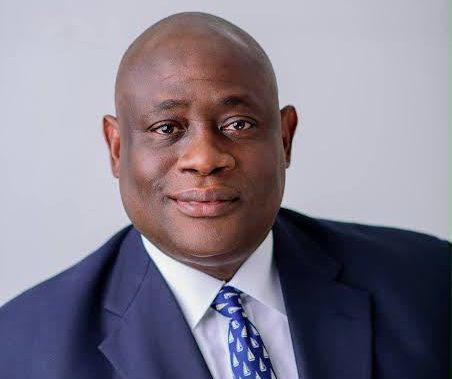
The Chairman of the National Health Facilities Regulatory Agency (NHFRA) Establishment Committee, Dr Richardson Ajayi, on Monday mounted a robust defence of the proposed agency, insisting that Nigeria’s healthcare system remains dangerously exposed because health facilities across the country are not subject to a unified national safety regulation.
Ajayi’s position follows a petition by the Association of Community Pharmacists of Nigeria (ACPN), signed by its National Chairman, Pharm. Ambrose Ezeh, urging the National Assembly to halt the NHFRA Bill over concerns that it would duplicate existing regulatory bodies and fuel professional tensions.
But Ajayi said the opposition misses the real danger confronting Nigerians unsafe facilities, poor standards and weak oversight in the very places where patients seek care.
“The reality is simple: Nigeria licenses the people and the products, but not the places,” Ajayi said.
“That missing part of the system is where unsafe theatres, contaminated instruments, broken oxygen systems and fraudulent clinics cause damage. This is not duplication; it is a gap that must be closed.”
At the centre of the debate is whether existing regulators such as the Pharmacy Council of Nigeria (PCN), National Agency for Food and Drug Administration and Control (NAFDAC), Medical and Dental Council of Nigeria (MDCN) and Nursing and Midwifery Council of Nigeria (NMCN) already provide enough oversight.
Ajayi argued that they do not.
According to him, those agencies regulate professionals and products, but none is empowered to inspect and license health facilities as institutions.
“A licensed pharmacist in an unsafe clinic is still working in an unsafe clinic. A NAFDAC-approved drug given in an unregulated facility can still become dangerous if the system itself is unsafe,” he said.
Ajayi also dismissed claims that the National Health Act 2014 already provides enough legal backing, saying the law merely outlines the framework of the health system but does not create a functioning national licensing regime for facilities.
He noted that Nigeria still lacks a central register of health facilities, recurring inspection cycles, public quality ratings and a national authority with powers to suspend or shut unsafe facilities.
“The evidence is in the repeated anti-quackery raids across states. If the system was effective, we would not always be responding after harm has already happened,” he said.
Ajayi further challenged the ACPN’s position that the regulatory gap exists only in federal tertiary hospitals, pointing to the National Tertiary Health Institutions Standards Committee (NTHISC), inaugurated in 2023, as proof that the Federal Government already accepts the principle of regulating facilities as institutions.
He said the NTHISC, however, covers only teaching hospitals and Federal Medical Centres, leaving the wider healthcare landscape largely untouched.
“The existence of the NTHISC actually strengthens our argument. It proves Nigeria already accepts institutional regulation. But it only covers the narrowest and safest part of the system,” Ajayi said.
He stressed that the biggest risks are in private, secondary and primary healthcare facilities, where the majority of Nigerians seek treatment.
According to him, private healthcare providers account for about 60 per cent of healthcare delivery in Nigeria, while nearly 70 per cent of healthcare spending is out-of-pocket, meaning millions of Nigerians are paying directly for services in facilities that often face inconsistent or weak oversight.
“That is where the real danger lies, maternity homes, diagnostic centres, neighbourhood clinics — the places where most Nigerians receive care every day,” he said.
Ajayi cited cases in Kano State where authorities uncovered more than 100 illegal hospitals and pharmacies, including one involving the use of infected blood for transfusion, as evidence of the regulatory gaps.
He also addressed concerns that the bill could centralise power at the federal level, clarifying that the NHFRA is designed to work with states rather than override them.
“This is not about taking powers from states. It is about setting a national minimum safety floor while states continue to inspect and supervise within their territories,” he said.
Ajayi pointed to the National Primary Health Care Development Agency (NPHCDA) as an existing model of cooperative federalism, where national standards are set centrally while implementation is carried out at the state level.
He also cited the Health Facility Monitoring and Accreditation Agency (HEFAMAA) in Lagos as a working example of what effective state-level facility regulation can achieve.
“The NHFRA will coordinate, not usurp. It will strengthen states by giving them a unified framework and a national register,” he added.
Ajayi acknowledged one major flaw in the current NHFRA draft bill, the clause reserving the Director-General’s position exclusively for medical doctors,,and agreed it should be amended.
“That clause should be changed. This agency must be neutral and multidisciplinary. Leadership should be based on competence, not profession,” he said.
He proposed statutory representation for pharmacists, nurses, laboratory scientists, radiographers and other health professionals on the agency’s board to ensure broad ownership and trust.
Ajayi warned that allowing professional rivalry to derail the bill would only prolong the risks facing patients.
“Patient safety must come first. The proper response is to strengthen the bill and pass it,,not kill it,” he said.
If enacted, the NHFRA would establish minimum national safety standards for hospitals, clinics, laboratories and diagnostic centres, creating what proponents describe as the first coordinated national framework to ensure healthcare facilities meet basic safety requirements before treating patients.
For Ajayi, the issue is beyond policy.
“This is about protecting Nigerians. Every patient deserves to walk into a health facility knowing it has met the minimum safety standards.”