
Trans rights case before Supreme Court will test freedom of all Americans
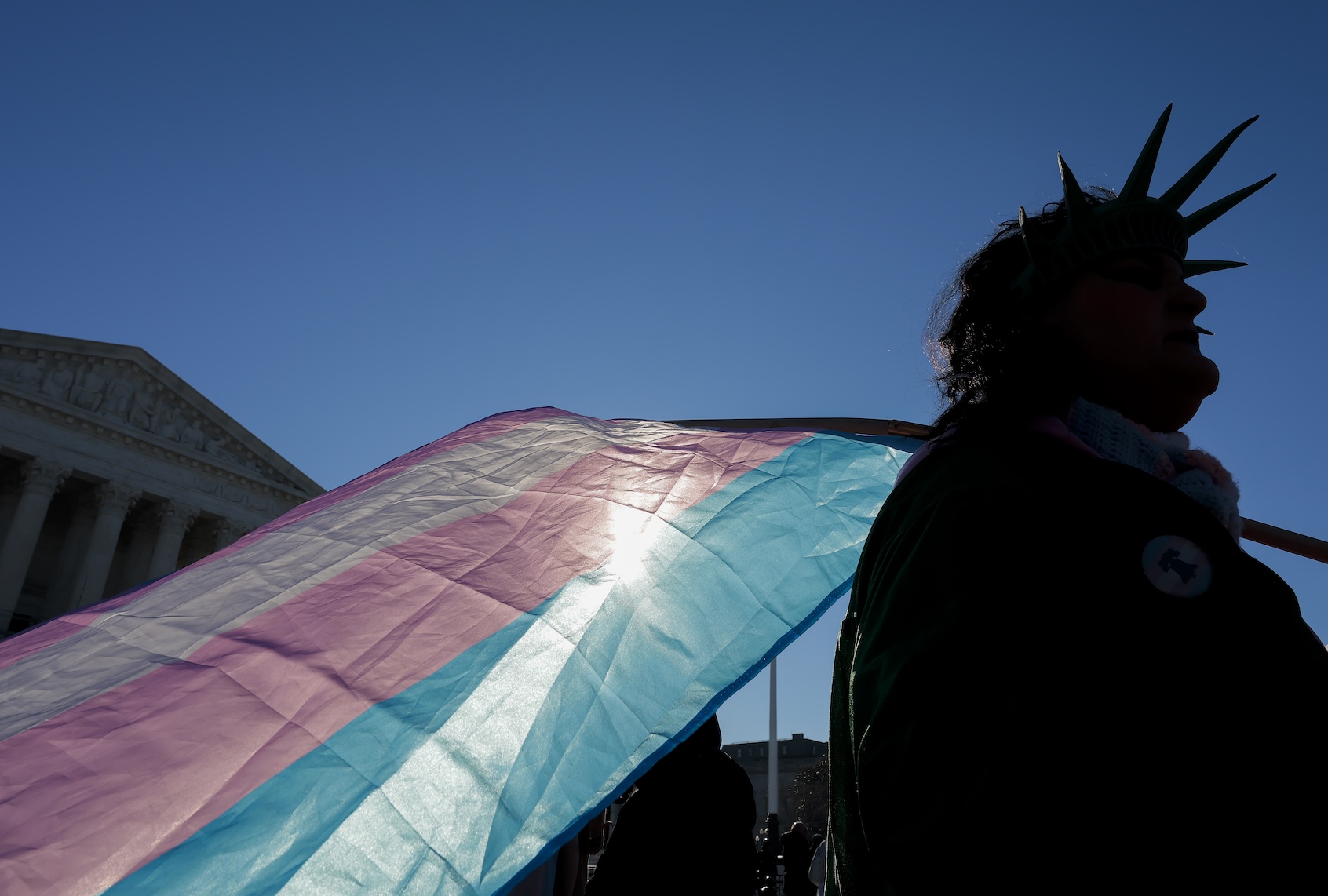
The Supreme Court has been infamous for saving its most contentious rulings for the tail end of its sessions, and the controversy placed on LGBTQ+ rights suggests the court will drop its decision in two key transgender rights cases right as this year’s Pride Month comes to a close.
Two cases, Little v. Hecox and West Virginia v. BPJ, task the justices with determining, in different ways, the constitutionality under the 14th Amendment of state bans on school sports participation based on sex assigned at birth. The Supreme Court held oral argument for both cases in mid-January, and the justices are expected to hand down a ruling at the end of June or early July.
Beyond defining the future of transgender athletes’ ability to participate in public school and collegiate-level sports, the cases test the strength of the 14th Amendment, adopted in 1868, which could have far-reaching consequences on every American’s rights under the equal protection clause.
Little v. Hecox challenges Idaho’s 2020 “Fairness in Women’s Sports Act,” which barred transgender women and girls from playing on female sports teams in public schools and colleges and allowed any person to question a student athlete’s gender, subjecting her to a medical verification process. Stemming from a lawsuit filed by a trans student who had undergone hormone therapy and wanted to join Boise State University’s cross-country team, the case questions whether a state, so long as it remains consistent with the 14th Amendment’s equal protection clause, can require sports participation based on biological sex.
West Virginia v. BPJ features a similar challenge against the state’s 2021 “Save Women’s Sports Act,” which required public schools and colleges to designate sports teams based on “biological sex” and prohibits students assigned male at birth from participating on women’s teams. It hinged on the experience of a trans girl who took puberty blockers for treatment of gender dysphoria at the onset of puberty and sought to continue participating on girls’ teams, and asks the court to consider whether Title IX or the 14th Amendment bars a state from assigning students to sports teams based on their birth-assigned sexes.
As these cases question transgender Americans’ — particularly trans youths’ — access to equal protections under the Constitution, they could also weaken that very protection under the 14th Amendment for all Americans.
The Supreme Court decisions in these consolidated cases will come on the heels of a suite of pivotal transgender rights cases that have made their way to the court. Last summer, the court ruled narrowly in favor of a Tennessee ban on gender-affirming care in U.S. v. Skrmetti, while it allowed the Trump administration’s executive orders banning transgender people from enlisting and serving in the military, and requiring passports to display holders’ sex assigned at birth to take effect pending litigation in U.S. v. Shilling and Trump v. Orr, respectively. Given those outcomes, the odds that the court will rule in the transgender respondents’ favor aren’t high — and that should concern all Americans.
For one, the petitioners argue that these bans on transgender athletes’ participation in sports, should they be upheld, will protect women from injury, allow for competitive fairness and preserve women and girls’ equal opportunity. Countless trans rights advocates and women’s rights organizations have highlighted, however, how such bans ostensibly open cisgender women and girls, particularly those perceived as more masculine for one reason or another, up to invasive body examinations and discrimination.
See, for example: the contention over Algerian Olympic boxer Imane Khelif’s eligibility in 2024, the recent parroting of false, anti-Black claims that former First Lady Michelle Obama is “a man” and Candace Owens’ baseless conspiracy theory questioning French First Lady Brigitte Macron’s gender identity.
Second, and most critically, are the cases’ tests of the 14th Amendment’s equal protection clause, which protects against discrimination. As these cases question transgender Americans’ — particularly trans youths’ — access to equal protections under the Constitution, they could also weaken that very protection under the 14th Amendment for all Americans.
Start your day with essential news from Salon.
Sign up for our free morning newsletter, Crash Course.
If the Supreme Court is willing to deny key freedoms to some of the nation’s most vulnerable by narrowing its interpretation of whom the Constitution applies to and, more importantly, protects, it stands to reason that it can narrow it further for others, opening the door for greater discrimination and reshaping interpretations of the founding document around the whims of the nation’s politics rather than refining the nation through its principles.
Justice Ketanji Brown Jackson’s questioning in oral argument for Little v. Hecox alluded to this concern while questioning deputy solicitor general Hashim Mooppan, who represented the Department of Justice in support of the petitioners, over the number of people that the sports participation law was tailored to cover or exclude.
“I understand that you’re saying that if the law has such a broad sweep of constitutionality, then we’re not going to strike this thing down just because we can identify one person for whom it doesn’t apply,” Jackson said. “But, if you are that one person and you can show that this is unconstitutional as applied to you, I guess I don’t understand why it matters that it’s constitutional as applied to 99.9 percent of the other people?”
Justice Sonia Sotomayor further questioned during that oral argument what percentage of the population a subclass accounts for would make it meaningful.
“Is it 1 percent, 5 percent, 30 percent, 15 percent? One is not enough for you, but why?” she asked. “The numbers don’t talk about the human beings.”
This ripple effect of such constitutional arguments also came to light in U.S. v. Skrmetti as the justices deliberated whether Tennessee’s prohibition of access to hormone therapy and puberty blockers based on whether a young patient sought the treatment to transition or for precocious puberty constituted a sex-based classification. As Justice Ketanji Brown Jackson stressed during oral argument, if such a distinction doesn’t base access to treatment on sex as Tennessee argued, the race-based access to marriage that justices found in Loving v. Virginia, which sought to overturn a miscegenation law, shouldn’t be valid either.
The ruling allowing Trump’s executive order on displaying birth-assigned sex in passports in Trump v. Orr provides yet another example. The majority opinion holds that the transgender respondents “failed to establish that the government’s choice to display biological sex ‘lack[s] any other purpose other than a bare … desire to harm a politically unpopular group,” citing language from the 2018 Trump v. Hawaii ruling that denied that the first Trump administration’s travel ban violated the First Amendment’s establishment clause by restricting refugees from majority-Muslim countries.
Add to these risks that a broader ruling from the Supreme Court in West Virginia v. BPJ regarding the assignment of public school activities based on sex lends itself to more bathroom restrictions in public spaces. A recently viral video of a father taking his daughters to the women’s restroom and having the police called on him by another customer demonstrates how all Americans would face harm under these pending rulings.
It’s no mistake that such cases reach the nation’s highest court in a post-Roe v. Wade U.S., one that exists shakily in economic uncertainty and a cultural moment where ultrapolarized politics beget increased political violence and ultraconservative government officials seek to curtail funding for public services like SNAP and Medicaid in favor of expanding funding for Immigration and Customs Enforcement through the end of President Donald Trump’s term.
Restrictions on Americans’ ability to live freely arise slowly and in many forms, and the suite of transgender rights cases before the Supreme Court and pending below it serve as a reminder of what’s at stake.
Read more
about LGBTQ+ rights