
The real reason RFK Jr. is coming for your antidepressants
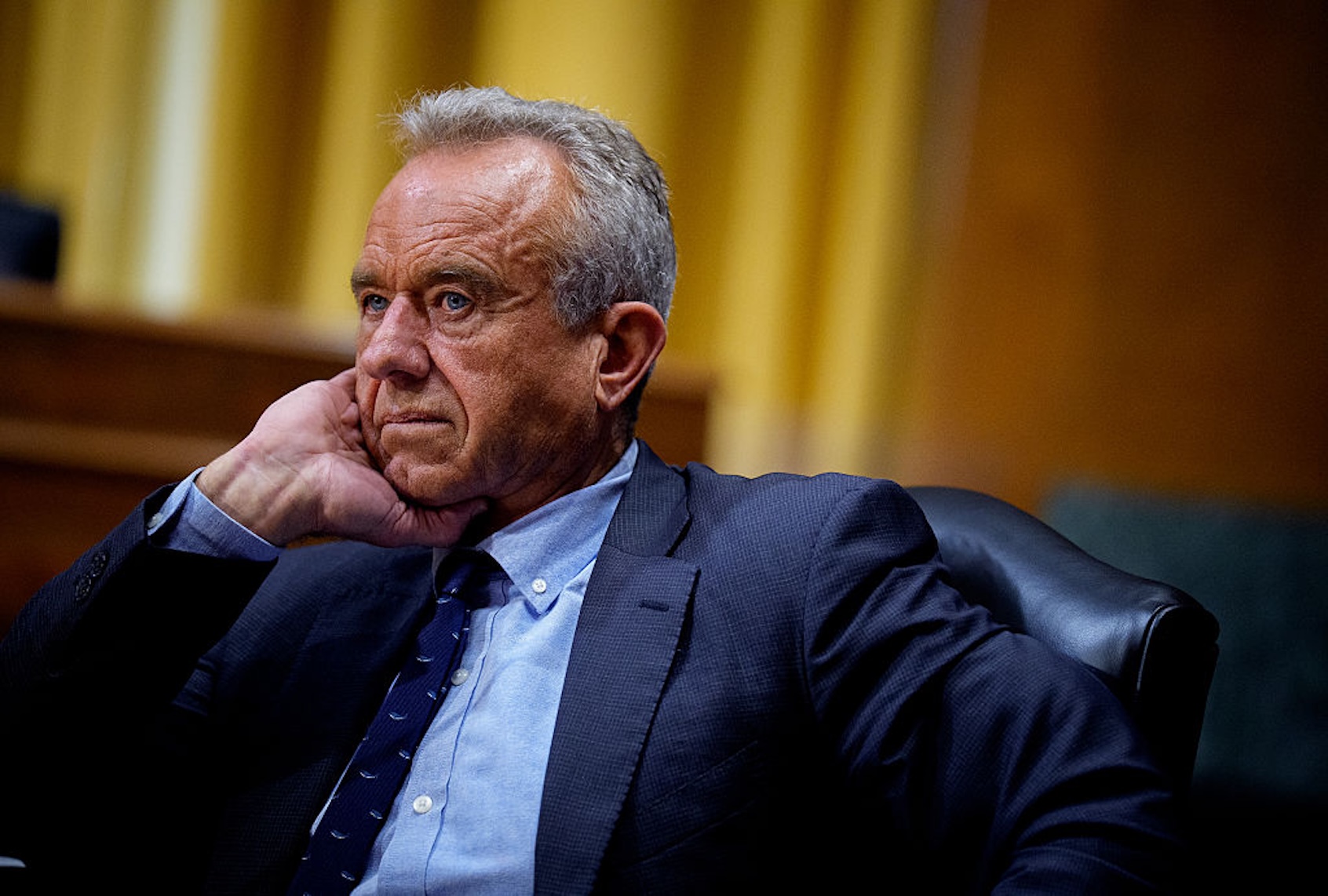
The siren call was apparently irresistible. “Kennedy Starts a Push to Help Americans Quit Antidepressants,” read a New York Times headline from early May — phrasing that seemed to normalize Robert F. Kennedy Jr., the anti-science, roadkill enthusiast who is currently running the Department of Health and Human Services, and to assume that he wants to help everyday Americans.
But reading the article should disabuse anyone of the notion that Kennedy has sincere, much less helpful, motivations in shepherding an event called the “Mental Health and Overmedicalization Summit,” held by the MAHA Institute, a far-right group organized to wage war on responsible healthcare systems. “No major medical organizations were represented at the gathering,” Times reporter Ellen Barry noted, and it’s not a surprise why. Legitimate medical experts are, to put it mildly, skeptical of taking away mental health medications, especially when there’s no real pathway to effective alternatives for people struggling with depression, anxiety or other psychiatric conditions — or the one in six people who are taking selective serotonin reuptake inhibitors to manage them.
In the two weeks since the summit, news outlets have been dutifully publishing articles that draw on facts and medical expertise, explaining that Kennedy is wrong to compare people who use SSRIs to heroin addicts. “Redirecting patients away from medications is only clinically responsible if the alternatives are accessible. They are not,” Dr. Jonathan Slater of Columbia University Irving Medical Center explained in an article for STAT News, a publication focused on health and medicine.
These responses are necessary to educate the public about why antidepressant use is so common. But ultimately, they’re encountering an obstacle that defines Kennedy’s general approach to these contentious issues at HHS: He isn’t worried about the science or what’s best for patients. Despite his famous last name and Democratic lineage, Kennedy has become a bog-standard right-wing Republican. His aims are political in nature, not medical. His heated, misleading rhetoric about SSRI use, including demonizing people who need mental health medication as coddled weaklings, functions primarily as a justification for stripping people of medical care.
The complicating factor here is that antidepressants are prescribed in the U.S. at rates that are above the ideal, which no one really disputes. The argument is over why that is. Are Americans just lazy in turning to a pill instead of working on themselves? Or are there real obstacles to addressing the underlying causes of many mental health concerns?
By and large, experts point to systematic failures that leave Americans more vulnerable to mental illness and without access to drug-free interventions, which cost both time and money. “A prescription is accessible in a way that a weekly therapy appointment is not,” Slater explained.
In early May, Anna Louis Sussman wrote for the New Republic about Dr. Khameer Kidia, an internist at Brigham and Women’s Hospital in Boston, who is speaking out in his new book “Empire of Madness: Reimagining Western Mental Health Care for Everyone,” about how social and economic inequality are driving causes of mental illness. “My patients are not suffering from depression; they’re suffering from oppression,” Kidia writes in the book, detailing how many people’s conditions are dependent on external circumstances, including financial instability.
Kennedy, however, has no real interest in fixing structural problems that leave people with no choice but to use SSRIs to stabilize themselves. To the contrary, he has a long history of talking about people on SSRIs in dehumanizing, often racist language that implies their actual problem is they’re lazy and need to just work harder — or even work for free. As I wrote in 2025, Kennedy’s “solution” for mental illness looks very much like using prison camps he euphemistically calls “wellness farms.” On these “farms,” the prisoner-patients would be denied access to computers and phones, taking them out of contact with families, and made to do hard labor until some vague, undefined moment where they’ve supposedly recovered — which is unlikely to happen in such circumstances.
Kennedy has a real talent for taking reactionary, often sadistic ideas and reframing them to sound compassionate and therapeutic.
Kennedy has a real talent for taking reactionary, often sadistic ideas and reframing them to sound compassionate and therapeutic. He frames his hostility to vaccines as “concern” for children’s health, even though the overwhelming real-world evidence is that vaccines are safe, but the diseases kids can get without them can lead to unnecessary suffering and death. He attacks women who use Tylenol during pregnancy, rejecting all medical experts who say it’s safe. He uses his perch at HHS to preach his “eat real food” message, and to scold people to work out more, knowing that it makes his critics sound like they’re opposed to healthy food and exercise. (In reality, however, critics understand that Americans already know about eating right and staying active. The problem is not that we have a deficit in public shaming about this, but that our social systems don’t support better living habits.)
Right now, Donald Trump’s administration is attempting to cut the monthly fruit and vegetable allotment for WIC (Special Supplemental Nutrition Program for Women, Infants and Children) recipients from $52 to $13 a month. When asked about this during a recent congressional hearing, Kennedy defended the cuts by complaining about government debt. (The annual budget for WIC costs less than what the U.S. spends on average during a week of the Iran war.) But by shifting blame away from systematic issues and onto individuals for their supposed gluttony and laziness, Kennedy and his Republican allies can justify cutting healthcare on the grounds that people shouldn’t be using it anyway.
Kennedy is playing a similar shell game with SSRIs. In his usual tone of faux concern, Kennedy wrote a letter to healthcare providers extolling the virtues of “non-pharmacological interventions” for depression, noting that “evidence supports the use of psychotherapy, individual or group therapy and other nonpharmacological interventions either as first-line treatment” — a message that sounds nice to outsiders who don’t understand the structural issues. To providers themselves, however, this is condescending, victim-blaming nonsense.
Want more Amanda Marcotte on politics? Sign up for her free newsletter, Standing Room Only, now also on YouTube or wherever you get your podcasts.
Kennedy’s letter implies that doctors are writing prescriptions for SSRIs because they and/or their patients are too lazy or stupid to invest in therapy. In reality, as Slater notes, the demographics of who accesses psychotherapy show that the issue is often a matter of access, not will. Therapy use is up with “younger, wealthier, college-educated, urban adults with private insurance,” but not with people who are “older, less educated, uninsured, or rural.”
Indeed, as more people take up therapy, there has been a multi-year trend of SSRI use declining. That’s because of telehealth and, crucially, because the Affordable Care Act expanded access to healthcare coverage. But thanks to Trump and Republicans, millions of Americans are now losing access to healthcare which, for many, will mean having to quit expensive, time-consuming talk therapy.
Kennedy has defended kicking millions of people off healthcare, falsely claiming that they’re “almost all illegal immigrants.” This followed a telling moment during his confirmation hearing when he refused to answer Sen. Bernie Sanders, I-Vt., on the question of whether healthcare is a right. Instead, Kennedy suggested that some people shouldn’t be allowed to “take from the pool” because of personal choices that lead to bad health outcomes.
At the time, he used smokers as an example of who should lose access, no doubt because smoking is a widely unpopular and indisputably unhealthy behavior. (It’s also an addiction that can be overcome with, you guessed it, decent medical care.) But the underlying assumption that poor health is a result of poor character has been rapidly expanded in Kennedy’s time at HHS.
Autism is blamed on the imaginary selfishness of mothers. Everything from diabetes to schizophrenia, he claims, is caused by Americans being junk food junkies. “You can heal yourself with a good diet” is a favorite saying of Kennedy’s, which sounds nice — as long as you ignore the larger implication that Americans don’t need expensive doctors if they would just eat carrots instead of chips.
Kennedy is playing the same trick with SSRIs. On the surface level, it sounds nice to tell people that it’s better to try talk therapy and regular exercise than an antidepressant. The problem isn’t lack of will, but lack of access.
Americans are overworked and underpaid. Beyond not having the time, energy or money for exercise and therapy, many people have additional stress that exacerbates mental health concerns — all of which is getting worse under an administration that is stripping away healthcare and accelerating inflation. The only purpose Kennedy’s rhetoric serves is to stigmatize people who use SSRIs as lazy or ignorant, making it easier to justify taking away their healthcare. In other words, it’s the same old Republican playbook, just dressed up in a phony mask of compassion.
Read more
about MAHA